
If you live in West Melbourne and haven’t looked in your attic recently, you’re not alone.
Most homeowners only go up there when there’s a roof issue or a contractor needs access. But in Brevard County, attics are one of the most common places for mold to develop — especially after heavy storms, high humidity, or ventilation problems.
Attic mold isn’t always dramatic. It often starts as light staining on roof decking. Left unchecked, it can spread and create larger moisture issues.
Here’s what West Melbourne homeowners should know.
Why Attic Mold Is So Common in West Melbourne
Florida’s climate creates ideal attic conditions for mold.
In West Melbourne, contributing factors include:
- High year-round humidity
- Heavy summer thunderstorms
- Hurricane exposure
- Extreme attic heat
- Poor ventilation balance
When humid air enters the attic through soffit vents and meets hot roof decking, condensation can form. Over time, that moisture supports mold growth on wood sheathing.
Unlike a plumbing leak, this process can happen slowly and quietly.
The Role of Ventilation
Attic ventilation is critical in Brevard County homes.
A properly balanced system includes:
- Soffit vents (intake)
- Ridge or roof vents (exhaust)
If intake is blocked or exhaust is insufficient, humid air becomes trapped.
Bathroom exhaust fans vented improperly into the attic are another common issue. Instead of sending moisture outside, they dump warm, humid air directly into the attic space.
We frequently see this in West Melbourne homes built in various decades.
Signs You May Have Attic Mold
Most homeowners don’t see attic mold until a roof inspection or home sale.
But warning signs may include:
- Musty odors indoors
- Dark staining on ceilings
- Elevated indoor humidity
- AC running constantly
- Visible black or gray staining on attic wood
If your home smells damp but walls look clean, the attic may be the source.
Storm Damage and Wind-Driven Rain
West Melbourne experiences frequent thunderstorms and hurricane activity.
Wind-driven rain can enter through:
- Displaced shingles
- Flashing gaps
- Roof penetrations
- Ridge vent openings
Even minor moisture intrusion can dampen attic insulation and decking.
Because attic spaces get extremely hot, that moisture may dry partially — but not completely — leaving behind conditions for mold growth.
How AC Systems Affect Attic Mold
Your air conditioning system plays an indirect role.
If indoor humidity remains high due to:
- Oversized systems
- Short cooling cycles
- Clogged condensate lines
Moist air can migrate upward into the attic.
In Brevard County’s climate, humidity control inside the home directly impacts attic conditions.
What Attic Mold Looks Like
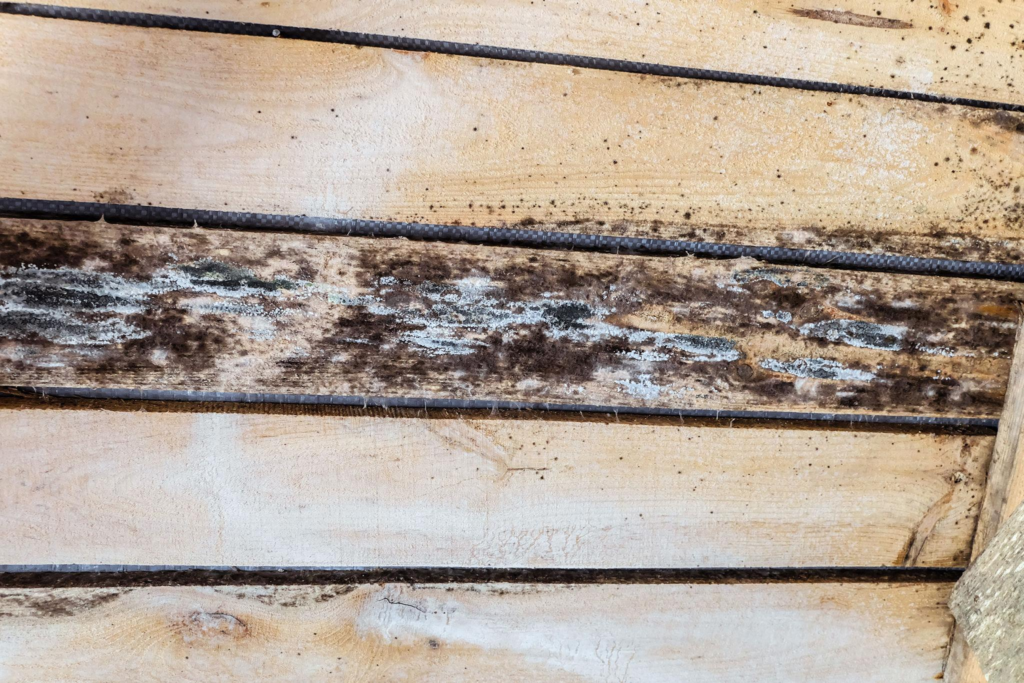
Attic mold often appears as:
- Dark staining on roof sheathing
- Speckled gray or black patches
- Discoloration around nails or seams
Not all dark staining is active mold. Sometimes it’s old moisture staining.
That’s why proper evaluation is important before assuming the worst.
How Attic Mold Is Evaluated
A professional attic inspection typically includes:
- Visual examination of roof decking
- Moisture meter readings
- Checking insulation condition
- Evaluating ventilation balance
- Looking for signs of roof leaks
If necessary, samples may be collected to confirm mold presence.
The focus is identifying the moisture source first.
At Brevard Mold Inspections & Removal, attic inspections are common after storm season in West Melbourne and surrounding areas.
What Proper Attic Mold Remediation Involves
If mold is confirmed, remediation may include:
- Containment if needed
- Cleaning of affected roof decking
- Removal of contaminated insulation
- Addressing ventilation imbalances
- Repairing roof vulnerabilities
In some cases, improving attic ventilation alone prevents recurrence.
The key is correcting the moisture source.
Simply spraying a surface treatment without fixing ventilation will not provide long-term results.
Why DIY Attic Mold Cleaning Is Risky
Homeowners sometimes attempt to spray mold with household cleaners.
This approach:
- Does not address ventilation issues
- May not penetrate porous wood
- Can disturb spores without containment
- Does not evaluate hidden moisture
Attics also present safety hazards, including heat exposure and limited footing.
Professional evaluation is safer and more thorough.
Preventing Attic Mold in West Melbourne
Prevention focuses on moisture control and ventilation.
Homeowners should:
- Inspect attics annually
- Ensure soffit vents are unobstructed
- Confirm bathroom fans vent outside
- Service AC systems regularly
- Check roofs after major storms
- Monitor indoor humidity (45–55%)
Homes in nearby Melbourne, Palm Bay, Rockledge, and Viera benefit from the same preventive steps.
Consistency is critical in Florida’s humid climate.
Why Local Experience Matters
Attic mold in West Melbourne is driven by:
- High humidity
- Extreme attic heat
- Hurricane exposure
- Coastal moisture patterns
- Florida building styles
Local professionals understand how these environmental pressures interact with specific roof designs common in Brevard County.
An out-of-state approach may not account for Florida’s humidity dynamics.
When to Schedule an Attic Inspection
Consider having your attic evaluated if:
- You notice persistent musty odors
- There has been recent storm damage
- You’re buying or selling your home
- Indoor humidity remains elevated
- Ceiling stains appear
You don’t need widespread visible mold to justify inspection.
Early detection prevents larger structural repairs later.
Brevard Mold Inspections & Removal provides attic mold inspections and remediation throughout West Melbourne, Melbourne, Palm Bay, Cocoa, Merritt Island, Titusville, Rockledge, Viera, Satellite Beach, and Cape Canaveral.
In Brevard County, attic mold is almost always a ventilation and moisture story.
Correct the moisture. Balance the airflow. And you protect your home from above.