
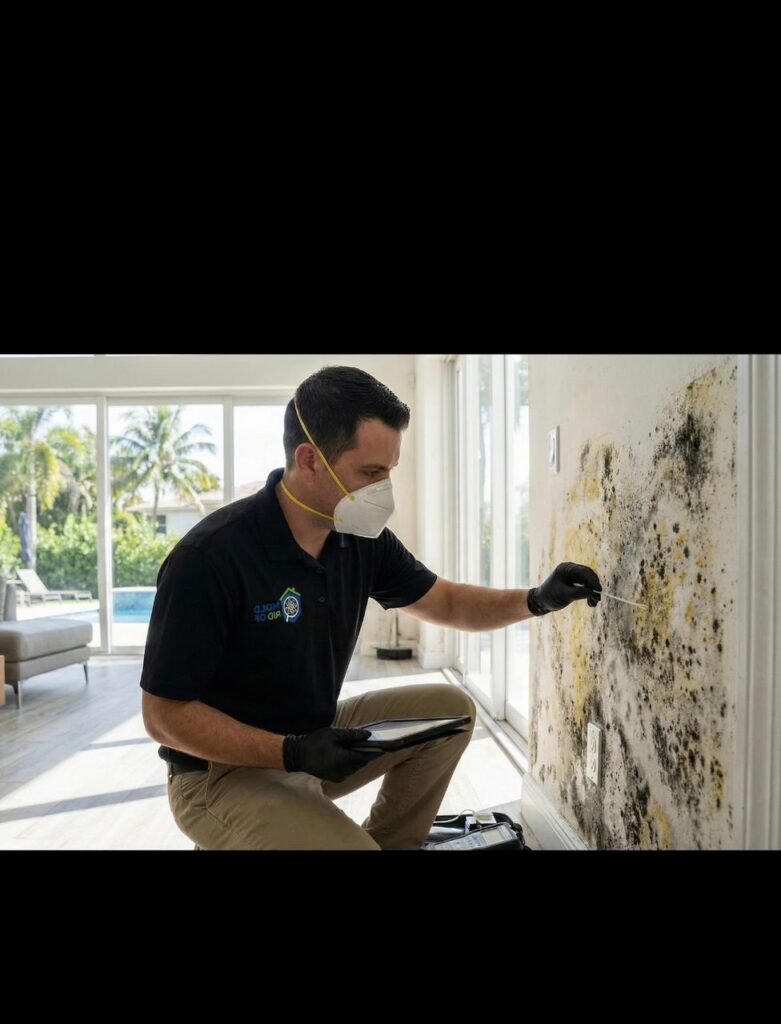
Mold Testing in Palm Bay: What Homeowners in Brevard County Should KnowMold testing is one of the most misunderstood steps homeowners face in Palm Bay and across Brevard County. Some people assume testing is always required, while others skip it entirely and regret it later. The truth is more practical: mold testing is a diagnostic tool, and when used at the right time, it provides clarity that visual inspections alone cannot.In Palm Bay’s humid climate, mold often grows out of sight—inside walls, HVAC systems, attics, and crawl spaces—making testing a valuable option when answers aren’t obvious.⸻Why Mold Testing Is Common in Palm Bay HomesPalm Bay homes are under constant mold pressure due to: • High humidity most of the year • Frequent afternoon rainstorms • Heavy air conditioning use • Condensation inside HVAC systems • Tightly sealed homes • Storm-related water intrusionBecause mold can grow without visible signs, testing is often used to confirm whether indoor air quality has been affected.⸻What Mold Testing Actually DoesMold testing does not fix mold. It provides information.Mold testing can: • Measure mold spore levels in the air • Identify mold on surfaces • Compare indoor vs outdoor mold levels • Help determine if mold is affecting indoor air quality • Support decisions about remediationTesting answers the question: “Is mold present at concerning levels?”⸻Mold Testing vs Mold InspectionThese two services are often confused.Mold Inspection • Identifies moisture problems • Locates visible and hidden mold • Evaluates HVAC, attic, and crawl spaces • Determines if testing is usefulMold Testing • Measures mold spores • Identifies mold types • Documents air quality conditionsIn many Palm Bay homes, inspection comes first, and testing is added only when it provides value.⸻When Mold Testing Is RecommendedTesting is not always necessary, but it’s helpful in specific situations.Common Reasons to Test • Mold is suspected but not visible • Musty odors persist without a clear source • Health symptoms worsen indoors • Mold keeps returning after cleaning • HVAC systems may be involved • Buying or selling a home • Insurance documentation is neededIn these cases, testing helps remove uncertainty.⸻When Mold Testing Is Often Not NeededTesting may not be necessary when: • Visible mold is already present and clearly caused by moisture • The source of moisture is obvious and confirmed • Remediation is already required regardless of resultsTesting doesn’t replace fixing moisture problems.⸻Types of Mold Testing Used in Palm BayAir SamplingAir samples measure mold spores in the indoor environment.Used to: • Evaluate indoor air quality • Compare indoor and outdoor levels • Identify hidden mold sourcesAir testing is common when symptoms are present but mold isn’t visible.⸻Surface SamplingSurface samples confirm mold growth on materials.Used on: • Walls or ceilings • HVAC components • Attic wood • InsulationSurface testing helps identify whether discoloration is mold or something else.⸻HVAC Mold TestingHVAC systems are frequent mold sources in Palm Bay homes.Testing may target: • Air handlers • Duct interiors • Supply and return ventsHVAC-related mold affects the entire home.⸻What Mold Test Results MeanTest results are evaluated based on: • Type of mold present • Spore concentration • Comparison to outdoor samples • Location of elevated levelsHigher indoor levels compared to outdoor samples often indicate an indoor mold source.Results are interpreted in context, not in isolation.⸻Common Mold Types Found in Palm Bay HomesTesting often identifies common indoor molds such as: • Cladosporium • Aspergillus • PenicilliumThese molds thrive in humid environments and often indicate moisture issues rather than one-time events.⸻Health Concerns and Mold TestingMold testing is frequently requested when health symptoms appear.Symptoms may include: • Sneezing or coughing indoors • Sinus congestion or headaches • Eye or throat irritation • Asthma symptoms worsening • Fatigue or brain fogTesting can help determine whether indoor air quality may be contributing.⸻Mold Testing and HVAC SystemsBecause HVAC systems circulate air throughout the home, mold inside them can affect every room.Testing helps: • Confirm HVAC contamination • Identify whether ductwork is involved • Guide remediation decisionsHVAC mold is rarely visible without testing or inspection.⸻Mold Testing After Water DamageAfter leaks, flooding, or storms, testing may be used to: • Confirm drying was effective • Identify hidden mold growth • Document post-damage conditionsMold can begin growing within 24–48 hours if moisture remains.⸻Mold Testing and Real Estate TransactionsIn Palm Bay’s real estate market, testing is often used during:Home Purchases • To identify hidden mold issues • To avoid unexpected remediation costsHome Sales • To address concerns proactively • To prevent delays or disputesTesting provides documentation that protects both buyers and sellers.⸻Mold Testing and Insurance ClaimsInsurance coverage depends on cause, not mold alone.Testing may help: • Document indoor air quality • Support or clarify claim details • Establish timelinesHowever, testing does not guarantee coverage. Moisture source and response time matter most.⸻Why DIY Mold Test Kits Are UnreliableHome test kits often: • Detect normal background mold • Provide misleading results • Lack context for interpretation • Cause unnecessary alarmMold spores are everywhere. Professional testing compares results properly and explains what they mean.⸻What Mold Testing Does Not DoMold testing: • ❌ Does not eliminate mold • ❌ Does not identify moisture sources by itself • ❌ Does not replace remediation • ❌ Does not confirm health diagnosesIt’s one piece of a larger assessment.⸻What Happens After Mold TestingAfter testing, homeowners typically receive: • Lab results • Interpretation of findings • Recommendations for next stepsSometimes results show no concerning issues. Other times, they confirm the need for remediation or moisture correction.⸻Preventing Mold After TestingTesting often highlights prevention needs.Common recommendations include: • Fixing leaks immediately • Controlling indoor humidity below 50% • Maintaining HVAC systems • Improving ventilation • Monitoring high-risk areasPreventing moisture prevents mold.⸻When to Call a Professional in Palm BayProfessional mold testing is recommended if: • Odors persist • Mold keeps returning • Health symptoms worsen indoors • HVAC systems may be involved • Water damage occurred • Clear documentation is neededEarly testing can prevent larger problems later.⸻Final Thoughts for Palm Bay HomeownersMold testing in Palm Bay isn’t about fear—it’s about information. In Florida homes, mold is often hidden, and guessing leads to delays, repeat problems, and higher costs.When used at the right time, mold testing provides clarity, supports smart decisions, and helps homeowners protect indoor air quality and long-term property value.