
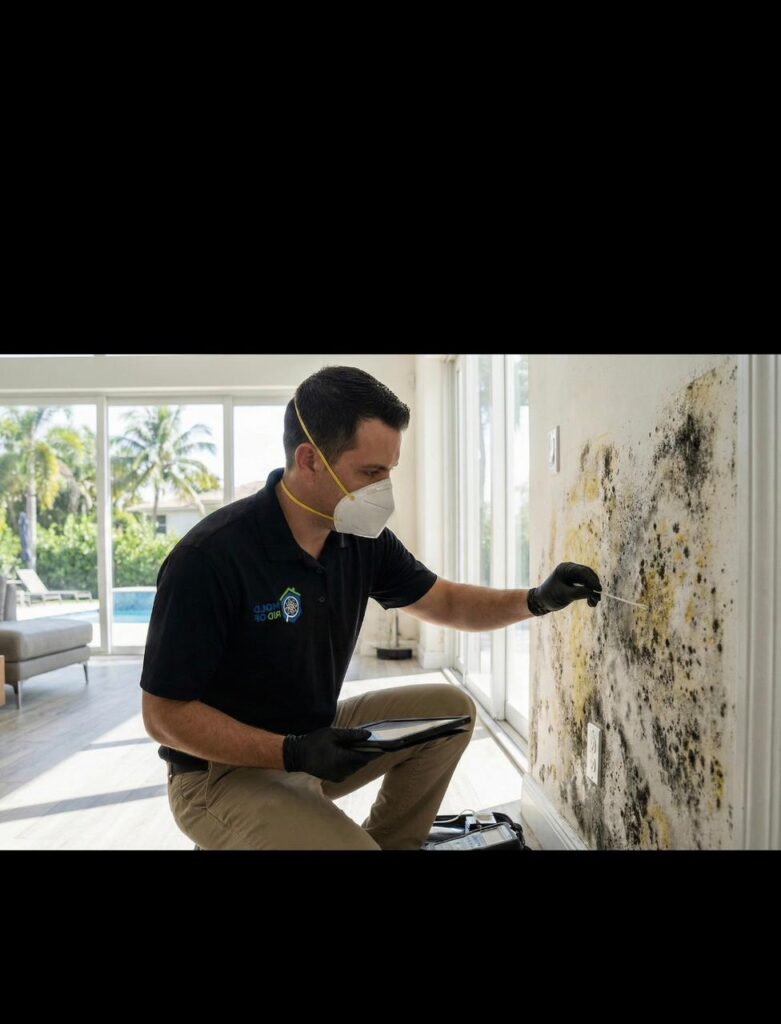
Mold Testing in Palm Bay: What Homeowners in Brevard County Should KnowMold testing can be a valuable tool for homeowners in Palm Bay and across Brevard County, especially when mold is suspected but not clearly visible. With high humidity, frequent rain, and year-round air conditioning, mold often develops quietly behind walls, under floors, or inside HVAC systems. Proper mold testing helps clarify what’s happening inside the home and guides the next steps.This guide explains when mold testing is useful, how it works, what results actually mean, and how Palm Bay homeowners should use testing responsibly.⸻Why Mold Testing Matters in Palm BayPalm Bay homes face constant moisture pressure.Common contributing factors include: • High year-round humidity • Heavy rainfall and storms • AC condensation and drain line issues • Plumbing leaks inside walls • Attics and crawl spaces with limited airflow • Slab foundations that trap moistureMold can begin growing within 24–48 hours after moisture exposure and often remains hidden until odors or health symptoms appear.⸻When Mold Testing Is RecommendedMold testing is most helpful when: • Musty or earthy odors are present without visible mold • Health symptoms worsen indoors • Water damage occurred but mold is not visible • Buying or selling a home • Mold is suspected inside walls or HVAC systems • Documentation is needed for insurance or real estate • Mold-related disputes ariseIf mold is clearly visible, testing is often unnecessary and remediation should not be delayed.⸻When Mold Testing Is Not NecessaryTesting may not be needed when: • Mold is clearly visible and extensive • The moisture source is obvious • Immediate remediation is requiredIn these cases, fixing moisture and removing mold is more important than testing.⸻Types of Mold Testing Used in HomesAir SamplingMeasures airborne mold spores inside and outside the home. Useful for identifying hidden mold and evaluating indoor air quality.Surface SamplingIncludes swab or tape-lift samples from visible growth to confirm mold presence on specific materials.Bulk SamplingTests pieces of building material when removal is already planned.Each method serves a specific purpose depending on the situation.⸻What Mold Testing Can Tell YouMold testing can: • Identify elevated spore levels • Compare indoor and outdoor mold concentrations • Confirm mold presence on surfaces • Support insurance or real estate documentation • Help locate hidden mold sourcesTesting provides guidance but does not fix the problem.⸻What Mold Testing Cannot Tell YouMold testing cannot: • Determine exact health impact • Identify the precise age of mold • Replace moisture detection • Guarantee a mold-free home • Stop mold growthResults must always be interpreted alongside moisture conditions and inspection findings.⸻Mold Testing and Indoor Air QualityElevated airborne mold spores can impact indoor air quality.Possible effects include: • Respiratory irritation • Allergy-like symptoms • Sinus congestion • Headaches • Worsening asthmaChildren, seniors, and individuals with respiratory conditions are more sensitive.⸻Mold Testing and HVAC SystemsHVAC systems are common mold reservoirs in Palm Bay homes.Testing may reveal: • Mold spores circulating through ducts • Contaminated air handlers • Condensation-related mold growth • Distribution of spores throughout the homeHVAC-related mold often affects multiple rooms at once.⸻Mold Testing for Buyers and SellersBuyers • Identify hidden mold before purchase • Avoid unexpected remediation costs • Support negotiation decisionsSellers • Address issues proactively • Reduce closing delays • Provide documentation to buyersMold testing is commonly requested during real estate transactions in Brevard County.⸻Insurance and Mold TestingMold testing can support insurance claims by: • Documenting mold presence • Supporting cause-of-loss analysis • Providing professional reports • Strengthening claim credibilityInsurance coverage depends on the cause of moisture, not test results alone.⸻Why DIY Mold Test Kits Are LimitedDIY test kits often: • Do not account for outdoor mold levels • Produce misleading results • Lack professional interpretation • Miss hidden mold sources • Do not identify moisture problemsProfessional testing includes context, controls, and proper analysis.⸻What Happens After Mold TestingTest results should guide action.Next steps may include: • Moisture source correction • Targeted remediation • HVAC system evaluation • Dehumidification improvements • Follow-up inspectionTesting without corrective action does not solve mold problems.⸻Preventing Mold After TestingPrevention focuses on moisture control.Effective strategies include: • Keeping indoor humidity between 30–50% • Fixing leaks promptly • Maintaining AC systems and drain lines • Using exhaust fans properly • Monitoring humidity regularly • Inspecting after stormsReducing moisture reduces future mold risk.⸻Why Professional Interpretation MattersMold test results must be interpreted correctly.Professional evaluation considers: • Indoor vs. outdoor spore levels • Moisture conditions • Home layout and airflow • HVAC operation • Recent water eventsNumbers alone do not tell the full story.⸻Final ThoughtsMold testing is a useful tool for homeowners in Palm Bay and throughout Brevard County when used appropriately. It helps confirm hidden problems, supports documentation needs, and guides remediation decisions.Testing should always be paired with moisture control and timely corrective action to protect indoor air quality and prevent small issues from becoming costly mold problems.