
Humidity and Mold in Palm Bay: What Homeowners in Brevard County Should Know
If you live in Palm Bay, you’ve felt it — that heavy, sticky air that seems to hang inside the house during summer.
Humidity is part of daily life in Brevard County. Between afternoon thunderstorms, lagoon moisture, hurricane season, and year-round warmth, moisture is always in the air.
What many homeowners don’t realize is that high indoor humidity alone — even without a visible leak — can lead to mold growth.
In Palm Bay homes, managing humidity is just as important as fixing plumbing or roof problems.
Why Palm Bay Homes Struggle With Humidity
Palm Bay may sit slightly inland compared to Satellite Beach or Cocoa Beach, but humidity levels remain high throughout the year.
Homes here face:
- Frequent summer rain
- Warm temperatures year-round
- Slab foundation construction
- Continuous AC use
- Limited natural drying periods
Even when it isn’t raining, outdoor humidity often stays above 70%.
When that humid air enters your home — through doors, windows, attic spaces, or ventilation — it raises indoor moisture levels quickly.
If indoor relative humidity rises above 60%, mold growth becomes much more likely.
How Humidity Alone Can Cause Mold
Mold needs three things:
- Moisture
- Warmth
- Organic material
In Palm Bay homes, warmth and organic material (drywall, wood, dust) are always present.
Humidity provides the missing ingredient.
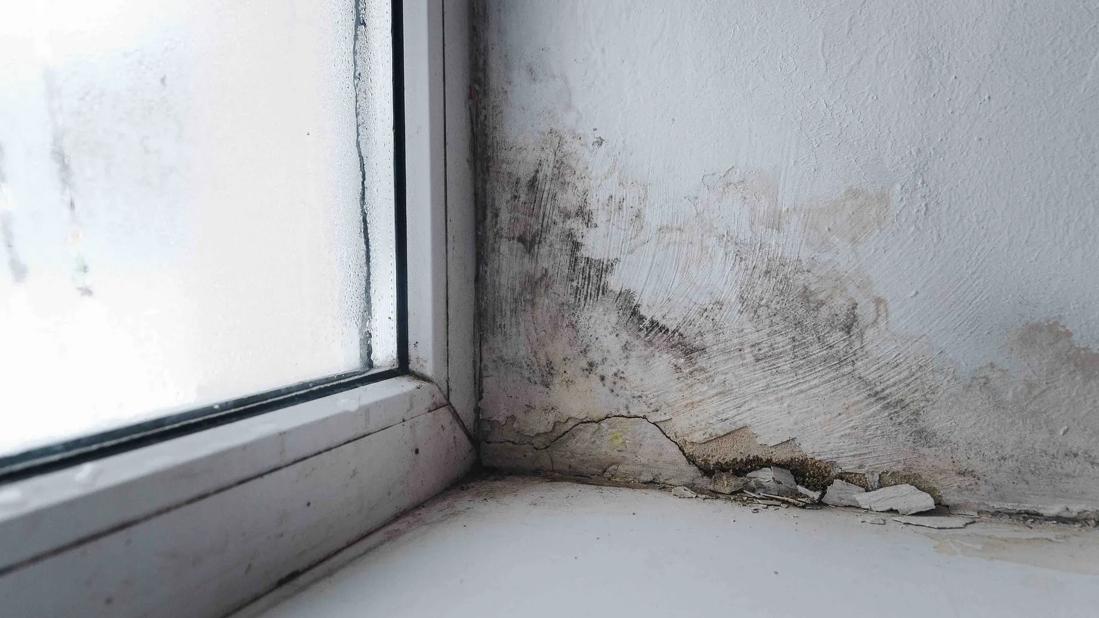
When humid air settles on cooler surfaces — like ceilings, drywall corners, or AC vents — condensation can form.
Repeated condensation, even without standing water, creates conditions where mold can begin growing.
You don’t need a flood. You need consistent moisture.
Common Areas Where Humidity-Driven Mold Appears
In Brevard County homes, humidity-related mold often shows up in specific places.
Ceiling Corners
Warm air rises and collects near the ceiling.
Dark speckling often begins in upper corners of rooms.
Around Air Vents
Cool air hitting humid air can create condensation near supply vents.
Closets
Closets with poor airflow trap warm, moist air.
Behind Furniture
Large items placed tightly against walls reduce air circulation.
Bathroom Ceilings
Even when no leak exists, shower steam increases moisture levels.
In Palm Bay and nearby Rockledge, we frequently see mold appear in rooms with limited ventilation rather than in areas with obvious leaks.
The Role of Your HVAC System
In Florida, air conditioning does more than cool the air — it removes moisture.
If your HVAC system isn’t functioning properly, humidity rises.
Common problems include:
- Oversized AC units that short-cycle
- Dirty evaporator coils
- Clogged condensate drain lines
- Turning the AC off during humid months
- Thermostats set too high
When the AC runs long enough, it dehumidifies effectively.
If it shuts off too quickly, moisture remains in the air.
Proper system sizing and maintenance are critical in Palm Bay homes.
Slab Foundations and Moisture
Most Palm Bay homes are built on concrete slabs.
While slab construction is durable, it can contribute to indoor moisture issues.
Moisture may:
- Wick upward from small plumbing leaks
- Remain trapped under laminate flooring
- Accumulate near baseboards
- Create damp conditions behind drywall
Humidity inside the home combined with slab moisture can create persistent mold growth along lower walls.
Moisture testing helps determine whether humidity alone is the issue or if hidden dampness exists.
Signs Humidity May Be Causing Mold
You may notice:
- Musty odors without visible leaks
- Recurring mold in the same area
- Condensation on windows
- Warped baseboards
- Peeling paint
- Increased indoor stuffiness
In Merritt Island and Titusville homes, we often find that persistent humidity — not a specific leak — is the root cause.
Odor is often the earliest warning sign.
Why Palm Bay’s Climate Makes Drying Difficult
In dry states, indoor humidity often drops naturally overnight.
In Brevard County:
- Outdoor humidity remains elevated
- Afternoon storms add moisture daily
- Warm temperatures accelerate mold growth
- Attics retain heat and moisture
Even if you open windows, outdoor humidity may be higher than indoor levels.
Natural ventilation rarely solves humidity problems here.
Mechanical moisture control is necessary.
What a Humidity-Focused Mold Inspection Includes
If humidity-related mold is suspected, inspection focuses on environmental balance.
A thorough evaluation typically includes:
Visual Assessment
Checking ceilings, walls, baseboards, closets, attic spaces, and HVAC systems.
Moisture Detection
Using moisture meters to rule out hidden leaks.
Humidity Measurement
Assessing indoor relative humidity levels in multiple areas.
Attic Inspection
Evaluating ventilation and insulation conditions.
HVAC Review
Checking system performance and drain lines.
Brevard Mold Inspections & Removal approaches humidity-driven mold issues with a focus on identifying environmental imbalance.
The solution is often stabilization rather than demolition.
How Humidity-Related Mold Is Properly Addressed
If mold is confirmed, remediation may involve:
- Cleaning affected surfaces
- Removing damaged drywall if necessary
- Improving ventilation
- Servicing HVAC systems
- Installing dehumidifiers
- Sealing exterior gaps
Lowering indoor humidity to between 45% and 55% significantly reduces mold regrowth risk.
In Florida’s climate, maintaining consistent humidity control is ongoing.
Preventing Humidity-Driven Mold in Palm Bay
Homeowners can take practical steps:
- Use a digital hygrometer to monitor indoor humidity
- Keep humidity below 55%
- Service HVAC systems annually
- Flush condensate drain lines regularly
- Avoid turning off AC during humid months
- Use bathroom exhaust fans consistently
- Keep air circulating in closets and tight spaces
After hurricanes affecting Cocoa or Satellite Beach, indoor humidity may spike due to storm moisture.
Checking humidity levels early prevents long-term issues.
Why Local Experience in Brevard County Matters
Humidity-related mold in Florida behaves differently than in dry climates.
Palm Bay homes face:
- Lagoon-influenced humidity
- Hurricane-related moisture
- Slab foundation challenges
- Warm attic environments
- Continuous AC operation
An inspector familiar with Brevard County understands how these environmental factors interact.
Brevard Mold Inspections & Removal works throughout Palm Bay, Rockledge, Melbourne, Merritt Island, Titusville, Cocoa Beach, and Satellite Beach. Local knowledge ensures recommendations reflect Florida’s climate realities.
A Practical, Balanced Perspective
Humidity and mold in Palm Bay go hand in hand.
But mold caused by humidity alone is manageable with proper moisture control.
If you’ve noticed recurring mold, musty odors, or elevated indoor humidity, a professional inspection can determine whether environmental imbalance or hidden moisture is the cause.
In Brevard County’s humid climate, consistent moisture management is the foundation of mold prevention.
Control humidity, maintain your systems, and small problems stay small.