
Mold in Attics in Cocoa Beach: What Homeowners in Brevard County Should Know
If you own a home in Cocoa Beach, your attic works harder than you probably realize.
It sits directly under a roof exposed to ocean winds, salt air, intense sun, heavy summer storms, and hurricane season. While most homeowners rarely step into their attic, it’s one of the most common areas where we find mold in Brevard County homes.
Attic mold in Cocoa Beach isn’t unusual. But understanding why it happens — and how to stop it — makes all the difference.
In Florida’s coastal climate, attic mold is almost always a moisture and ventilation issue.
Why Attics in Cocoa Beach Are High-Risk
Cocoa Beach homes deal with environmental pressure year-round:
- Constant ocean humidity
- Wind-driven rain
- Salt-air roof deterioration
- High attic temperatures
- Hurricane-related stress
Attics naturally trap heat. When warm, humid air rises from inside the home and meets cooler roof decking, condensation can form.
Add storm-driven rain entering through vents or minor roof gaps, and moisture builds quickly.
Unlike interior rooms, attics can stay damp for long periods without obvious signs below.
The Most Common Causes of Attic Mold
In Cocoa Beach and nearby areas like Satellite Beach and Cape Canaveral, attic mold usually traces back to one of these issues:
Poor Ventilation
Attics require balanced airflow between intake (soffit vents) and exhaust (ridge or roof vents).
If vents are blocked or improperly installed, humid air becomes trapped.
Hurricane-Driven Rain
Strong winds push rain into ridge vents or beneath shingles.
Even small amounts of water can soak insulation.
Roof Leaks
Salt air accelerates deterioration of flashing and fasteners.
Minor leaks may go unnoticed until mold develops.
Bathroom Exhaust Fans Venting Into the Attic
When humid air from showers vents into the attic instead of outside, moisture accumulates rapidly.
AC Duct Condensation
Ductwork in hot attics can sweat if insulation is compromised.
Each of these sources introduces moisture into an already humid environment.
Signs You May Have Attic Mold
Because most homeowners rarely check their attic, signs often appear elsewhere first.
Watch for:
- Musty odors inside the home
- Repeated bathroom ceiling spots
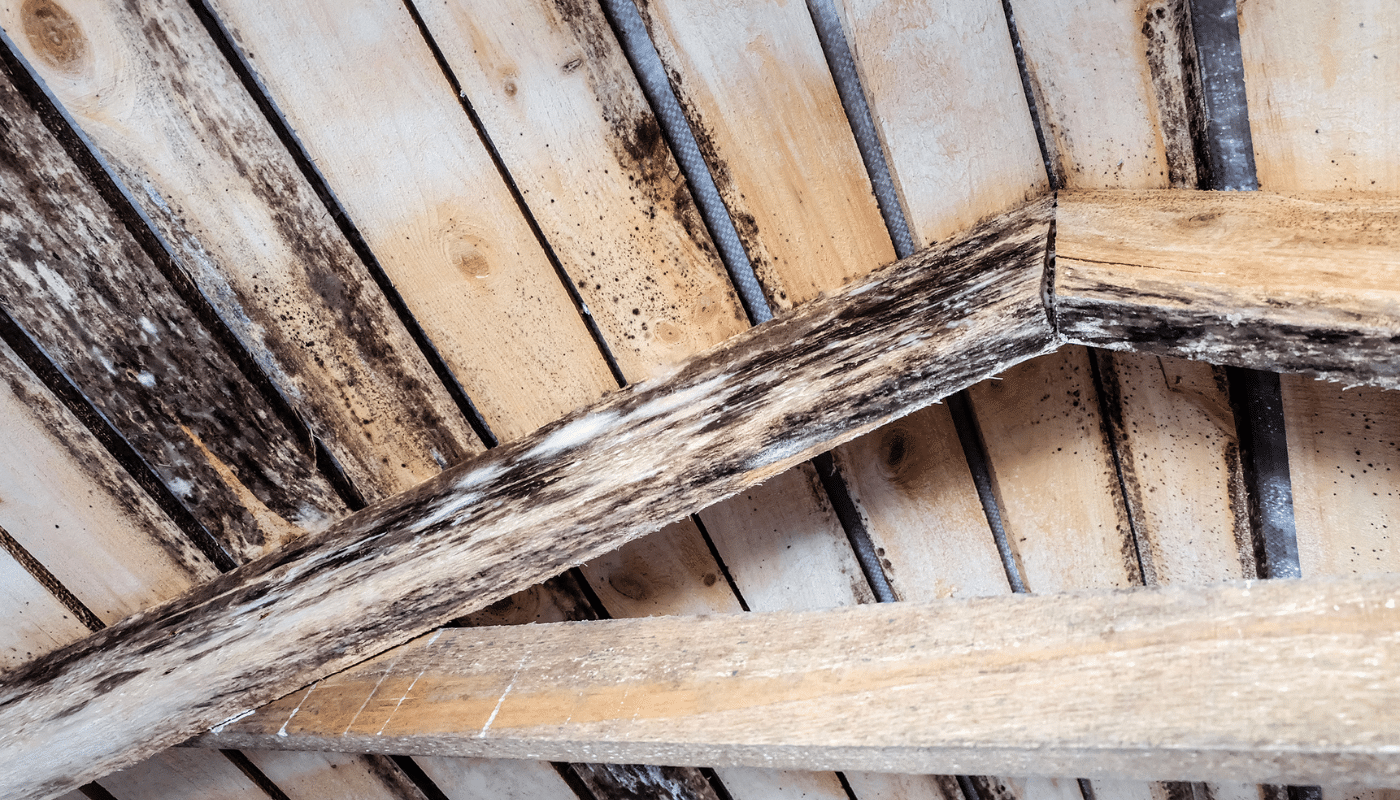
- Dark staining on roof decking
- Damp or compacted attic insulation
- Increased indoor humidity
- Mold returning after cleaning
In Merritt Island and Rockledge homes, recurring interior mold often leads us back to attic ventilation problems.
Odor is frequently the first clue.
Why Cocoa Beach’s Climate Makes Drying Difficult
In dry climates, attic moisture may evaporate naturally.
In Brevard County, humidity slows that process.
Cocoa Beach attics experience:
- Elevated outdoor humidity
- Frequent rain events
- Limited dry periods
- Warm temperatures year-round
Wet insulation can hold moisture against roof decking for weeks.
Wood framing absorbs moisture as well.
Over time, mold spreads across sheathing and rafters.
Why DIY Attic Mold Cleaning Often Fails
Homeowners sometimes attempt to spray visible attic mold with bleach or antimicrobial products.
This approach has limitations:
- Bleach does not penetrate wood effectively
- Spraying adds additional moisture
- Ventilation problems remain uncorrected
- Disturbing mold releases spores
Without fixing the moisture source, mold frequently returns.
In Palm Bay and Titusville homes, we often see attic mold reappear because ventilation imbalance was never corrected.
Proper remediation focuses on both removal and prevention.
What a Professional Attic Inspection Includes
If attic mold is suspected in your Cocoa Beach home, inspection should focus on moisture patterns.
A thorough evaluation typically includes:
Visual Assessment
Examining roof decking, rafters, insulation, and vent systems.
Moisture Measurement
Checking wood moisture content and insulation dampness.
Ventilation Analysis
Assessing airflow balance between intake and exhaust vents.
Roof Evaluation
Looking for flashing damage, lifted shingles, or storm-related intrusion.
Humidity Measurement
Assessing overall indoor and attic moisture levels.
Brevard Mold Inspections & Removal approaches attic inspections with attention to both structural and environmental factors.
Understanding the cause is essential.
How Attic Mold Is Properly Remediated
If mold is confirmed, remediation typically includes:
- Repairing roof leaks
- Improving ventilation balance
- Removing wet insulation
- Cleaning affected roof decking
- Installing proper vapor barriers if needed
- Dehumidifying the structure
In Florida’s humid climate, drying must be verified before insulation replacement.
Encapsulation or ventilation upgrades may be recommended depending on attic design.
Long-term moisture control is the goal.
Preventing Attic Mold in Cocoa Beach
Prevention requires ongoing maintenance.
Homeowners can:
- Inspect attics annually
- Check insulation after storms
- Ensure bathroom fans vent outdoors
- Keep soffit vents clear
- Repair roof damage promptly
- Maintain indoor humidity below 55%
- Service HVAC systems regularly
After hurricanes affecting Satellite Beach or Merritt Island, early attic checks reduce hidden moisture risks.
Small storm intrusions can lead to larger problems if ignored.
Why Local Experience Matters in Brevard County
Attic mold in Florida behaves differently than in dry states.
Cocoa Beach homes face:
- Direct ocean humidity
- Salt-air roof deterioration
- Hurricane wind pressure
- Slab foundation moisture
- Continuous AC operation
An inspector familiar with Brevard County understands how these factors interact.
Brevard Mold Inspections & Removal works throughout Cocoa Beach, Satellite Beach, Merritt Island, Rockledge, Melbourne, Palm Bay, and Titusville. Local experience ensures realistic, climate-appropriate recommendations.
A Practical, Proactive Approach
Mold in attics in Cocoa Beach is manageable when addressed early.
The key is identifying moisture sources, correcting ventilation issues, and ensuring proper drying.
If you’ve noticed musty odors, ceiling stains, or recent storm exposure, an attic inspection can provide clarity.
In Brevard County’s humid coastal climate, what happens above your ceiling often affects the rest of your home.
Stay proactive, monitor moisture, and address issues early.