
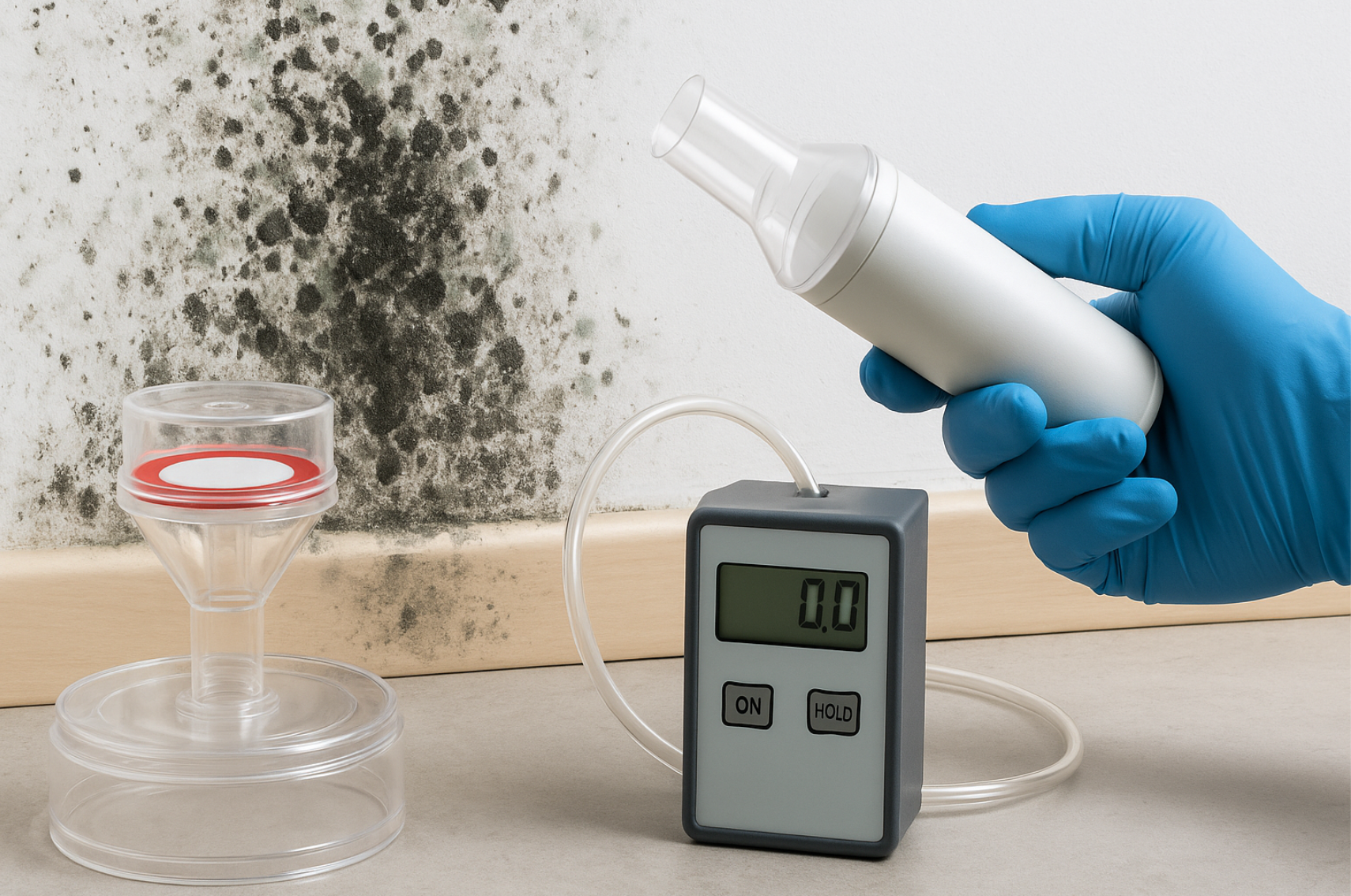
Mold Testing in Titusville: What Homeowners in Brevard County Should Know
If you’re considering mold testing for your Titusville home, you’re probably dealing with one of three things:
A persistent musty odor.
Visible mold that keeps coming back.
Or a recent water event you want documented properly.
In Brevard County, mold is common. Between lagoon humidity, heavy summer storms, hurricane season, and year-round air conditioning, moisture problems are simply part of homeownership.
But mold testing isn’t something every situation requires. Understanding when testing helps — and what it actually tells you — makes a big difference.
What Mold Testing Is (And What It Isn’t)
Mold testing is a tool used to:
- Identify mold species
- Measure airborne spore levels
- Compare indoor air to outdoor air
- Document conditions for real estate or insurance purposes
What mold testing does not do is fix the problem.
Testing provides data. Moisture correction and remediation provide results.
In Titusville homes, testing is most useful when the situation is unclear or documentation is required.
When Mold Testing Makes Sense in Titusville
There are specific scenarios where testing is helpful.
Persistent Odor Without Visible Mold
If your home smells musty but no mold is visible, air sampling can determine whether indoor spore levels are elevated compared to outside.
Recent Water Damage
After storms affecting Rockledge, Merritt Island, or Titusville, testing can help determine whether mold has developed in hidden areas.
Real Estate Transactions
Buyers and sellers often request mold testing during inspections.
Health Concerns
If occupants report ongoing indoor air discomfort, testing may provide useful baseline information.
Clearance After Remediation
Post-remediation testing verifies that indoor spore levels have returned to normal background ranges.
Testing provides clarity when visual inspection alone isn’t enough.
Common Moisture Issues in Titusville Homes
Before testing, it’s important to understand what typically causes mold in North Brevard.
Titusville homes frequently experience:
- AC drain line clogs
- Attic condensation from poor ventilation
- Roof leaks after hurricanes
- Plumbing leaks in slab walls
- High indoor humidity
- Window seal deterioration
Testing identifies the mold.
Inspection identifies the moisture.
Both are important, but moisture control is always the priority.
Types of Mold Testing
There are several methods used in Titusville homes.
Air Sampling
Air samples are collected inside the home and compared to outdoor samples.
This helps determine whether indoor spore levels are elevated.
Air sampling is often used when mold is suspected but not visible.
Surface Sampling
Swab or tape samples are collected from visible growth.
This identifies the specific mold species present.
Surface sampling confirms type — but does not measure airborne exposure.
Bulk Sampling
In some cases, pieces of contaminated material are sent to a lab for analysis.
Each method serves a different purpose.
What Mold Testing Results Mean
Lab reports typically provide:
- Mold species identified
- Spore counts per cubic meter (for air samples)
- Comparison between indoor and outdoor levels
- Interpretation of whether levels are normal or elevated
In Titusville, outdoor mold spore levels are naturally high due to humidity and vegetation.
Indoor air should generally reflect similar or lower levels than outdoor air.
If indoor levels significantly exceed outdoor levels, active indoor growth may be present.
Understanding results requires local context.
Why Outdoor Comparison Matters in Brevard County
Florida’s climate naturally supports mold growth outdoors.
In Titusville, Satellite Beach, and Palm Bay, outdoor air already contains mold spores.
That’s why testing compares indoor samples to outdoor samples taken the same day.
If indoor spore levels are higher than outdoor levels, it suggests indoor amplification.
Without an outdoor comparison, results lack context.
The Role of Moisture Mapping Alongside Testing
Testing alone cannot find leaks.
That’s why professional inspections include:
- Moisture meters
- Infrared imaging
- Humidity measurements
- Attic inspections
- HVAC evaluations
In Titusville homes, attic condensation and AC-related moisture are common hidden sources.
Brevard Mold Inspections & Removal pairs testing with detailed moisture assessment to identify root causes.
Data without moisture correction doesn’t solve the problem.
Why DIY Mold Test Kits Are Limited
Store-bought mold test kits often create confusion.
Common issues include:
- No outdoor comparison sample
- Inability to quantify spore levels
- Lack of professional interpretation
- False positives due to normal background mold
Because mold spores are naturally present in Titusville’s outdoor air, DIY kits often show growth even when indoor conditions are normal.
Professional testing provides controlled, comparable results.
What Happens After Mold Testing?
If testing confirms elevated indoor spore levels, the next step is identifying the moisture source.
Remediation may include:
- Correcting leaks
- Improving ventilation
- Cleaning contaminated materials
- Removing damaged drywall or insulation
- HEPA air filtration
- Thorough drying
If testing shows normal indoor levels, moisture prevention strategies may still be recommended.
Testing informs the plan — it doesn’t replace inspection.
Preventing Mold in Titusville Homes
Whether you test or not, prevention remains the goal.
Homeowners can:
- Maintain indoor humidity between 45%–55%
- Service HVAC systems annually
- Flush AC drain lines regularly
- Inspect attics after storms
- Repair roof damage promptly
- Seal windows and sliding doors
- Address plumbing leaks immediately
After hurricanes affecting Cocoa Beach or Rockledge, early attic checks reduce hidden mold risk.
In Brevard County, moisture control is ongoing.
Why Local Experience Matters
Mold testing in Florida differs from testing in dry climates.
Titusville homes face:
- Lagoon-driven humidity
- Hurricane-related moisture intrusion
- Slab construction challenges
- Warm attic environments
- Continuous AC operation
An inspector familiar with Brevard County understands what “normal” mold levels look like here — and what indicates a problem.
Brevard Mold Inspections & Removal works throughout Titusville, Rockledge, Melbourne, Palm Bay, Merritt Island, Satellite Beach, and surrounding communities. Local knowledge ensures test results are interpreted within Florida’s environmental context.
A Clear, Practical Perspective
Mold testing in Titusville is a useful tool when applied appropriately.
It provides clarity, documentation, and data — especially when moisture sources are unclear.
But the real solution always involves moisture control.
If you’re unsure whether mold testing is necessary, a professional inspection can help determine the right approach.
In Brevard County’s humid environment, understanding moisture is the key to protecting your home.