Hidden Mold Problems in Viera: What Homeowners in Brevard County Should Know
Viera is known for newer construction, well-planned neighborhoods, and modern homes—but that doesn’t make it immune to mold. In fact, hidden mold problems are surprisingly common in Viera, precisely because many homes look clean, dry, and well maintained on the surface. In Brevard County’s humid environment, mold often grows out of sight, quietly feeding on moisture long before homeowners realize there’s an issue.
Hidden mold doesn’t usually announce itself with obvious black patches on walls. Instead, it develops behind walls, under floors, inside attics, or around HVAC systems—places most homeowners never see. Understanding how hidden mold forms in Viera homes, why it’s easy to miss, and what warning signs to watch for can help prevent long-term damage and repeated problems.
Why Hidden Mold Is So Common in Viera Homes
Many homeowners assume mold is mainly an issue in older houses. In reality, newer homes in Viera can be more vulnerable to hidden mold because they are tightly sealed for energy efficiency. While this improves comfort, it can also trap moisture indoors if ventilation and drainage aren’t perfectly balanced.
Brevard County’s climate adds constant pressure:
- High humidity most of the year
- Heavy seasonal rain
- Warm temperatures that slow drying
- Homes kept closed and air-conditioned
When moisture enters a tightly sealed home and can’t escape, it often ends up in concealed spaces.
How Hidden Mold Usually Starts
Hidden mold doesn’t start suddenly. It almost always begins with moisture that goes unnoticed.
Common triggers in Viera homes include:
- Small plumbing leaks inside walls
- AC condensate drain issues
- Minor roof leaks after heavy rain
- Condensation around ductwork
- Moisture trapped beneath slab foundations
Because these issues aren’t visible, mold has time to grow and spread before any surface signs appear.
The Most Common Hidden Mold Locations in Viera Homes
Hidden mold tends to develop in predictable places—areas where moisture can linger without airflow.
Frequently affected areas include:
- Behind drywall in bathrooms and kitchens
- Under laminate or vinyl flooring on slab foundations
- Inside attics, especially near roof penetrations
- Around HVAC air handlers and ductwork
- Behind cabinets and vanities
- Inside wall cavities near exterior walls
In many cases, mold is discovered only during renovations, AC servicing, or professional inspections.
Why Slab Foundations Contribute to Hidden Mold
Most Viera homes are built on slab foundations, which behave differently than raised foundations. After heavy rain, moisture can remain trapped beneath the slab and slowly migrate upward.
This can lead to:
- Damp subfloor conditions
- Flooring adhesives breaking down
- Mold growth beneath flooring materials
Because there’s no crawl space to inspect, moisture problems under slabs often go unnoticed until mold odors or flooring damage appear.
Hidden Mold and HVAC Systems
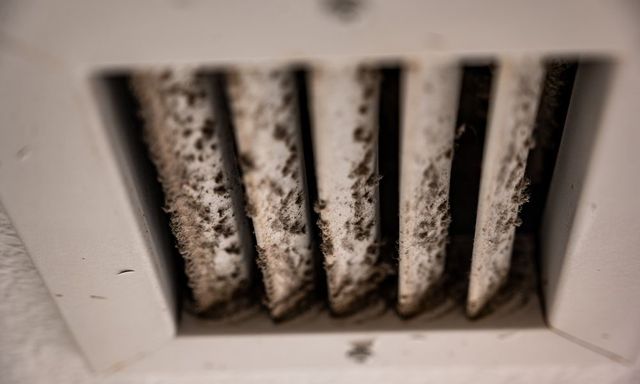
HVAC systems are one of the most common hidden mold sources in Brevard County homes. In Viera, AC systems run much of the year, constantly removing humidity and producing condensation.
Hidden mold often develops:
- Inside air handlers
- On evaporator coils
- In condensate drain pans
- Inside duct insulation
When mold grows in HVAC systems, spores and odors can circulate throughout the home—even when no mold is visible in living spaces.
Why Attics Are a Major Hidden Mold Risk
Attics are another frequent source of hidden mold in Viera homes. Hot attic temperatures combined with humid air can cause condensation on roof decking and framing.
Common attic mold triggers include:
- Bathroom fans venting into attics
- Poor attic ventilation
- Small roof leaks after storms
- Moist air escaping from living spaces
Because attics are rarely checked, mold can grow there for long periods without detection.
Signs Hidden Mold May Be Present
Hidden mold often reveals itself indirectly. Homeowners may notice changes without immediately connecting them to mold.
Common warning signs include:
- Persistent musty or earthy odors
- Odors stronger when AC runs
- Increased indoor humidity
- Bubbling paint or peeling drywall
- Flooring that feels warped or soft
- Discomfort that improves when leaving the home
These signs don’t always mean mold is present—but they do indicate moisture problems that deserve attention.
Why Cleaning Visible Mold Doesn’t Fix Hidden Mold
Some homeowners clean small visible mold spots and assume the problem is resolved. Unfortunately, visible mold is often just the tip of the iceberg.
Surface cleaning fails because:
- Hidden moisture remains
- Mold roots stay embedded in materials
- Growth continues behind walls or under floors
- Mold spreads to new areas
In humid environments like Viera, hidden mold will continue growing until moisture conditions are corrected.
Why DIY Efforts Often Miss Hidden Mold
DIY mold cleanup usually focuses on what can be seen and reached. Hidden mold problems require specialized tools and experience to identify.
DIY approaches often miss:
- Moisture inside walls or slabs
- Mold in ductwork or insulation
- Attic condensation problems
- Slow plumbing leaks
Without identifying the moisture source, mold almost always returns.
How Professional Mold Inspections Find Hidden Problems
A professional mold inspection focuses on conditions, not just visible growth. The goal is to understand where moisture is present and where mold is likely developing.
Inspections typically include:
- Moisture detection in walls, floors, and ceilings
- Evaluation of HVAC systems
- Attic and insulation inspections
- Identification of past water damage
- Targeted testing when appropriate
This approach helps confirm whether hidden mold is present—or likely to develop.
Brevard Mold Inspections & Removal works with Viera homeowners to uncover hidden moisture and mold issues early, before they turn into widespread damage.
Why Hidden Mold Often Becomes a Repeat Problem
Hidden mold is one of the main reasons homeowners experience recurring mold issues. The visible mold may be removed, but the hidden source remains.
Repeat mold problems often stem from:
- Unresolved moisture under floors
- HVAC condensation issues
- Attic ventilation problems
- Leaks inside walls
Until these issues are addressed, mold is likely to return—sometimes in new locations.
Preventing Hidden Mold in Viera Homes
Prevention focuses on moisture awareness, not constant worry.
Effective prevention steps include:
- Regular AC maintenance and drain line checks
- Monitoring indoor humidity
- Inspecting attics after heavy rain
- Addressing small leaks immediately
- Paying attention to odors and airflow changes
Early detection is far easier than large-scale remediation.
Why Local Brevard County Experience Matters
Hidden mold behaves differently in Florida than in drier regions. Viera homes face unique challenges related to humidity, slab construction, and year-round AC use.
Local professionals understand:
- Where hidden mold typically develops in Brevard County homes
- How moisture moves through slabs and attics
- How HVAC systems contribute to hidden growth
Brevard Mold Inspections & Removal brings that local experience into every inspection, helping homeowners get clear answers instead of guesses.
A Calm, Practical Takeaway for Homeowners
Hidden mold problems in Viera are common—but they’re also manageable when caught early. Most hidden mold issues start with moisture that quietly lingers where homeowners can’t see it.
If your home has musty odors, recurring mold, unexplained moisture, or hasn’t been inspected in years, a professional evaluation can provide clarity. Understanding what’s happening behind the walls and under the floors is one of the most effective ways to protect your home and avoid ongoing mold problems in Brevard County.