

Mold Testing in Palm Bay: What Homeowners in Brevard County Should Know
Mold testing is one of the most misunderstood steps homeowners consider when they’re worried about mold in their Palm Bay home. Some people think testing will automatically tell them how dangerous a situation is. Others assume testing is always required before anything can be done. In reality, mold testing is a useful tool when used for the right reasons, and unnecessary when used the wrong way.
In Palm Bay and throughout Brevard County, mold issues are strongly tied to humidity, storms, slab foundations, and constant air conditioning use. Mold testing helps answer specific questions, but it’s only one part of understanding what’s happening inside a home. Knowing when mold testing makes sense, what it can and cannot tell you, and how it fits into the bigger picture helps homeowners make calm, informed decisions.
What Mold Testing Actually Is
Mold testing is the process of collecting samples to evaluate mold conditions inside a home. These samples are analyzed by a laboratory to identify types of mold present and relative levels.
Testing does not “find” mold on its own. It supports what’s discovered during a visual and moisture inspection. Without understanding moisture conditions, test results alone can be misleading.
In Palm Bay homes, mold testing is most effective when paired with a thorough inspection that looks for humidity issues, leaks, and hidden moisture.
Common Reasons Homeowners Request Mold Testing
Many Palm Bay homeowners request mold testing when they smell musty odors but don’t see visible mold. Others want testing after water damage or storms to confirm whether mold has developed.
Mold testing is also common during real estate transactions. Buyers may want documentation of indoor conditions, and sellers may want clarity before closing.
Some homeowners request testing when mold keeps returning after cleaning or when certain rooms feel damp despite normal AC operation.
In each case, testing is meant to answer a specific question, not replace inspection or remediation.
Types of Mold Testing Commonly Used
Air sampling is one of the most common methods. Air samples are collected inside the home and sometimes outdoors for comparison. These samples help identify elevated mold levels or unusual indoor conditions.
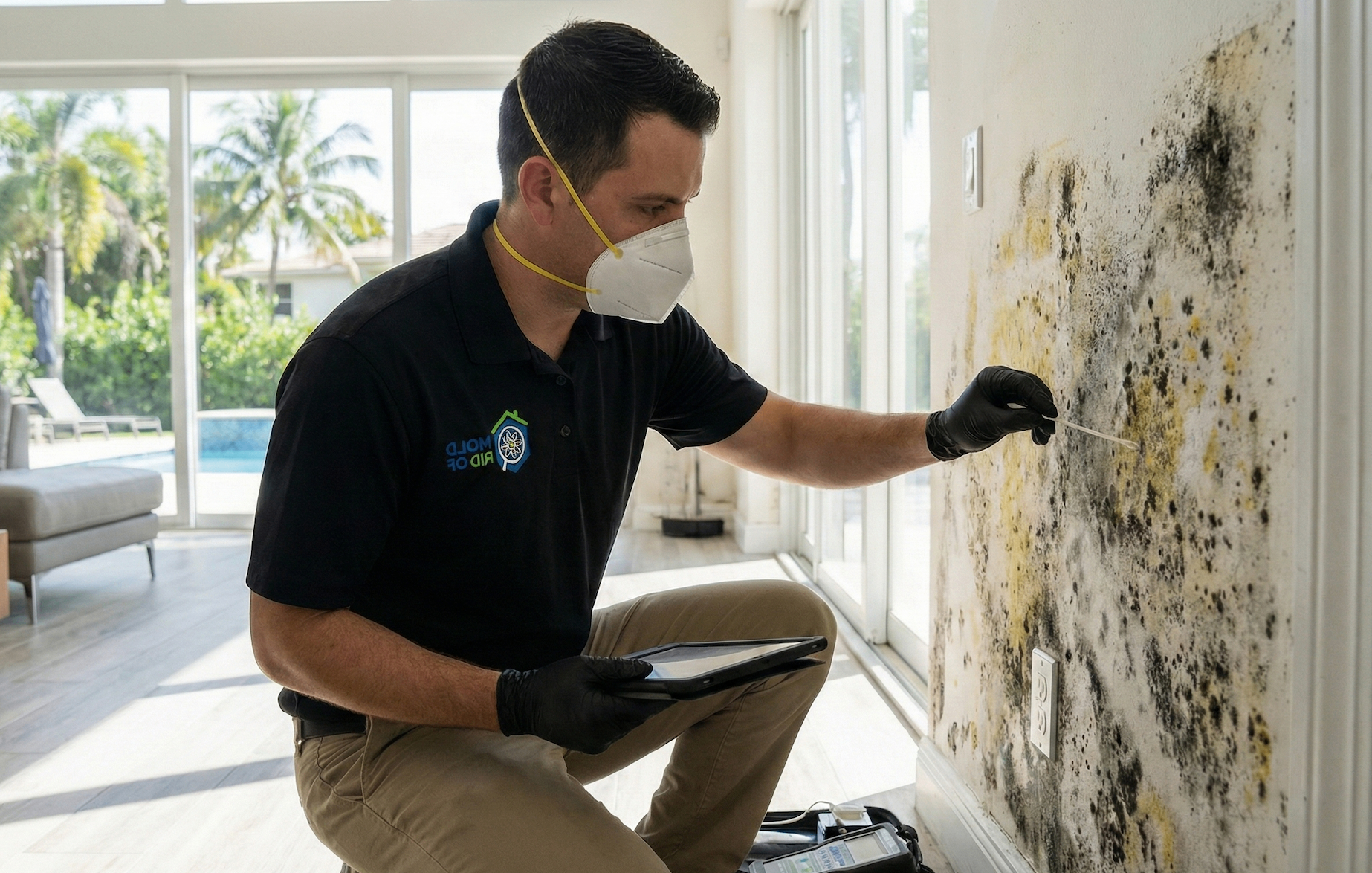
Surface sampling involves collecting material from visible mold growth or suspected areas. This helps confirm whether a substance is mold and supports documentation.
In Palm Bay homes, air sampling is often used when mold is suspected but hidden, while surface sampling is used when growth is visible but homeowners want confirmation.
What Mold Testing Can Tell You
Mold testing can show whether indoor mold levels are elevated compared to outdoor conditions. It can also identify general mold categories present in the home.
Testing can support decisions about next steps and provide documentation for real estate, insurance, or personal records.
What testing does not do is explain why mold is present. It also does not determine how far mold has spread inside walls or building materials. Moisture evaluation is still required.
What Mold Testing Cannot Do
Mold testing cannot determine whether a home is “safe” or “unsafe.” It does not diagnose health conditions or predict how individuals may react to mold.
Testing also cannot replace fixing moisture problems. Even perfect test results don’t prevent mold if humidity, leaks, or condensation remain unresolved.
In Florida homes, focusing only on testing without addressing moisture often leads to repeat issues.
When Mold Testing Is Most Helpful
Mold testing is especially useful when mold is suspected but not visible. Persistent odors, unexplained humidity issues, or discomfort inside the home are common reasons.
Testing is also helpful for documentation after water damage or storms, especially when homeowners want confirmation that conditions have stabilized.
During home sales or purchases, testing provides neutral information that helps all parties move forward with confidence.
In Palm Bay, testing is often used to confirm conditions in HVAC systems, attics, and hidden areas.
When Mold Testing Is Often Unnecessary
When visible mold growth is clearly present and the moisture source is obvious, testing is often not required. The presence of mold already indicates a moisture problem that needs correction.
Testing also adds little value if it’s done without a proper inspection. Numbers alone don’t explain what repairs or remediation are actually needed.
In many Palm Bay homes, homeowners benefit more from identifying moisture sources than from collecting samples.
The Role of Moisture in Mold Testing Results
Moisture conditions heavily influence mold test results. High indoor humidity, active leaks, or condensation can cause mold levels to fluctuate.
If moisture issues aren’t addressed, test results may change over time and lead to confusion. This is why inspections focus first on moisture detection.
In slab foundation homes common in Palm Bay, moisture movement is often hidden, making moisture evaluation critical alongside testing.
Professional Mold Inspection and Testing Together
A professional approach combines inspection and testing when appropriate. The inspection identifies moisture sources, visible growth, and building conditions.
Testing is then used strategically to support findings, document conditions, or investigate hidden concerns.
This combined approach provides clarity instead of isolated data points.
Mold Testing and HVAC Systems in Palm Bay
HVAC systems are a frequent focus of mold testing in Palm Bay homes. Condensation inside air handlers, drain pans, and ductwork can support mold growth that spreads through the system.
Air sampling near vents or inside HVAC areas helps evaluate whether the system is contributing to indoor mold conditions.
Because AC systems run most of the year in Brevard County, HVAC-related mold testing is common and often revealing.
After Testing: What Comes Next
Test results should always be reviewed alongside inspection findings. If mold is confirmed, the next step is identifying and correcting moisture sources.
In some cases, cleaning or remediation may be recommended. In others, improving ventilation, fixing leaks, or adjusting HVAC performance may be enough.
Testing is a decision-making tool, not a solution by itself.
Why Local Experience in Brevard County Matters
Mold testing in Palm Bay must be interpreted with local climate in mind. Coastal humidity, frequent storms, slab foundations, and year-round AC use all affect results.
Local experience means understanding what “normal” looks like for this area and recognizing when results indicate a real issue versus typical Florida conditions.
Professionals familiar with Brevard County know how to use testing appropriately rather than relying on it blindly.
A Calm, Practical Takeaway
Mold testing can be helpful, but only when used for the right reasons and paired with proper inspection. It’s not a shortcut or a guarantee, and it’s not always necessary.
If you’re dealing with musty odors, past water damage, recurring mold, or uncertainty about indoor conditions, testing may provide helpful information. The key is understanding what question you’re trying to answer.
Homeowners throughout Brevard County benefit from clear guidance rather than assumptions. Brevard Mold Inspections & Removal helps homeowners determine when mold testing makes sense, how to interpret results, and what practical steps to take next.
When used correctly, mold testing brings clarity. When used alone, it often brings confusion. The difference lies in experience and context.