
Black Mold in Merritt Island: What Homeowners in Brevard County Should Know
Black mold is one of the most alarming terms a homeowner can hear, especially in Merritt Island where humidity, storms, and coastal moisture are part of everyday life. Homeowners often discover dark mold growth on a wall, ceiling, or near an AC vent and immediately worry about how serious the situation might be. While the term “black mold” is widely used, the real issue isn’t the color. It’s the moisture conditions that allowed mold to grow in the first place.
In Merritt Island and across Brevard County, black mold concerns are common because homes are constantly exposed to high humidity, heavy rain, and salt air. Understanding what black mold actually means, where it usually appears, and how it should be handled helps homeowners respond calmly and correctly.
What People Mean by “Black Mold”
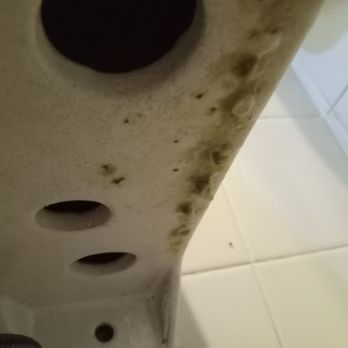
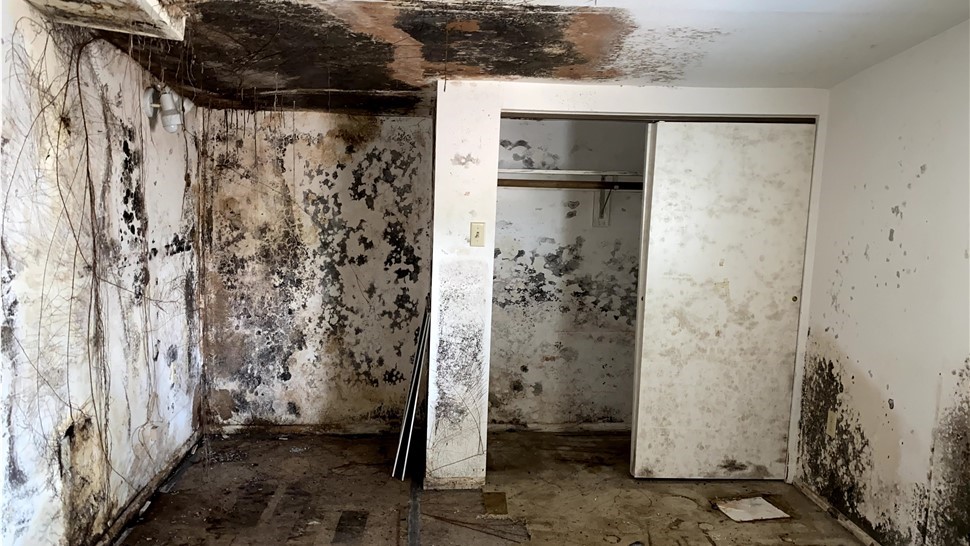
When homeowners say “black mold,” they are usually referring to dark-colored mold growth they can see. Many different molds appear black or very dark green, and color alone does not identify the type or severity of mold.
What dark mold does tell you is that moisture has been present long enough for mold to grow. In Merritt Island homes, this often means humidity, condensation, leaks, or storm-related moisture has affected building materials.
The focus should always be on why the mold appeared, not just what it looks like.
Why Black Mold Is Common in Merritt Island Homes
Merritt Island’s location between the Indian River Lagoon and the Banana River creates constant moisture pressure on homes. Even on dry days, the air carries high humidity that slows drying inside buildings.
Storms and tropical systems add another layer of risk. Wind-driven rain can enter through roofs, windows, doors, and small exterior openings without causing immediate visible damage. Moisture often reaches wall cavities, attics, and insulation before homeowners notice anything wrong.
Air conditioning systems also play a major role. AC units remove humidity, but clogged drain lines, overflowing pans, or duct condensation can introduce moisture into walls and ceilings. Slab foundations, common throughout Brevard County, can allow moisture to migrate upward after heavy rain.
All of these factors make Merritt Island homes especially vulnerable to dark mold growth.
Common Places Black Mold Appears
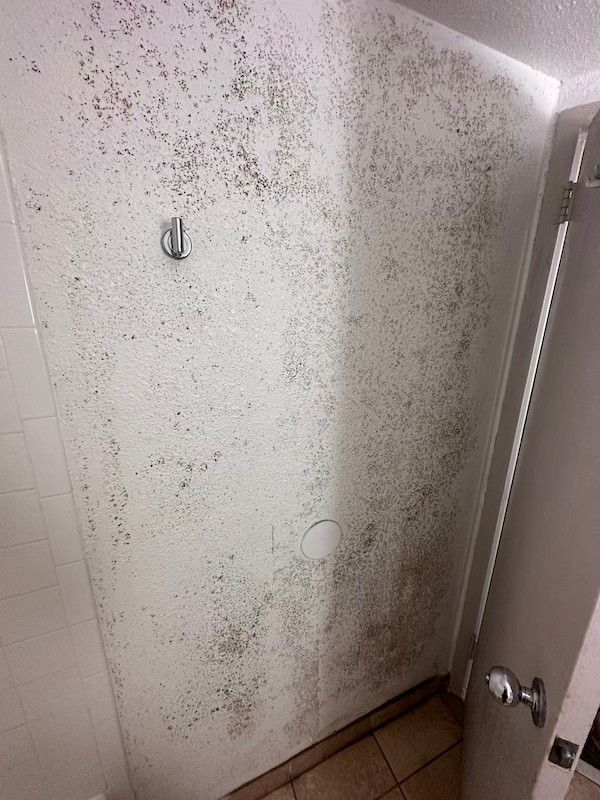
Bathrooms are one of the most frequent locations. Steam from showers combined with poor ventilation allows moisture to linger on ceilings, walls, and inside wall cavities.
HVAC-related areas are another common spot. Mold often appears near air handlers, drain pans, ductwork, or supply vents where condensation is present.
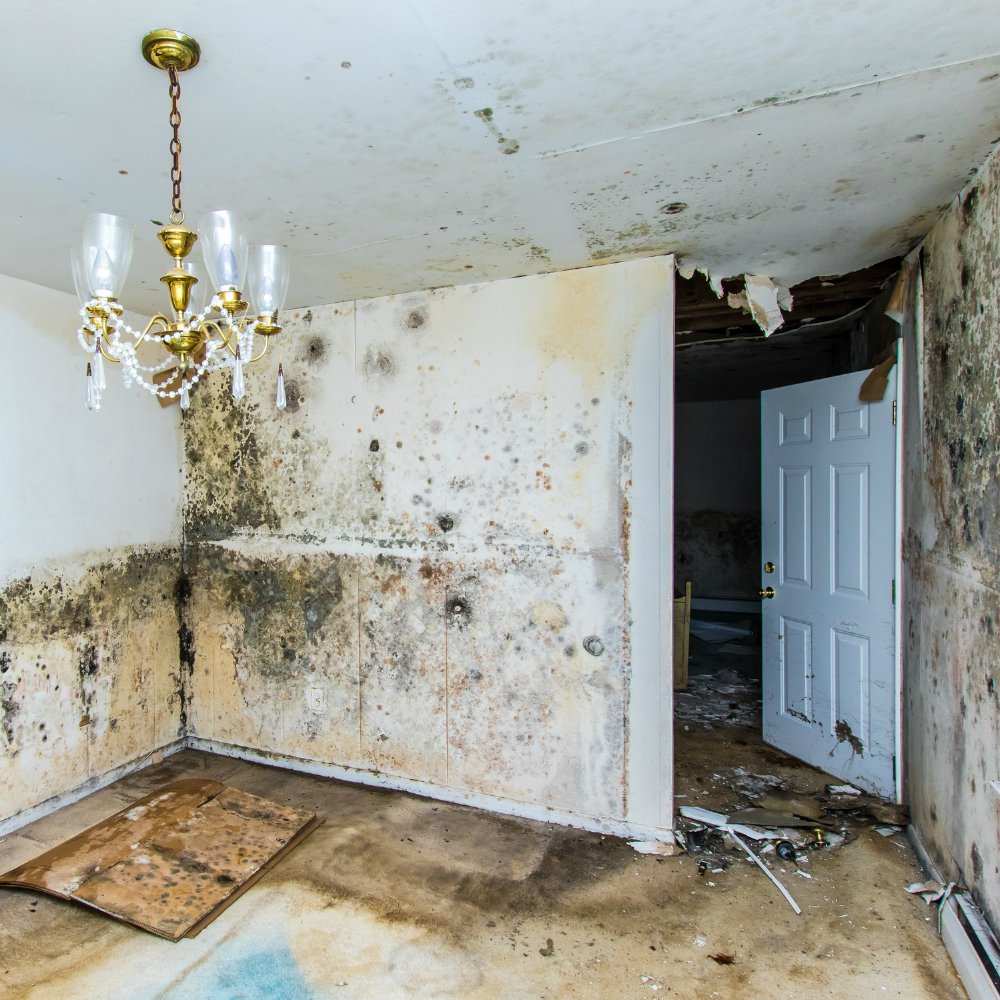
Behind drywall is also very common. A small visible patch of dark mold may indicate a much larger problem inside the wall from leaks or long-term humidity.
Attics frequently develop dark mold due to roof leaks, poor ventilation, or bathroom fans venting into the attic instead of outdoors. In Merritt Island homes, attic mold is often discovered long after it has spread.
Signs Black Mold May Be a Bigger Issue
Visible mold is only one indicator. Persistent musty or damp odors are often the first sign homeowners notice, especially when the AC turns on.
Other warning signs include bubbling or peeling paint, warped baseboards, staining on drywall, or flooring that feels soft or uneven. Rooms that feel more humid than others can also indicate hidden moisture feeding mold growth.
If dark mold keeps returning after cleaning, that’s a strong sign the underlying moisture problem hasn’t been addressed.
Hidden Causes Homeowners Often Overlook
Many black mold problems are driven by issues that aren’t obvious. Poor bathroom exhaust fans, especially those venting into attics, allow moisture to build up out of sight.
Small plumbing leaks inside walls or under sinks can keep materials damp for months. AC drain line backups and condensation on ductwork are also common hidden contributors.
In Merritt Island, ground moisture and slab foundations can contribute as well, allowing moisture to affect lower walls and flooring without a visible leak.
Why DIY Cleaning Usually Makes Things Worse
Homeowners often try to clean black mold themselves using bleach or household cleaners. While this may improve appearance temporarily, it rarely solves the problem.
Bleach does not penetrate porous materials like drywall or wood. Mold can remain active beneath the surface and return once moisture conditions stay the same. The water in cleaning products can also feed mold growth below the surface.
Scrubbing mold without containment can release spores into the air, allowing them to spread through the home, especially via HVAC systems. In Merritt Island homes, this often turns a localized issue into a much larger one.
Moisture Is the Real Issue Behind Black Mold
Black mold is not a cleaning problem first. It’s a moisture problem.
Without moisture, mold cannot grow or survive. Common moisture sources include roof leaks, plumbing leaks, AC condensation, poor ventilation, window intrusion, and high indoor humidity.
In coastal homes, humidity alone can be enough to support mold growth when airflow is limited. Until moisture is identified and corrected, black mold is likely to return no matter how often it’s cleaned.
Professional Mold Inspection for Black Mold Concerns
A professional mold inspection focuses on identifying moisture and understanding where mold is actually growing. This includes visible areas as well as hidden spaces like attics, wall cavities, HVAC systems, and under flooring.
Moisture detection tools help locate damp materials that aren’t visible to the eye. These tools are especially important in slab homes, where moisture movement is often hidden.
When appropriate, air or surface sampling may be used to support findings and provide documentation. Testing supports decisions but does not replace identifying moisture sources.
A proper inspection replaces fear with clear information.
Proper Mold Remediation for Black Mold
Effective mold remediation addresses both the mold and the conditions that allowed it to grow. Containment is used to prevent spores from spreading during removal.
Mold-affected materials such as drywall, insulation, or flooring may need to be removed if contamination is deep. Salvageable surfaces are cleaned using appropriate methods.
Correcting the moisture source is critical. This may involve roof repairs, plumbing repairs, HVAC adjustments, ventilation improvements, or humidity control.
Brevard Mold Inspections & Removal approaches black mold situations with a prevention-focused mindset rather than surface-level cleanup.
Preventing Black Mold Going Forward
Prevention starts with moisture management. Bathroom and kitchen exhaust fans should be used consistently and vented outdoors.
Regular AC maintenance helps prevent condensation issues. Drain lines and pans should be kept clear, and ductwork properly insulated.
Sealing windows, doors, and exterior penetrations reduces humid air intrusion. After storms, attics and ceilings should be checked even if no damage is immediately visible.
Monitoring indoor humidity is especially important in Merritt Island homes.
Why Local Experience in Brevard County Matters
Black mold problems in Brevard County are shaped by coastal humidity, storms, slab foundations, and local construction styles. Advice that works in dry climates often fails in Florida homes.
Local experience means understanding where black mold typically develops in Merritt Island homes and how moisture moves through these structures.
Professionals familiar with Brevard County conditions can identify risks early and recommend solutions that actually work long-term.
A Calm, Practical Next Step
Finding black mold in your Merritt Island home can be unsettling, but panic is rarely helpful. The most important step is understanding why it appeared and how far it extends beyond what you can see.
If you’re dealing with recurring mold, persistent odors, or moisture issues, a professional inspection can provide clarity without pressure. Homeowners across Brevard County benefit from early assessment and proper moisture control.
Brevard Mold Inspections & Removal helps homeowners identify black mold conditions, understand underlying moisture issues, and take practical steps toward long-term protection. Addressing black mold correctly restores stability to the home and helps prevent the problem from coming back.