Mold After Hurricanes in Rockledge: What Homeowners in Brevard County Should Know
In Rockledge, hurricanes don’t have to cause flooding to create serious mold problems. Strong winds, wind-driven rain, power outages, and weeks of elevated humidity can introduce moisture into places homeowners rarely see. Even when a home looks intact after a storm, mold can begin developing quietly days or weeks later if moisture isn’t fully removed.
Understanding how mold develops after hurricanes in Rockledge—where it hides, why it shows up later, and what actually prevents it—helps homeowners protect their homes long after the storm clouds clear.
Why Hurricanes Create Mold Risk in Rockledge Homes
Rockledge sits inland from the coast, but hurricanes still bring prolonged rain, heavy winds, and power disruptions that impact indoor moisture levels.
Local factors that increase post-hurricane mold risk include:
- Wind-driven rain entering small gaps around roofs and windows
- Power outages stopping AC systems and dehumidification
- High outdoor humidity before and after storms
- Slab foundations that trap moisture beneath flooring
- Homes kept closed during storm recovery
Mold doesn’t need dramatic water damage—lingering moisture is enough.
How Mold Develops After a Hurricane
Mold growth after hurricanes is often delayed, which is why it catches homeowners off guard.
A common sequence looks like this:
- Rain or wind introduces moisture into walls, attics, or floors
- Surfaces dry, but materials remain damp internally
- AC systems are off or running inefficiently
- Indoor humidity stays elevated
- Mold begins growing out of sight
By the time odors or spots appear, the original storm feels long past.
Common Hurricane-Related Moisture Sources
In Rockledge, mold after hurricanes often traces back to subtle issues rather than obvious flooding.
Frequent contributors include:
- Lifted shingles or damaged flashing
- Wind-driven rain around windows and doors
- Water intrusion at roof vents and penetrations
- AC condensate drain backups during outages
- Minor plumbing shifts from pressure changes
These issues may not show immediate signs, but they can keep materials damp long enough for mold to grow.
Where Mold Commonly Appears After Hurricanes
Post-hurricane mold often starts in hidden areas.
High-risk locations include:
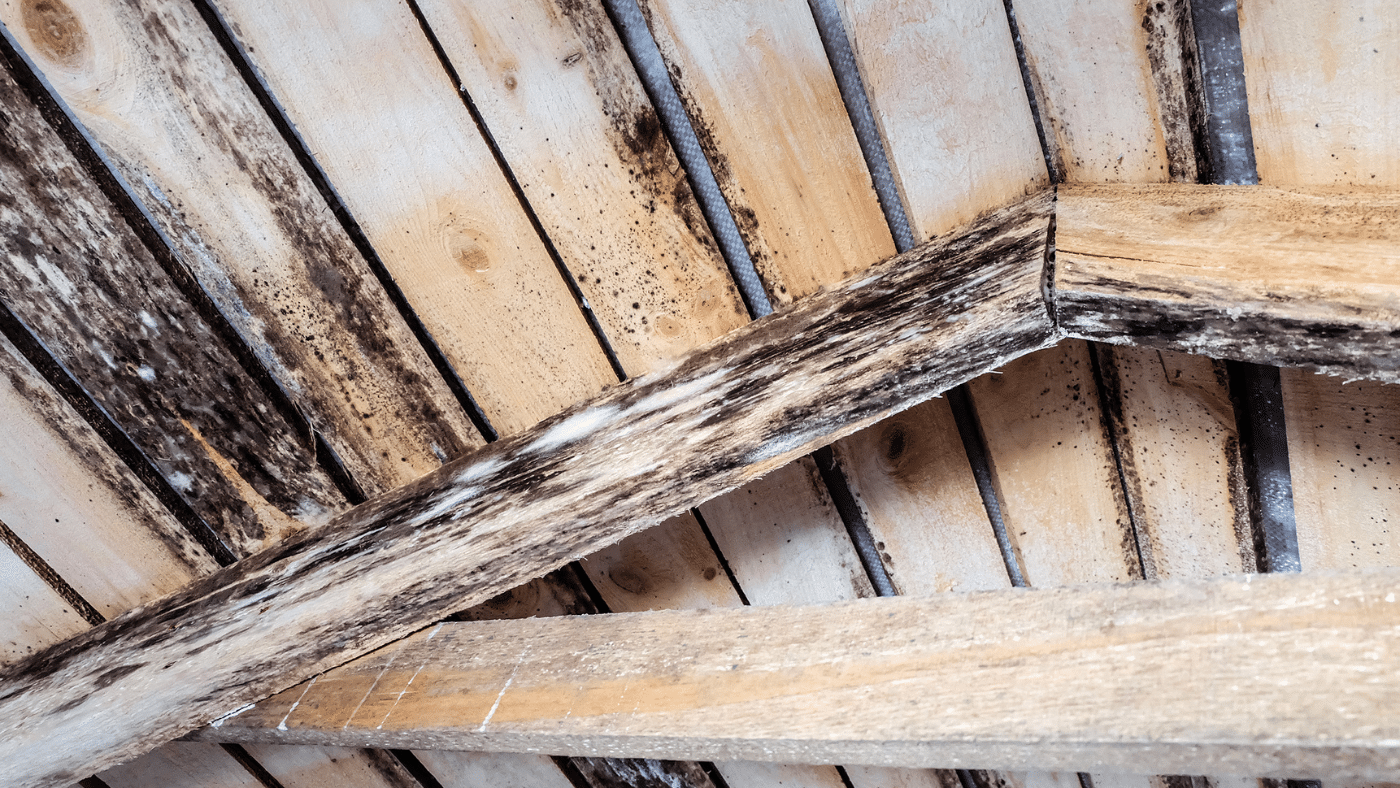
- Attics beneath roof decking
- Behind drywall on exterior walls
- Beneath laminate or vinyl flooring
- Around HVAC air handlers and ductwork
- Closets on exterior walls
Visible mold usually represents only part of the affected area.
Attics: A Major Post-Hurricane Mold Zone
Attics are especially vulnerable after hurricanes.
Mold often develops due to:
- Wind-driven rain entering roof gaps
- Damaged flashing or vents
- Bathroom fans exhausting moist air into the attic
- Insulation absorbing moisture and drying slowly
Because attics aren’t visited often, mold can spread before anyone notices.
Power Outages and Mold Risk
Power outages are one of the biggest mold accelerators after hurricanes.
During outages:
- AC systems stop removing humidity
- Indoor moisture rises quickly
- Airflow decreases
- Drying slows dramatically
Mold can begin developing within days if moisture remains trapped.
Slab Foundations and Hidden Moisture
Many Rockledge homes are built on slab foundations. After heavy rain, moisture can migrate upward and become trapped beneath flooring.
This can lead to:
- Mold under floors without visible signs
- Persistent musty odors
- Mold returning after surface cleaning
Slab-related moisture is a common reason mold reappears weeks after storms.
HVAC Systems and Post-Storm Mold
HVAC systems play a central role in post-hurricane mold issues.
Common problems include:
- Standing water in drain pans
- Clogged condensate drain lines
- Condensation forming on ducts when systems restart
Once the AC runs again, moisture and spores can circulate throughout the home.
Warning Signs Mold May Be Developing
Homeowners often notice subtle signs before seeing mold.
Common warning signs include:
- Musty or earthy odors
- Odors stronger when the AC runs
- Condensation on vents or windows
- Discoloration on ceilings or walls
- Mold that returns after cleaning
These signs often point to moisture left behind by storm conditions.
Why DIY Cleanup Often Misses Hurricane-Related Mold
DIY cleanup usually focuses on visible areas—but hurricane moisture is often hidden.
DIY efforts fall short because:
- Fans don’t dry inside walls or under floors
- Bleach doesn’t penetrate porous materials
- Hidden mold remains untouched
- Moisture sources aren’t fully identified
In Florida’s post-storm humidity, mold often returns after DIY efforts.
The Importance of a Post-Hurricane Mold Inspection
A professional inspection focuses on where moisture entered and where it remains.
An inspection may include:
- Moisture readings in walls, floors, and ceilings
- Attic inspections for roof-related moisture
- HVAC system evaluation
- Identification of hidden damp areas
- Connecting mold growth to storm conditions
This helps homeowners understand risk before mold spreads further.
Brevard Mold Inspections & Removal works with Rockledge homeowners after hurricanes to assess moisture and mold risk calmly and clearly, focusing on prevention and long-term solutions.
Mold Testing After Hurricanes
Mold testing isn’t always required, but it can help when:
- Mold is suspected but not visible
- Odors persist after drying
- HVAC involvement is suspected
- Confirmation is needed after remediation
Testing is most effective when guided by inspection findings.
Proper Mold Remediation After Hurricanes
When mold is confirmed, remediation focuses on removal and prevention, not cosmetic fixes.
A proper approach may include:
- Containment to prevent spore spread
- Removal of contaminated porous materials
- Cleaning remaining surfaces appropriately
- Correcting moisture entry points
- Thorough drying and humidity control
Skipping moisture correction often leads to repeat mold problems.
Timing Matters After Hurricanes
The days following a hurricane are critical.
Key timing factors include:
- Moisture trapped early is harder to remove later
- Mold can begin developing within days
- Delayed drying increases hidden growth risk
Early evaluation helps prevent larger issues later.
Preventing Mold After Future Hurricanes
While storms can’t be prevented, mold risk can be reduced.
Helpful steps include:
- Inspecting roofs and windows after storms
- Restoring AC operation as soon as possible
- Using dehumidification during recovery
- Monitoring for odors or moisture changes
- Checking attics, walls, and floors proactively
Early action is the best prevention.
Why Local Rockledge Experience Matters
Mold after hurricanes behaves differently in Florida than in dry climates. Rockledge homes face challenges tied to humidity, storms, slab foundations, and long cooling seasons.
Local professionals understand:
- How wind-driven rain affects local construction
- How humidity slows drying after storms
- Where mold commonly develops post-hurricane
Local experience leads to more accurate assessments and longer-lasting solutions.
A Calm, Practical Takeaway for Homeowners
Mold after hurricanes in Rockledge is common—but it’s manageable when addressed correctly. Most problems stem from moisture that didn’t fully dry, not from severe damage or neglect.
If your home experienced a hurricane and you’re now noticing musty odors, moisture issues, or recurring mold, a professional inspection can provide clarity. Understanding where moisture remains and how it’s affecting your home is the most effective way to prevent long-term mold problems and protect your property in Brevard County’s humid environment.