
Mold in HVAC Systems in Indian Harbour Beach: What Homeowners in Brevard County Should Know
Homeowners in Indian Harbour Beach often enjoy ocean breezes and coastal living—but those same conditions can create challenges inside the home, especially within HVAC systems. High humidity, salt air, and near-constant air conditioning make HVAC components one of the most common places for mold to develop in Brevard County homes.
Mold in an HVAC system doesn’t always announce itself right away. In many cases, homeowners first notice a musty smell when the system runs, uneven airflow, or recurring moisture issues. Understanding why HVAC mold happens, where it hides, and how it should be handled can help homeowners protect their indoor environment and avoid ongoing problems.
Why HVAC Systems Are Vulnerable to Mold
HVAC systems manage both temperature and humidity, which means they regularly deal with moisture. When everything is working correctly, that moisture is drained away. When something goes wrong, moisture can linger in dark, enclosed spaces—ideal conditions for mold.
In Indian Harbour Beach homes, air conditioning systems often run most of the year. Condensation forms on coils and inside air handlers as warm, humid air is cooled. If drain lines clog, drain pans crack, or airflow is restricted, moisture can remain inside the system.
Because HVAC components are enclosed and out of sight, mold can grow for long periods before homeowners realize there’s an issue.
Coastal Factors That Increase HVAC Mold Risk
Living near the coast adds several layers of risk.
Brevard County already experiences high humidity, but coastal areas like Indian Harbour Beach also deal with salt-laden air. Salt can accelerate corrosion in metal components, leading to small failures that allow moisture to collect.
Wind-driven rain during storms can introduce moisture into exterior HVAC closets or attic-mounted systems. Even small amounts of water can raise humidity levels inside ductwork.
Many coastal homes are tightly sealed to improve energy efficiency. While this helps with cooling, it can reduce natural airflow, allowing humidity to build up if the HVAC system isn’t properly balanced.
Common Areas Where Mold Develops in HVAC Systems
Mold rarely grows evenly throughout an HVAC system. It tends to appear in specific locations.
Air handlers are a frequent problem area, especially around evaporator coils and drain pans where condensation forms regularly. If water does not drain properly, mold can begin growing on nearby surfaces.
Ductwork can also be affected. Flexible ducts with insulation liners can trap moisture, particularly when insulation becomes damaged or compressed.
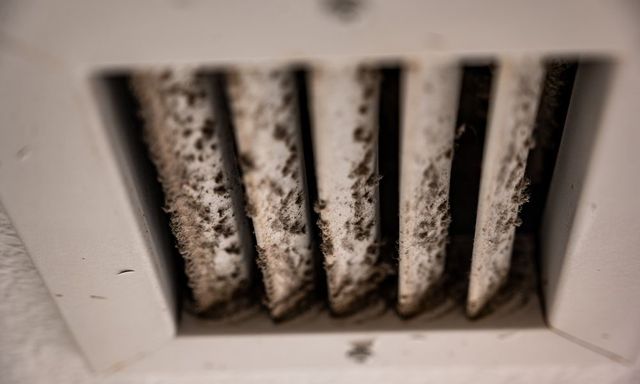
Return air vents sometimes show visible mold or discoloration when humidity levels remain elevated. This can be an early warning sign of a larger issue inside the system.
Registers and supply vents may also show buildup when mold spores circulate and settle over time.
Signs Homeowners Often Notice
HVAC mold doesn’t always look dramatic. In many homes, the signs are subtle at first.
A musty or damp odor when the air conditioning turns on is one of the most common indicators. The smell may fade after the system runs for a while, only to return later.
Some homeowners notice uneven airflow, excess dust, or vents that seem damp. Others observe recurring moisture around the air handler or inside utility closets.
Visible discoloration near vents or inside the air handler cabinet may also appear, especially during periods of high humidity.
How HVAC Mold Can Affect Indoor Comfort
Mold inside an HVAC system can influence indoor conditions because the system circulates air throughout the home.
When mold is present, spores and particles can move through ductwork and into living spaces. Some homeowners notice increased irritation, stuffiness, or general discomfort while indoors, especially when the system is running.
Not everyone reacts the same way, and some people may not notice any change at all. The key concern is that HVAC mold often indicates a moisture problem that can worsen if left unaddressed.
Why Surface Cleaning Is Not Enough
Homeowners sometimes attempt to clean visible mold around vents or inside accessible parts of the system.
While surface cleaning may improve appearance, it rarely addresses mold deeper inside ductwork or air handlers. In some cases, cleaning without proper containment can disturb mold and spread particles further through the system.
Effective solutions focus on identifying where moisture is coming from and addressing the system as a whole—not just what can be seen.
What a Professional HVAC Mold Inspection Involves
A professional inspection looks beyond visible areas.
The process typically starts with a visual evaluation of the HVAC system, including the air handler, drain components, duct connections, and vents. Inspectors look for signs of moisture, corrosion, and microbial growth.
Moisture meters may be used to check surrounding materials, and thermal imaging can help identify temperature differences that suggest condensation or airflow problems.
In some cases, air or surface samples may be collected and sent to an independent laboratory. Testing helps clarify whether mold is present and how widespread it may be.
Local specialists such as Brevard Mold Inspections & Removal focus on explaining findings clearly so homeowners understand what’s happening and why.
Proper Mold Remediation for HVAC Systems
Addressing mold in an HVAC system requires a careful, targeted approach.
Containment may be used to prevent mold from spreading during cleaning. Affected components are cleaned using appropriate methods, and heavily contaminated materials may need to be replaced.
Just as important is correcting the moisture issue. This may involve clearing or replacing drain lines, repairing drain pans, improving airflow, or adjusting system sizing.
In coastal homes, corrosion-resistant components and proper insulation can also help reduce future risk.
Preventing Mold in HVAC Systems Going Forward
Prevention centers on moisture control and regular maintenance.
Routine HVAC servicing helps catch condensation problems early. Drain lines should be inspected and flushed as needed, and filters replaced on schedule.
Keeping indoor humidity in a healthy range reduces the likelihood of condensation inside ductwork. In some homes, dehumidification may be beneficial during peak humidity months.
Exterior HVAC components and attic systems should be checked after storms for signs of water intrusion.
Good airflow throughout the home also helps prevent moisture from settling in ducts and vents.
Why Local Experience Matters in Indian Harbour Beach
HVAC mold issues are not the same everywhere.
Indian Harbour Beach homes face unique challenges related to salt air, coastal storms, slab foundations, and Florida-specific HVAC designs. Local experience helps professionals recognize patterns that are common in coastal Brevard County homes.
Understanding how moisture behaves in this environment leads to more accurate inspections and more effective solutions.
A Practical Next Step for Homeowners
If you notice musty odors, recurring moisture near your HVAC system, or visible discoloration around vents, a professional inspection can provide clarity without unnecessary alarm.
Identifying mold and moisture issues early helps protect both the HVAC system and the home itself. With accurate information and local expertise, homeowners in Indian Harbour Beach can address HVAC mold concerns confidently and keep their indoor environment comfortable year-round.