
Hidden Mold Problems in Viera: What Homeowners in Brevard County Should Know
Homeowners in Viera often take pride in newer construction, clean neighborhoods, and well-maintained homes. Because of that, mold is not always top of mind. Yet in Brevard County, some of the most serious mold problems aren’t visible at all. They develop quietly, behind walls, above ceilings, or beneath flooring—often in homes that otherwise look spotless.
Hidden mold issues in Viera are rarely caused by neglect. More often, they result from Florida’s humidity, tightly sealed modern homes, and small moisture problems that go unnoticed. Understanding where hidden mold forms, why it’s common locally, and how it’s discovered can help homeowners address issues early instead of after costly damage appears.
What “Hidden Mold” Really Means
Hidden mold refers to mold growth that is not immediately visible during everyday living. It may be growing inside wall cavities, behind cabinets, under flooring, in attics, or inside HVAC systems.
In many cases, homeowners don’t realize there’s a problem because surfaces look clean and dry. Paint may be intact, flooring solid, and no leaks obvious. Meanwhile, moisture trapped inside building materials allows mold to grow out of sight.
In Viera homes, hidden mold is often linked to humidity or condensation rather than dramatic water events.
Why Hidden Mold Is Common in Viera Homes
Brevard County has one of the most mold-friendly climates in the country, and Viera’s modern construction adds a few unique factors.
Newer homes are typically built tighter for energy efficiency. While this helps with cooling, it also reduces natural air exchange. If moisture enters the home—through humidity, condensation, or minor leaks—it may not escape easily.
High outdoor humidity is present most of the year. Moist air enters homes through doors, windows, attic spaces, and duct systems. When that air cools indoors, moisture can condense inside walls, on ductwork, or beneath flooring.
Small issues like a slow AC drain backup, poorly sealed window, or minor roof penetration can introduce enough moisture to support mold growth without obvious signs.
Common Hidden Mold Locations in Viera Homes
Hidden mold tends to develop in predictable places.
Behind drywall is one of the most common locations. Plumbing lines, roof leaks, or window intrusion can dampen drywall and insulation while the surface remains intact.
Attics are another frequent problem area. Warm, humid air rising from the living space can condense on roof decking, especially if ventilation is limited or insulation is uneven.
Under flooring is common in slab-on-grade homes. Moisture from plumbing leaks or spills can become trapped between the slab and finished flooring, particularly tile, laminate, or vinyl.
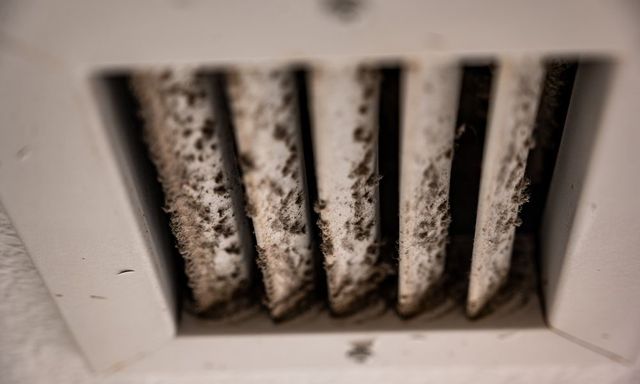
HVAC systems also hide mold easily. Condensation inside air handlers, drain pans, or ductwork can support growth that spreads air-borne particles throughout the home.
Cabinets, especially under sinks or along exterior walls, often conceal moisture and mold until damage becomes visible.
Subtle Signs That May Point to Hidden Mold
Because mold is hidden, warning signs are often indirect.
A persistent musty or earthy odor is one of the most common clues. In many Viera homes, the smell is strongest when the air conditioning runs or after the home has been closed up.
Some homeowners notice that certain rooms feel damp, heavy, or harder to cool. Others notice recurring condensation on vents or windows.
Visual signs may include peeling paint, bubbling drywall, warped flooring, or cabinets that feel soft or swollen—often appearing long after the moisture issue began.
In some cases, there are no obvious signs at all until a renovation or inspection exposes the problem.
Why Hidden Mold Often Goes Undetected
Hidden mold is easy to miss because it doesn’t behave like surface mold.
There may be no visible growth, no active leak, and no standing water. Moisture levels may fluctuate just enough to keep materials damp without triggering obvious damage.
In Florida’s climate, mold doesn’t need extreme conditions. Slightly elevated moisture over time is enough. Because the process is slow, homeowners often adapt to subtle changes without realizing something is wrong.
By the time mold becomes visible, it’s often been present for months.
Risks of Ignoring Hidden Mold
Hidden mold doesn’t stay hidden forever.
As moisture continues, mold can spread to larger areas, affect insulation performance, and damage drywall, wood framing, and finishes. Repairs become more invasive and expensive as more materials are affected.
Hidden mold can also influence indoor conditions. Air movement through walls, attics, and HVAC systems can distribute mold particles into living spaces even when growth isn’t visible.
Ignoring early warning signs often leads to bigger problems later.
Why DIY Checks Usually Miss Hidden Mold
Homeowners often try to rule out mold by looking for visible growth or cleaning suspicious areas.
Unfortunately, hidden mold is rarely found this way. Without moisture meters, thermal imaging, or access to concealed spaces, it’s difficult to know what’s happening inside walls or under floors.
Surface cleaning doesn’t address mold growing inside porous materials. Even repeated cleaning won’t stop mold if moisture remains trapped.
This is why hidden mold often continues undetected despite good housekeeping.
How Professional Inspections Find Hidden Mold
Professional mold inspections focus on moisture first, not just visible mold.
An inspection typically includes a detailed visual assessment of moisture-prone areas, along with moisture meters to detect dampness behind walls, beneath flooring, or in ceilings.
Thermal imaging may be used to identify temperature differences that suggest condensation, leaks, or trapped moisture.
When appropriate, air or surface samples may be collected and sent to an independent laboratory. Testing helps document whether mold is present and whether it may be coming from hidden sources.
Local professionals such as Brevard Mold Inspections & Removal focus on identifying both hidden mold and the moisture conditions that allow it to grow.
What Happens If Hidden Mold Is Found
When hidden mold is confirmed, the approach focuses on two things: limiting spread and correcting moisture.
Affected materials may need to be accessed and either cleaned or removed, depending on how extensive the growth is. Containment is used to prevent mold from spreading during this process.
Equally important is fixing the moisture source. This may involve HVAC adjustments, plumbing repairs, roof or window sealing, ventilation improvements, or insulation corrections.
Without moisture control, hidden mold is likely to return—even after cleanup.
Preventing Hidden Mold in Viera Homes
Prevention is largely about moisture awareness.
Regular HVAC maintenance helps prevent condensation problems and keeps humidity in check. Drain lines should remain clear, and duct insulation should be intact.
Attics should have proper ventilation and insulation to reduce condensation on roof decking.
Bathrooms, kitchens, and laundry areas should be vented effectively, and small leaks should be repaired promptly.
After storms or heavy rain, ceilings, attics, and exterior walls should be checked for early signs of moisture intrusion.
Periodic moisture inspections can help catch hidden issues before mold develops.
Why Local Experience Matters
Hidden mold behaves differently depending on climate and construction.
Viera homes face specific challenges related to high humidity, slab foundations, modern airtight construction, and Florida-specific HVAC designs. Local experience helps professionals recognize where moisture tends to hide and how mold develops in these conditions.
Understanding Brevard County homes leads to more accurate inspections and practical recommendations.
A Practical Takeaway for Viera Homeowners
Hidden mold problems are common in Brevard County, even in newer homes like those in Viera.
Because these issues develop quietly, early awareness and professional evaluation are key. Addressing moisture before mold becomes visible protects both the structure of the home and long-term maintenance costs.
With accurate information and local expertise, Viera homeowners can uncover hidden mold issues early and keep small problems from becoming major ones.