
Mold in Attics in Viera: What Homeowners in Brevard County Should Know
For homeowners in Viera, attic mold is one of the most common—and most overlooked—mold problems in Brevard County. Because attics aren’t living spaces, issues often go unnoticed until damage becomes extensive or a musty odor starts drifting into the home.
In Florida’s hot, humid climate, attics are exposed to extreme temperature swings and moisture conditions that create the perfect environment for mold growth. Understanding why attic mold develops in Viera homes, how to recognize the warning signs, and what proper inspection and remediation look like helps homeowners address problems early and avoid costly repairs.
Why Attic Mold Is So Common in Viera Homes
Attics in Brevard County face challenges that don’t exist in many other parts of the country.
During much of the year, outdoor humidity is high. Warm, moisture-laden air naturally rises from the living space below and enters the attic through small gaps, ceiling penetrations, and duct openings. When that warm air meets cooler roof decking or framing—especially at night—condensation can form.
Viera homes are often newer and more energy efficient, which means they’re more tightly sealed. While this helps with cooling, it also means moisture that enters the attic may not escape easily without proper ventilation.
Add Florida’s intense summer heat, frequent rain, and occasional hurricanes, and attic spaces are under constant stress from moisture and temperature extremes.
How Mold Develops in Attics
Mold needs moisture, organic material, and time. Attics provide all three.
Wood roof decking, trusses, and insulation contain organic material that mold can grow on. When moisture is introduced—through condensation, roof leaks, or humid air infiltration—those materials can remain damp for long periods.
Unlike living areas, attics don’t benefit from air conditioning or regular airflow. Once moisture settles, drying is slow, especially during humid weather.
In Viera homes, attic mold often develops gradually rather than after a single dramatic event. Homeowners are frequently surprised to learn mold has been growing overhead for months or even years.
Common Causes of Attic Mold in Viera
Professional inspections in Viera frequently trace attic mold back to a few key causes.
Poor attic ventilation is one of the most common. Without adequate airflow, heat and moisture build up, increasing condensation on roof decking.
Roof leaks are another frequent culprit. Even small leaks around shingles, flashing, vents, or skylights can introduce enough moisture to support mold growth. Because leaks may only occur during heavy rain or wind-driven storms, they often go unnoticed.
Bathroom and kitchen exhaust fans venting into the attic instead of outdoors is a surprisingly common issue. These fans release warm, humid air directly into the attic, creating ideal mold conditions.
HVAC duct leaks or poorly insulated ductwork can also introduce moisture into attic spaces, especially when condensation forms on cold ducts.
Signs Mold May Be Present in the Attic
Because attic mold is out of sight, warning signs are often indirect.
A persistent musty or earthy odor is one of the most common clues. In many Viera homes, this smell becomes noticeable when the air conditioning runs, pulling air from the attic into the living space.
Some homeowners notice increased humidity indoors or difficulty keeping certain rooms comfortable. This can happen when attic insulation becomes damp or moldy and loses effectiveness.
Visible signs inside the home may include ceiling discoloration, peeling paint, or small stains that appear after rain.
Often, attic mold is discovered during roof work, HVAC servicing, or a home inspection.
What Attic Mold Commonly Looks Like
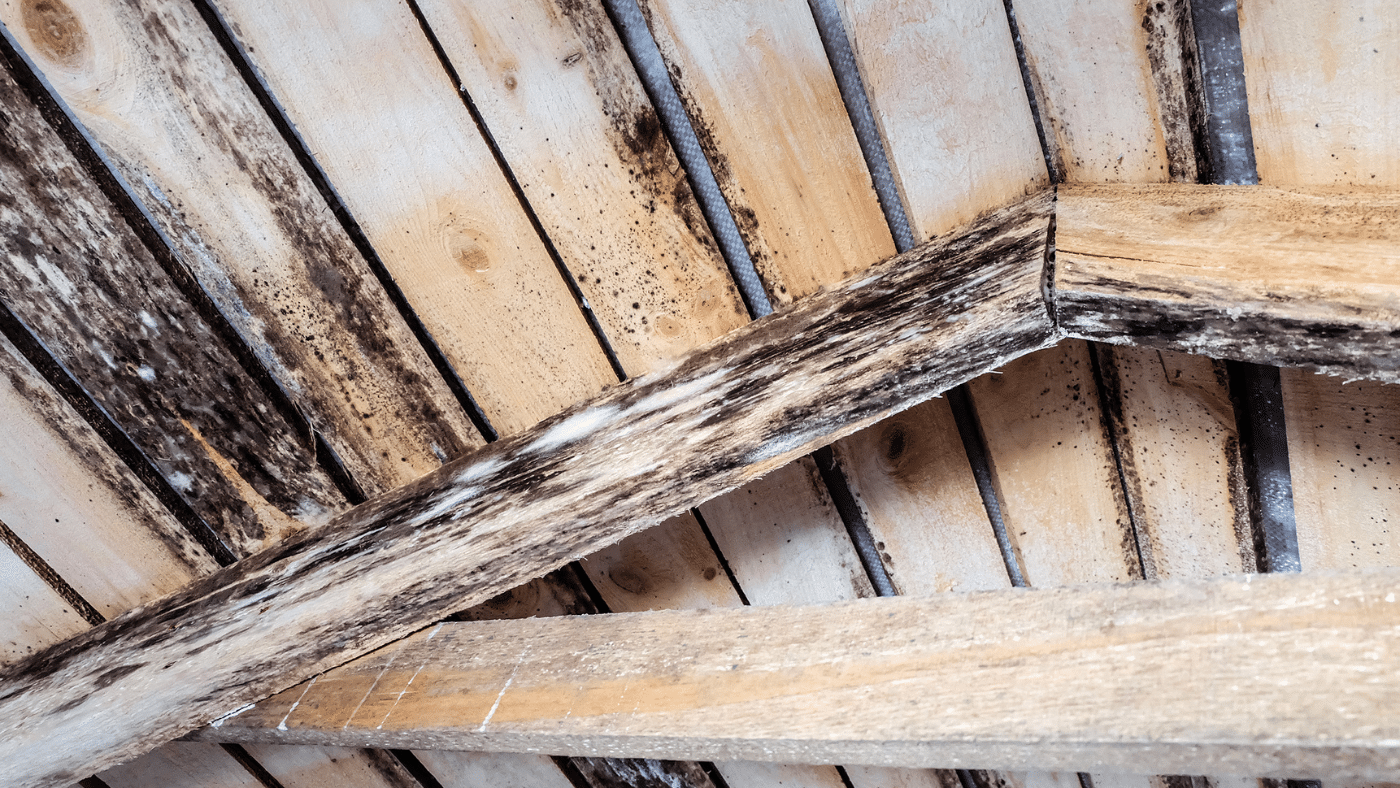
Attic mold typically appears as dark staining on the underside of roof decking or on wooden trusses. It may look black, gray, green, or brown and often spreads across large surface areas.
In some cases, mold grows on insulation, particularly if it has become damp from roof leaks or condensation. Moldy insulation can hold moisture and odors, contributing to indoor air issues.
It’s important to note that discoloration alone doesn’t tell the whole story. Moisture conditions and extent of growth matter more than appearance.
Why Attic Mold Shouldn’t Be Ignored
Ignoring attic mold allows the problem to grow quietly.
As moisture continues, mold can spread across additional roof decking and framing. Over time, this can contribute to wood deterioration and insulation failure.
Attic mold can also affect indoor conditions. Air movement through ductwork, ceiling gaps, and attic hatches can carry mold particles and odors into living spaces.
The longer attic mold goes unaddressed, the more extensive remediation may become.
Why DIY Attic Mold Cleanup Is Risky
Attics are one of the most dangerous places for DIY mold cleanup.
Scrubbing visible mold without containment can release mold particles into the air, spreading them throughout the attic and into the home below. Attic spaces also have limited ventilation, increasing exposure risk during cleanup.
Household cleaners and bleach do not address mold inside porous wood or insulation. Bleach also adds moisture, which can worsen mold conditions in humid environments.
Without addressing ventilation, roof leaks, or moisture sources, DIY cleaning almost always results in mold returning.
How Professional Attic Mold Inspections Work
A professional attic mold inspection focuses on moisture first.
Inspectors visually assess roof decking, trusses, insulation, and ventilation systems. They look for staining patterns that indicate condensation versus leaks.
Moisture meters may be used to identify damp wood or insulation. Thermal imaging can help locate temperature differences that suggest condensation or hidden moisture pathways.
Inspectors also evaluate attic ventilation, exhaust fan routing, and ductwork insulation to identify contributing factors.
When appropriate, air or surface samples may be collected and sent to an independent laboratory to document mold presence and extent.
Local professionals such as Brevard Mold Inspections & Removal focus on identifying why attic mold developed—not just where it’s visible.
What Proper Attic Mold Remediation Involves
Effective attic mold remediation is methodical and moisture-focused.
Containment may be used to prevent mold from spreading during cleanup. Affected surfaces are cleaned or treated using appropriate methods for wood and structural materials.
Moldy insulation may need to be removed and replaced if contamination is extensive or moisture-damaged.
Just as important is correcting the underlying cause. This may include improving attic ventilation, repairing roof leaks, rerouting exhaust fans, sealing air leaks from the living space, or improving duct insulation.
Without moisture correction, attic mold is likely to return—even after thorough cleaning.
Preventing Attic Mold in Viera Homes
Prevention starts with moisture control and airflow.
Proper attic ventilation helps regulate temperature and reduce condensation. Intake and exhaust vents should be balanced and unobstructed.
Bathroom and kitchen exhaust fans should vent outdoors, never into the attic. Ductwork in the attic should be properly sealed and insulated to prevent condensation.
After storms or heavy rain, attics should be inspected for leaks or damp insulation. Catching small issues early prevents long-term mold growth.
Maintaining indoor humidity through proper HVAC operation also reduces the amount of moisture rising into the attic.
Why Local Experience Matters
Attic mold behaves differently depending on climate and construction.
Viera homes face challenges related to high humidity, newer construction practices, slab foundations, and Florida-specific ventilation designs. Local experience helps professionals recognize common attic moisture patterns and avoid misdiagnosis.
What works in cooler or drier climates doesn’t always apply in Brevard County.
A Practical Takeaway for Viera Homeowners
Attic mold is one of the most common hidden mold issues in Viera homes, but it’s also one of the most manageable when addressed early.
If you’ve noticed musty odors, ceiling stains, or have concerns after storms or roof issues, a professional attic inspection can provide clarity before damage becomes extensive.
With accurate information, proper moisture control, and local expertise, Viera homeowners can address attic mold confidently and protect both their roofs and living spaces for the long term.