
Mold Inspection in Merritt Island: What Homeowners in Brevard County Should Know
Homeowners in Merritt Island deal with moisture almost year-round. Surrounded by water, exposed to coastal humidity, and impacted by seasonal storms, homes here experience conditions that allow mold to develop more easily than in many other parts of the country. For many residents, a mold inspection becomes necessary not because something looks alarming, but because something simply feels off—musty odors, lingering dampness, or unexplained staining.
A proper mold inspection provides clarity. It helps homeowners understand whether mold is present, where moisture may be hiding, and what steps actually make sense next.
Why Mold Inspections Are Common in Merritt Island
Merritt Island homes face unique environmental pressures.
Brevard County experiences high humidity most of the year, but Merritt Island’s location between the Indian and Banana Rivers adds even more moisture to the air. Ocean breezes feel pleasant outdoors, but indoors they contribute to condensation, especially when homes are cooled with air conditioning.
Storms and hurricanes increase the risk further. Wind-driven rain can enter through roofs, windows, vents, and siding without causing obvious flooding. Even brief water intrusion can soak drywall, insulation, or flooring and create conditions where mold develops quietly.
Because many Merritt Island homes are built on slab foundations, moisture can also become trapped beneath flooring after leaks or storm intrusion, allowing mold to grow unseen.
What a Mold Inspection Really Is—and Isn’t
A mold inspection is not just a quick look for visible spots.
A proper inspection focuses on identifying moisture, because mold only grows where moisture exists. The goal is to determine whether conditions support mold growth, not to create fear or make assumptions based on appearance alone.
Mold inspections are not automatically remediation or testing services. They are investigative. The outcome should be clear information that helps homeowners decide whether action is needed and what type.
Situations That Often Lead to Mold Inspections
Homeowners in Merritt Island typically request mold inspections for specific reasons.
Some notice persistent musty or earthy odors that don’t go away with cleaning. Others see discoloration on walls, ceilings, or around vents and want to understand whether it’s surface staining or something deeper.
Past water damage is another common trigger. Even when repairs were made, homeowners often want confirmation that moisture didn’t linger behind walls or under floors.
Mold inspections are also common during real estate transactions. Buyers and sellers want objective information about the home’s condition, especially in Florida’s climate.
Areas Inspectors Pay Close Attention To
Mold inspections focus on areas where moisture is most likely to accumulate.
Bathrooms and laundry rooms are inspected for ventilation issues, plumbing leaks, and condensation damage. Ceilings above showers and around exhaust fans are common problem areas.
HVAC systems receive careful attention. Air handlers, drain pans, condensate lines, and nearby materials are evaluated because AC-related moisture is one of the most frequent mold sources in Merritt Island homes.
Attics are another priority. Inspectors look for roof leaks, condensation on roof decking, wet insulation, and improper exhaust fan venting.
Walls, floors, and cabinets near plumbing fixtures are checked for hidden moisture. Slab foundations make under-floor moisture especially important to assess.
How Moisture Is Detected During an Inspection
Moisture detection tools are a key part of professional inspections.
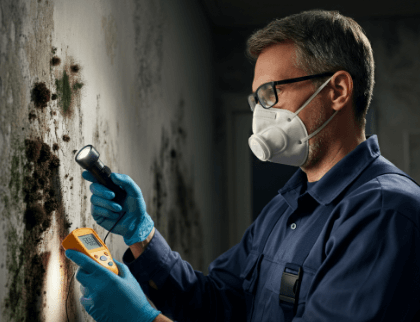
Moisture meters are used to check drywall, wood, and other materials for elevated moisture levels. These readings help identify areas where mold may be growing even if nothing is visible.
Thermal imaging may be used to detect temperature differences that suggest moisture, condensation, or hidden leaks behind surfaces.
These tools allow inspectors to look beyond what the eye can see and focus on conditions that actually support mold growth.
When Mold Testing Is Used
Mold testing is not always required, but it can be helpful in certain situations.
Air or surface samples may be collected when mold is suspected but not visible, when odors are present without an obvious source, or when documentation is needed for real estate or insurance purposes.
Samples are sent to an independent laboratory for analysis. Results help identify the types of mold present and whether indoor levels appear elevated compared to normal background conditions.
Testing should support inspection findings—not replace them. The most important information usually comes from understanding moisture patterns and building conditions.
Common Misunderstandings About Mold Inspections
One common misconception is that finding mold automatically means major remediation is needed. In reality, many inspections reveal small, manageable issues tied to ventilation or minor moisture problems.
Another misunderstanding is that visible mold always tells the full story. In Merritt Island homes, some of the most significant mold issues are hidden behind walls, above ceilings, or under flooring.
Finally, some homeowners assume inspections are only necessary when mold is obvious. In Florida, inspections are often most useful before problems become visible.
Why DIY Checks Often Miss the Problem
Homeowners often inspect visible areas and clean what they see. While this is understandable, it rarely addresses hidden moisture.
Without proper tools, it’s difficult to know whether walls, floors, or attics are truly dry. Cleaning surface mold without correcting moisture conditions often leads to quick recurrence.
DIY efforts may improve appearance temporarily but delay proper identification of the underlying issue.
What Happens After the Inspection
A good mold inspection provides clear next steps.
Sometimes the outcome is reassurance—no significant mold conditions are found, or moisture issues are minor and easily corrected.
In other cases, the inspection may recommend targeted repairs, improved ventilation, or professional remediation if mold growth is confirmed.
The focus should always be on addressing moisture first. Without moisture control, any mold cleanup is unlikely to last.
Local professionals such as Brevard Mold Inspections & Removal emphasize explaining findings in plain language so homeowners understand both the problem and the options available.
Why Local Experience Matters in Merritt Island
Mold inspections are not one-size-fits-all.
Merritt Island homes face challenges related to coastal humidity, slab foundations, frequent storms, and Florida-specific HVAC designs. Local experience helps inspectors recognize common moisture pathways and avoid misdiagnosis.
An inspector familiar with Brevard County conditions understands where moisture hides and how mold typically develops in these homes.
Preventing Mold After an Inspection
Inspections often highlight simple prevention steps.
Maintaining HVAC systems helps control humidity and prevent condensation issues. Drain lines should remain clear, and duct insulation should be intact.
Bathroom exhaust fans should vent outdoors and be used long enough to remove moisture after showers.
After storms, checking attics, ceilings, and windows for signs of water intrusion helps catch problems early.
Monitoring indoor humidity and addressing small leaks promptly reduces the need for future inspections.
When to Schedule a Mold Inspection
A mold inspection is worth considering when:
- Musty odors persist
- Mold keeps returning after cleaning
- The home has experienced leaks or storm damage
- You’re buying or selling a home
- Indoor humidity feels consistently high
Early evaluation usually leads to simpler solutions.
A Practical Takeaway for Merritt Island Homeowners
Mold inspections in Merritt Island are less about fear and more about information.
In a humid, coastal environment, moisture issues are common—but they’re also manageable when identified early. A professional inspection helps homeowners understand what’s happening inside their home and make informed decisions without guesswork.
With accurate assessment and local expertise, Merritt Island homeowners can protect their homes, avoid unnecessary repairs, and maintain healthier indoor conditions over the long term.