
Mold in Attics in Cocoa Beach: What Homeowners in Brevard County Should Know
Attic mold is one of the most common—and most overlooked—problems in coastal Florida homes. For homeowners in Cocoa Beach, mold in the attic often develops quietly, out of sight, until it’s discovered during a roof repair, home inspection, or after musty odors begin drifting into the living space.
Because attics aren’t used daily, mold can spread for months without detection. In Brevard County’s hot, humid, coastal environment, attic mold is rarely caused by a single dramatic event. More often, it’s the result of moisture imbalance, poor ventilation, or humid air moving into places it shouldn’t.
Understanding why attic mold forms in Cocoa Beach homes—and how it’s properly addressed—helps homeowners protect both their roof structure and indoor environment.
Why Attic Mold Is So Common in Cocoa Beach
Cocoa Beach sits directly along the Atlantic coast, where humidity is consistently high. Even on dry, sunny days, moist ocean air surrounds homes. When that air enters attic spaces, it can easily lead to condensation.
Brevard County experiences long cooling seasons, meaning air conditioning runs most of the year. As homes are cooled below outdoor temperatures, warm humid air naturally rises and migrates upward into the attic.
When that humid air meets cooler roof decking or framing, condensation forms. Over time, repeated condensation creates ideal conditions for mold growth—especially on wood surfaces.
Unlike plumbing leaks or flooding, attic mold often develops without obvious water intrusion, which is why it catches homeowners off guard.
What Attic Mold Typically Looks Like
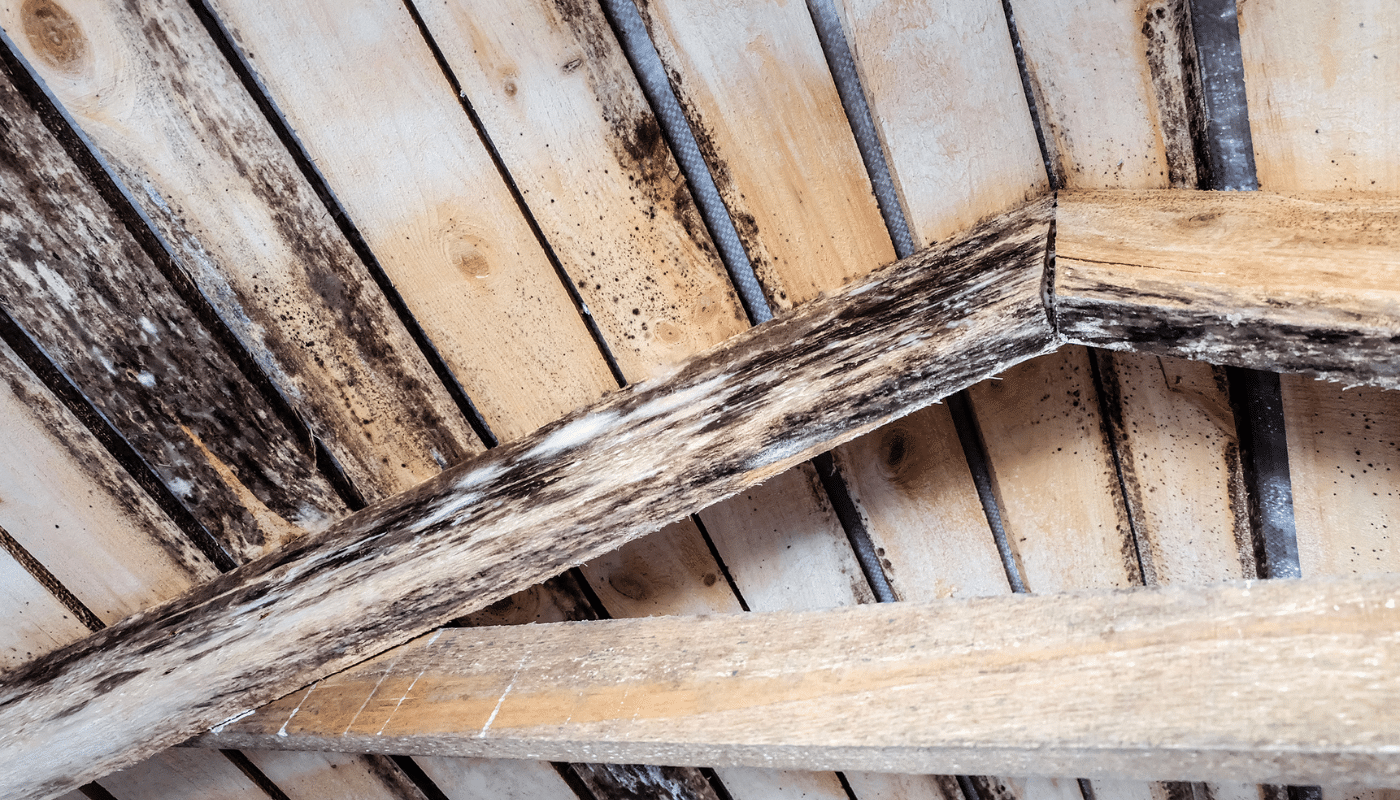
Attic mold is usually found on wood components rather than drywall.
Common locations include roof decking, trusses, rafters, and the tops of ceiling joists. The mold may appear as dark staining, spotting, or widespread discoloration across wood surfaces.
In Cocoa Beach homes, attic mold often covers large areas evenly rather than appearing in one isolated spot. This pattern usually indicates condensation or humidity issues rather than a roof leak.
Because attic lighting is limited, mold may look worse—or lighter—depending on conditions, but visual appearance alone doesn’t tell the full story.
The Role of Ventilation in Attic Mold
Ventilation plays a major role in attic moisture control.
Proper attic ventilation allows hot, humid air to escape before it condenses on roof surfaces. When ventilation is inadequate, moist air becomes trapped, raising humidity levels inside the attic.
In many homes, ventilation systems were designed for milder climates or have been altered during renovations. Blocked soffit vents, missing ridge vents, or insulation covering airflow pathways are common issues.
In Cocoa Beach, where humidity is already high, even small ventilation problems can lead to persistent attic moisture.
Bathroom and Kitchen Fans: A Hidden Cause
One of the most frequent contributors to attic mold is improper exhaust fan venting.
Bathroom and kitchen fans should vent outdoors. In many homes—especially older ones—fans vent directly into the attic instead. This releases warm, moisture-laden air straight into a space that already struggles to dry.
Each shower or cooking session adds moisture to the attic. Over time, this repeated exposure often leads to widespread mold growth on attic wood.
This issue is especially common in coastal homes and is often discovered only after mold has already developed.
Roof Leaks vs. Condensation: Understanding the Difference
Homeowners often assume attic mold means a roof leak, but that’s not always the case.
Roof leaks typically cause localized mold or staining near the leak source. You may see wet insulation, water stains, or damaged decking in a specific area.
Condensation-related mold, on the other hand, usually appears more evenly across large sections of the attic. The wood may look darkened but dry to the touch.
In Cocoa Beach homes, condensation is one of the most common causes of attic mold, especially when combined with high humidity and limited ventilation.
Why Attic Mold Often Goes Unnoticed
Attics aren’t part of daily living space, so problems can develop without being seen.
Most homeowners don’t enter the attic unless there’s a reason. By the time mold is discovered, it may already cover significant areas of roof decking or framing.
Some homeowners first notice attic mold indirectly—through musty odors in the home, increased allergy-like irritation, or during a real estate inspection.
Because attic mold develops slowly, it’s easy to underestimate how long the problem has existed.
Risks of Ignoring Attic Mold
Ignoring attic mold allows moisture conditions to continue unchecked.
Over time, mold can spread further across wood surfaces, increasing cleanup scope. Persistent moisture can also affect insulation performance, reducing energy efficiency and increasing cooling costs.
In homes with air leaks between the attic and living space, mold-related odors can migrate indoors. While the mold may be confined to the attic, its effects don’t always stay there.
Addressing attic mold early usually limits the extent of remediation and prevents additional damage.
Why DIY Attic Mold Cleanup Is Risky
DIY attic mold cleanup often creates more problems than it solves.
Scrubbing or spraying mold without containment can disturb mold and spread it to other areas of the attic—or into the home through air movement.
Bleach and household cleaners may change the appearance of mold but do not address moisture conditions or prevent regrowth. Bleach also adds moisture to porous wood, which can worsen mold problems in humid climates.
Without correcting ventilation or humidity issues, attic mold almost always returns after DIY efforts.
How Professional Inspections Evaluate Attic Mold
A professional mold inspection focuses on both mold and moisture.
Inspectors evaluate attic ventilation, insulation placement, exhaust fan venting, and roof conditions. Moisture meters and visual assessment help determine whether mold is caused by condensation, leaks, or a combination of factors.
The inspection also looks for air pathways that allow humid indoor air to enter the attic, such as recessed lights, attic hatches, or unsealed duct penetrations.
When appropriate, surface samples may be collected and sent to an independent laboratory to document mold presence and guide remediation decisions.
Local professionals such as Brevard Mold Inspections & Removal focus on identifying root causes specific to Cocoa Beach homes rather than applying generic solutions.
What Proper Attic Mold Remediation Involves
Effective attic mold remediation addresses both the mold and the conditions that caused it.
The process may include:
- Containment to prevent spread
- Cleaning or treating affected wood surfaces
- Correcting ventilation deficiencies
- Redirecting exhaust fans to the exterior
- Improving air sealing between attic and living space
In some cases, insulation may need to be removed and replaced if it’s contaminated or blocking airflow.
The goal is to create a dry, stable attic environment where mold cannot return.
Preventing Attic Mold in Cocoa Beach Homes
Prevention focuses on moisture control and airflow.
Ensuring attic ventilation is balanced and unobstructed helps regulate temperature and humidity. Bathroom and kitchen fans should always vent outdoors, never into the attic.
Air sealing around attic penetrations reduces the movement of humid indoor air upward. Regular attic inspections—especially after storms—help catch issues early.
Because Cocoa Beach homes face constant humidity, attic moisture control is an ongoing responsibility rather than a one-time fix.
Why Local Experience Matters
Attic mold behaves differently in coastal environments.
Cocoa Beach homes face salt air, high humidity, frequent storms, and year-round cooling demands. Local experience helps professionals recognize common attic moisture patterns and avoid misdiagnosis.
Approaches that work in colder or drier climates often fail in Brevard County.
A Practical Takeaway for Cocoa Beach Homeowners
Mold in attics is common in Cocoa Beach, but it’s not inevitable.
Most attic mold problems stem from humidity, condensation, or ventilation issues—not neglect. When identified early and addressed properly, attic mold can be resolved and prevented long-term.
If your home has musty odors, past roof work, or hasn’t had the attic evaluated in years, a professional inspection can provide clarity. With accurate assessment and local expertise, Cocoa Beach homeowners can protect their attics, their homes, and their peace of mind.