
Mold in Attics in Viera: What Homeowners in Brevard County Should Know
Attic mold is one of the most commonly missed problems in Florida homes, and homeowners in Viera are no exception. Because attics are out of sight, moisture problems can quietly develop overhead long before anyone notices stains, odors, or indoor air issues. By the time mold becomes visible inside the home, attic growth is often already established.
In Brevard County, attic mold is rarely caused by a single dramatic leak. More often, it’s the result of humidity, condensation, ventilation problems, or small air leaks that allow moisture to build up over time. Understanding why attic mold forms in Viera homes—and how it should be handled—helps homeowners prevent long-term damage and recurring issues.
Why Attics Are So Vulnerable to Mold in Viera
Attics sit at the hottest part of the home and are constantly exposed to temperature swings.
Warm, humid air from the living space naturally rises. When that air enters the attic and meets cooler surfaces—such as roof decking, nails, or framing—condensation can form. If moisture doesn’t dry quickly, mold has the opportunity to grow.
Brevard County has high humidity for much of the year, and Viera homes rely heavily on air conditioning. This temperature difference between cool indoor air and hot attic spaces increases condensation risk, even when there is no roof leak.
Attics also tend to have limited airflow, which slows drying and allows moisture to linger longer than homeowners expect.
Common Causes of Attic Mold in Viera Homes
Most attic mold problems trace back to a few recurring causes.
Poor attic ventilation is one of the most common. When warm, moist air cannot escape efficiently, it accumulates and condenses on roof decking and framing.
Bathroom exhaust fans vented into the attic instead of outdoors are another major contributor. Each shower releases a large amount of moisture, and when that moisture is discharged into the attic, mold growth often follows.
Air leaks from the home into the attic also play a role. Gaps around light fixtures, attic access points, duct penetrations, and wiring allow humid indoor air to rise directly into the attic.
Roof leaks—especially small or intermittent ones—can also introduce moisture. Even minor leaks can keep insulation and wood damp long enough for mold to develop.
What Attic Mold Typically Looks Like
Attic mold doesn’t always look dramatic at first.
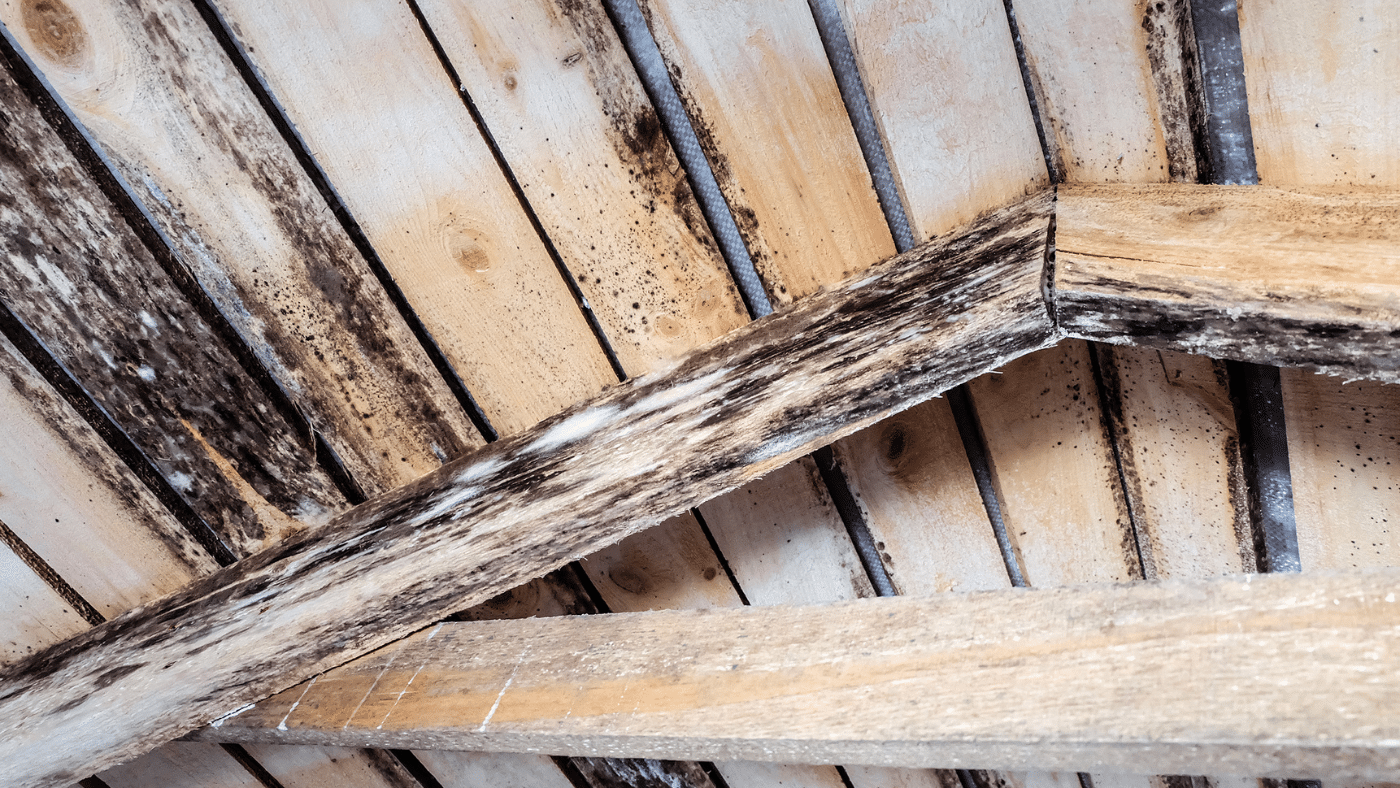
Early growth often appears as dark staining or discoloration on the underside of roof decking. Nail heads may show rust or dark rings where condensation repeatedly forms.
Over time, mold may spread across trusses, rafters, or sheathing. In many cases, homeowners only discover the problem during roof repairs, insulation work, or a home inspection.
Because attics aren’t living spaces, mold can grow extensively before it’s noticed.
Signs There May Be Mold in the Attic
Attic mold often reveals itself indirectly.
Homeowners in Viera may notice:
- Musty or stale odors inside the home
- Ceiling discoloration or staining
- Mold appearing on upper-level walls or ceilings
- Increased indoor humidity without an obvious cause
- Past issues with roof leaks or bathroom ventilation
These signs don’t always originate where they appear. In many cases, the attic is the source.
Condensation: A Leading Cause of Attic Mold
Condensation is one of the most common causes of attic mold in Viera.
When humid air enters the attic and cools, water forms on surfaces. This often happens overnight or during cooler weather when roof surfaces cool faster than attic air.
Repeated condensation—even without leaks—can keep wood surfaces damp long enough for mold to grow. Because this moisture comes and goes, homeowners often don’t realize it’s happening.
Proper ventilation and air sealing are critical to reducing condensation-related mold.
Why Attic Mold Often Goes Undetected
Attics are easy to forget.
Many homeowners rarely enter their attic, and even when they do, mold on roof decking or framing can be missed without good lighting or experience.
Attic mold also doesn’t always cause immediate ceiling damage. Moisture may remain localized in the attic, allowing mold to grow without obvious interior signs.
By the time mold becomes visible inside the home, attic growth is often already advanced.
Why DIY Attic Mold Cleanup Is Risky
Some homeowners consider cleaning attic mold themselves, but this often creates more problems.
Scrubbing or spraying mold without containment can release mold particles into the air. Those particles can migrate into living spaces through ductwork or attic openings.
Household cleaners and bleach do not address underlying moisture issues and are not effective on porous materials like wood. They can also add moisture to already damp surfaces.
Without correcting ventilation, air leaks, or moisture sources, mold is likely to return—often worse than before.
How Professional Inspections Address Attic Mold
A professional mold inspection looks beyond visible growth.
Inspectors evaluate attic ventilation, insulation condition, roof decking, and signs of condensation or water intrusion. Moisture meters help identify damp materials even when they appear dry.
Air leaks from the home into the attic are assessed, along with bathroom fan venting and duct insulation. These details are essential to understanding why mold formed.
When appropriate, surface or air samples may be collected and sent to an independent laboratory to document mold presence, but moisture findings guide decisions.
Local professionals such as Brevard Mold Inspections & Removal focus on identifying attic moisture patterns specific to Viera homes rather than just treating surface mold.
What Proper Attic Mold Remediation Involves
Effective remediation addresses both mold and moisture.
The process often includes containment to prevent mold from spreading, cleaning or treating affected wood surfaces, and removing or replacing contaminated insulation if needed.
Just as important is correcting what caused the problem. This may involve improving attic ventilation, sealing air leaks, rerouting bathroom exhaust fans outdoors, or repairing roof issues.
Without these corrections, attic mold is likely to return even after thorough cleaning.
How Attic Mold Can Affect the Rest of the Home
Although attic mold is out of sight, it can still affect indoor conditions.
Air movement between the attic and living space can carry musty odors or moisture downward. HVAC ductwork that runs through the attic may also be affected if insulation becomes damp.
Over time, attic mold can contribute to recurring indoor mold issues, persistent odors, and higher indoor humidity.
Addressing attic mold often improves overall indoor comfort.
Preventing Attic Mold Going Forward
Prevention focuses on moisture control and airflow.
Attic ventilation should allow warm, moist air to escape efficiently. Soffit and ridge vents must remain unobstructed by insulation.
Bathroom exhaust fans should vent outdoors and be used during showers and long enough afterward to remove moisture.
Air leaks between the home and attic should be sealed where possible, especially around light fixtures and attic access points.
After storms, attics should be checked for wet insulation or signs of roof intrusion. Periodic inspections help catch small issues before mold develops.
Why Local Experience Matters in Viera
Attic mold behaves differently depending on climate and construction.
Viera homes face Florida humidity, slab foundations, long cooling seasons, and frequent storms. Local experience helps professionals understand how moisture moves through these homes and where attic problems typically start.
Generic solutions that work in cooler or drier climates often fail here.
A Practical Takeaway for Viera Homeowners
Mold in attics is common in Viera, but it’s usually preventable and manageable when addressed early.
Most attic mold problems stem from humidity, condensation, or ventilation issues—not major roof failures. Recognizing early warning signs and understanding how moisture behaves in Florida attics helps homeowners avoid costly repairs later.
If you suspect attic mold or haven’t checked your attic in a while, a professional inspection can provide clarity. With proper evaluation and local expertise, attic mold becomes a solvable issue—not a lingering concern—for Brevard County homeowners.