
Mold in Rental Properties in Indian Harbour Beach: What Homeowners in Brevard County Should Know
Rental homes and condos are common throughout Indian Harbour Beach, where long-term residents, seasonal renters, and vacation tenants all share the same coastal housing market. While beachside living is a major attraction, the same coastal environment that makes the area desirable also creates ideal conditions for mold growth.
For homeowners who rent out property, mold issues can quickly become stressful. Tenants may report musty odors, visible spots, or persistent moisture, and owners often struggle to determine whether the problem is minor or something larger hiding behind walls or flooring.
Across Brevard County, mold in rental properties is one of the most frequent concerns we see after storms, plumbing leaks, or long periods of humidity. Understanding why mold forms in rentals — and how to properly handle it — helps homeowners protect their investment and keep tenants comfortable.
Why Mold Is Common in Rental Properties
Mold thrives anywhere moisture remains on building materials. Rental homes are especially vulnerable because small issues often go unnoticed or unreported.
In rental properties, mold typically grows on:
- Drywall and ceilings
- Wood framing
- Carpet and padding
- Cabinetry
- Insulation
- Dust and organic debris
In Indian Harbour Beach rentals, moisture often builds up from everyday activities combined with Florida’s already humid environment. When moisture remains trapped, mold can begin forming within 24 to 48 hours.
Unlike sudden storm damage, many mold issues develop slowly, making them harder to detect early.
Why Brevard County Rentals Face Higher Mold Risk
Homes throughout Brevard County experience environmental factors that increase mold risks, but coastal communities like Indian Harbour Beach face even greater challenges.
Coastal Humidity
Ocean air keeps humidity levels high year-round. Even homes with working air conditioning may struggle to maintain low humidity if systems are not properly maintained.
Heavy Rainfall and Storms
Communities like Satellite Beach, Cocoa Beach, and nearby inland cities including Melbourne and Palm Bay often experience heavy rain and wind-driven storms. Small leaks around windows, roofs, or doors can introduce moisture without immediate detection.
Hurricane and Tropical Weather
Storm systems frequently push water into buildings through small openings, saturating insulation and drywall before visible damage appears.
AC System Condensation
Air conditioning systems constantly remove humidity, but clogged drain lines or leaking ducts allow condensation to accumulate inside ceilings and walls.
Vacant Rental Periods
Between tenants, properties may sit empty. Without climate control, humidity quickly builds, allowing mold growth to begin before new occupants arrive.
These factors make mold a recurring challenge in many beachside rental units.
Signs Tenants or Owners Often Notice
Mold problems are often first reported by tenants who notice changes in indoor conditions.
Common warning signs include:
- Musty or damp odors
- Mold spots on walls or ceilings
- Peeling paint or bubbling drywall
- Persistent humidity indoors
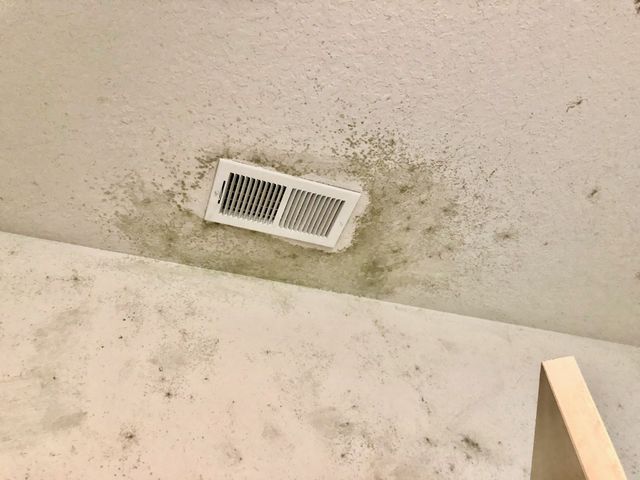
- Mold forming near AC vents or windows
- Warped baseboards or flooring
- Damp closets or storage areas
Sometimes tenants simply say the property smells damp without visible mold present. That odor often indicates hidden moisture problems behind walls or beneath flooring.
Early investigation helps prevent expensive repairs later.
Hidden Mold Problems in Rental Properties
One of the biggest challenges with rental properties is that mold often grows in hidden locations.
Behind Walls
Slow plumbing leaks or rain intrusion frequently soak insulation and framing before surface damage becomes visible.
Under Flooring
Moisture trapped under laminate or carpet after small leaks or flooding can fuel mold growth below the surface.
Attics
Improper ventilation or roof leaks often lead to mold above living areas.
HVAC Systems
Mold inside air handlers or ducts can spread spores throughout rental units.
Bathrooms and Kitchens
Repeated moisture exposure and poor ventilation encourage mold growth behind cabinets and under fixtures.
Because these areas are hidden, visible mold often represents only part of the problem.
Why DIY Mold Cleanup Often Causes Bigger Problems
When tenants or owners see mold, the first instinct is often to clean it quickly. Unfortunately, DIY cleanup rarely solves the underlying issue.
Common mistakes include:
Cleaning Only Surface Mold
Visible mold may be removed while hidden growth remains active.
Using Bleach
Bleach lightens stains but doesn’t eliminate mold embedded in porous materials.
Painting Over Mold
Paint hides stains temporarily while mold continues growing underneath.
Scrubbing Mold Without Containment
Disturbing mold spreads spores throughout the home.
Ignoring Moisture Sources
Without fixing leaks or humidity problems, mold simply returns.
Homes throughout Brevard County often require larger remediation efforts because early cleanup attempts didn’t address moisture correctly.
How Professional Mold Inspection Helps Rental Owners
A professional inspection helps determine both the extent of mold and the moisture source behind it.
Typical inspections include:
Visual Examination
Inspectors examine bathrooms, kitchens, attics, HVAC systems, and moisture-prone areas.
Moisture Detection Tools
Thermal imaging and moisture meters locate hidden dampness behind walls or floors.
Leak and Condensation Identification
Professionals determine whether plumbing, roof, or AC issues are fueling mold growth.
Testing When Necessary
Air or surface sampling may help clarify mold levels in uncertain cases.
Local professionals, including Brevard Mold Inspections & Removal, focus on identifying moisture causes so mold problems do not repeatedly return.
How Proper Mold Remediation Is Handled
If mold contamination is confirmed, proper remediation corrects both contamination and moisture conditions.
Remediation typically includes:
Containment Setup
Work areas are sealed to prevent mold spores from spreading to unaffected parts of the property.
Moisture Source Correction
Leaks or ventilation issues must be repaired first.
Removal of Damaged Materials
Drywall, insulation, or flooring that cannot be cleaned may require removal.
Professional Cleaning and Filtration
HEPA filtration and specialized cleaning remove contamination safely.
Prevention Measures
Owners receive recommendations to reduce future moisture buildup.
Proper remediation protects both the property and tenant comfort.
Preventing Mold Problems in Rental Homes
Rental property owners in Indian Harbour Beach can reduce mold risks through routine maintenance.
Maintain Air Conditioning Systems
Regular HVAC servicing helps control indoor humidity.
Address Leaks Quickly
Small plumbing or roof leaks become major mold problems if ignored.
Inspect After Storms
Homes should be checked after heavy rainfall or hurricanes.
Encourage Tenant Reporting
Tenants should report leaks or moisture concerns immediately.
Maintain Ventilation Systems
Bathroom and kitchen fans should vent moisture outdoors.
Monitor Vacant Properties
Unoccupied units should remain climate-controlled between tenants.
Prevention saves money and prevents tenant complaints.
Why Local Experience Matters
Mold problems in Brevard County homes are shaped by regional weather and building styles.
Local professionals understand:
- Coastal humidity effects
- Hurricane-related moisture intrusion
- Slab foundation moisture behavior
- AC condensation challenges
- Beachside construction patterns
Homes in Indian Harbour Beach face different moisture patterns than inland homes in Titusville or Viera, making local experience important when diagnosing mold issues.
Professionals familiar with the area, including Brevard Mold Inspections & Removal, tailor solutions to local conditions.
A Practical Next Step for Property Owners
Mold concerns in rental properties can feel overwhelming, but most situations are manageable when addressed early.
If tenants report musty odors or mold signs in your Indian Harbour Beach rental, starting with a professional inspection provides clarity about the situation and what steps are truly needed.
Early action protects property value, keeps tenants comfortable, and prevents small moisture issues from becoming large restoration projects.
Taking calm, practical steps today helps ensure rental properties remain safe and well maintained for years to come.