
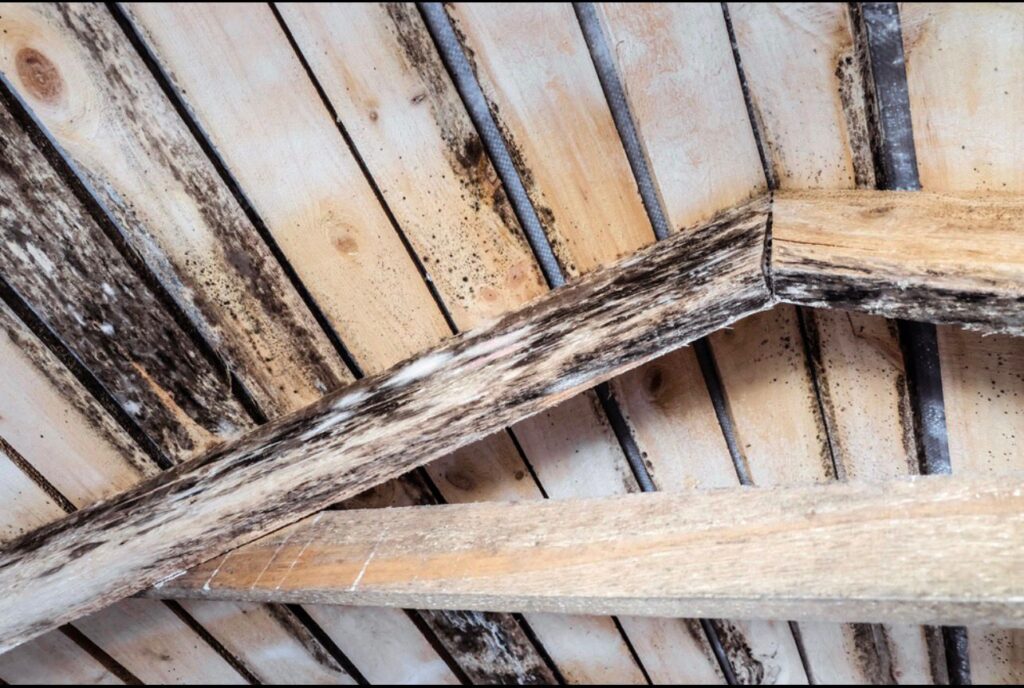
Mold in Attics in Cocoa Beach: What Homeowners in Brevard County Should Know
If you live in Cocoa Beach, your attic works harder than you think.
Between intense coastal humidity, heavy rainstorms, hurricane season, and year-round heat, attics in Brevard County are constantly exposed to moisture stress. And when moisture lingers in a hot, poorly ventilated attic, mold can develop quietly overhead — long before you notice a problem inside your living space.
Many homeowners in Cocoa Beach, Cape Canaveral, Merritt Island, Rockledge, Palm Bay, and Satellite Beach don’t discover attic mold until there’s a musty odor, a ceiling stain, or a home inspection during a sale.
Let’s talk about why attic mold happens in Cocoa Beach — and what you can do about it.
Why Attic Mold Is Common in Cocoa Beach
Cocoa Beach sits directly along the Atlantic Ocean. That means:
- High year-round humidity
- Salt-laden air
- Wind-driven rain during storms
- Hurricane exposure
- Extreme attic temperatures
When humid air enters an attic and meets cooler surfaces — especially at night — condensation can form on roof decking and framing.
Over time, that repeated moisture exposure creates ideal conditions for mold growth.
Even homes that appear well-maintained can develop attic mold if ventilation is unbalanced.
The Most Common Causes of Attic Mold
In Brevard County, attic mold typically traces back to one or more of these issues:
1. Poor Ventilation
Attics need balanced airflow — intake vents (soffits) and exhaust vents (ridge or roof vents) working together.
If airflow is restricted, humid air becomes trapped, and condensation forms.
Homes in Viera and Rockledge sometimes experience this due to blocked soffits or insulation covering intake vents.
2. Bathroom Fans Venting Into the Attic
This is extremely common.
Instead of venting outside, some bathroom exhaust fans discharge moist air directly into the attic space.
That warm, humid air settles on cooler roof decking — especially during winter evenings or after AC use.
Over time, mold develops on wood framing.
3. Roof Leaks After Storms
Cocoa Beach homes regularly face wind-driven rain during hurricanes and summer storms.
Even small roof penetrations can allow moisture into insulation.
Sometimes the leak is minor enough that it doesn’t stain the ceiling immediately — but insulation above remains damp.
4. AC Duct Condensation
In homes where ductwork runs through the attic, cold air moving through ducts in a hot, humid attic creates condensation on duct insulation.
This dripping moisture can affect nearby wood framing.
Continuous AC operation in Brevard County increases this risk.
5. Salt Air Exposure
Coastal air contains salt particles that can accelerate material deterioration.
Combined with humidity, this creates additional moisture retention in attic materials.
Homes closer to the shoreline in Cocoa Beach and Cape Canaveral often see this effect.
Signs of Attic Mold
Because attics aren’t frequently inspected, early signs can be subtle.
Homeowners may notice:
- Musty odors indoors
- Increased humidity inside the home
- Ceiling staining after storms
- Peeling paint near ceiling lines
- Dark spotting visible during attic access
Often, attic mold is discovered during a home inspection.
In Cocoa Beach real estate transactions, attic mold is one of the most common findings.
Why Surface Cleaning Isn’t Enough
Some homeowners attempt to spray visible attic mold with cleaners or seal it with paint.
This approach rarely solves the problem because:
- The moisture source remains
- Ventilation imbalance continues
- Condensation still forms
- Insulation may still be damp
In Florida’s humid environment, untreated moisture leads to recurring mold.
Correcting airflow and moisture is essential.
How Professional Attic Mold Inspections Work
A structured attic mold inspection in Cocoa Beach typically includes:
- Visual examination of roof decking and framing
- Moisture meter readings
- Ventilation assessment
- Insulation evaluation
- Checking bathroom fan vent routing
- Reviewing duct insulation and condensation
- Air sampling when appropriate
The goal is identifying why moisture is present — not just confirming mold.
At Brevard Mold Inspections & Removal, inspections are tailored to coastal Florida conditions.
How Attic Mold Is Properly Addressed
If mold is confirmed, remediation may involve:
- Containment if needed
- Cleaning affected framing
- Removing contaminated insulation
- HEPA air filtration
- Correcting ventilation imbalance
- Rerouting bathroom fan vents
- Addressing roof leaks
- Improving duct insulation
Drying the attic thoroughly is critical before closing up any materials.
Rebuilding without moisture correction leads to recurrence.
Preventing Attic Mold in Cocoa Beach
Prevention focuses on airflow and moisture management.
Homeowners can reduce risk by:
- Ensuring soffit vents are unobstructed
- Confirming ridge vents are functional
- Verifying bathroom fans vent outdoors
- Inspecting roofs annually
- Servicing HVAC systems
- Monitoring attic humidity
- Checking after hurricanes
- Keeping insulation properly installed
Coastal homes benefit from regular attic inspections — especially after storm season.
Why Local Experience Matters
Attic mold in Cocoa Beach behaves differently than in dry inland states.
Here, we manage:
- Coastal humidity
- Salt air exposure
- Hurricane rainfall
- High water tables
- Continuous AC operation
- Extreme attic heat
Homes in Cocoa Beach differ from inland properties in Palm Bay or newer builds in Viera.
Understanding Brevard County’s climate patterns ensures inspections focus on realistic causes — not assumptions.
Local experience helps distinguish between cosmetic staining and active moisture issues.
A Calm, Practical Perspective
Finding mold in your attic can feel unsettling.
But most attic mold situations in Cocoa Beach are manageable when addressed properly.
The key steps are:
- Identify the moisture source.
- Correct ventilation or leaks.
- Clean affected materials safely.
- Stabilize humidity levels.
There’s no need for alarm — just informed action.
If you’d like a structured evaluation of your attic in Cocoa Beach or anywhere in Brevard County, Brevard Mold Inspections & Removal provides experienced, locally informed inspections designed specifically for Florida’s coastal climate.
Managing attic moisture is part of protecting your home in Brevard County. With the right airflow and moisture control, your attic can remain dry, stable, and problem-free year-round.