
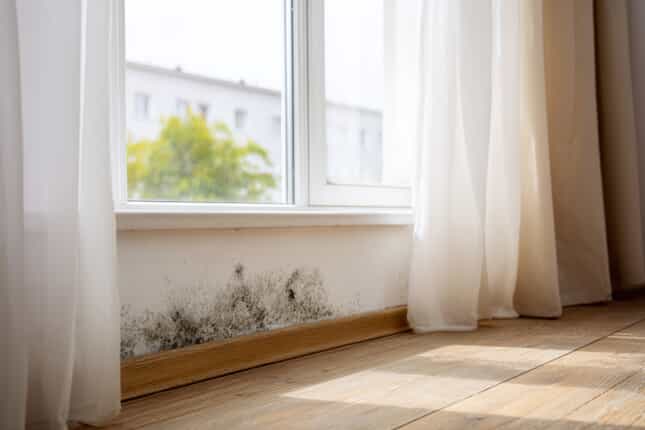
Black Mold in Satellite Beach: What Homeowners in Brevard County Should Know
If you’ve spotted dark mold in your Satellite Beach home, your first reaction was probably concern.
The phrase “black mold” gets a lot of attention, especially here in Brevard County where humidity, ocean air, and hurricanes create the perfect storm for moisture problems. But before jumping to conclusions, it’s important to understand what black mold actually means — and what it doesn’t.
In most Satellite Beach homes, the bigger issue isn’t the color of the mold. It’s the moisture that allowed it to grow in the first place.
Let’s break it down clearly and calmly.
What Is “Black Mold,” Really?
Homeowners often use the term “black mold” to describe any dark-colored mold growth. However:
- Many common household molds appear black or dark green
- Color alone does not identify mold type
- Only lab testing can confirm species
One species that often gets labeled as “toxic black mold” is Stachybotrys chartarum. But not all dark mold is Stachybotrys, and not all mold produces harmful byproducts.
In Satellite Beach, Cocoa Beach, and Merritt Island homes, we most often find typical moisture-related mold growth tied to humidity and water intrusion — not rare or unusual species.
The real question is always: where is the moisture coming from?
Why Black Mold Appears in Satellite Beach Homes
Satellite Beach sits directly along the Atlantic Ocean. That coastal location creates year-round environmental pressure.
Homes here deal with:
- Constant ocean humidity
- Salt-air deterioration of window seals
- Wind-driven rain during storms
- Hurricane roof stress
- Continuous AC use
When moisture enters drywall, attic insulation, or wall cavities, mold can begin developing within 24–48 hours.
Because Florida’s climate slows drying, small moisture problems can turn into visible mold quickly.
Common Places Black Mold Shows Up
In Brevard County coastal homes, dark mold growth most commonly appears in:
Ceiling Corners
Warm, humid air rises and condenses on cooler ceiling surfaces.
Around Windows and Sliding Doors
Salt air and storm pressure can weaken seals, allowing moisture intrusion.
Attics
Wind-driven rain during hurricanes can dampen insulation and roof decking.
Bathrooms
Poor ventilation combined with high humidity creates condensation.
HVAC Systems
Clogged condensate drain lines or dirty evaporator coils can support growth.
The location of the mold usually provides clues about the source.
Does Black Mold Always Mean a Serious Health Risk?
Mold spores are naturally present outdoors everywhere — including Rockledge, Palm Bay, Titusville, and throughout Brevard County.
When mold grows indoors due to moisture, spore levels may increase.
Some individuals may experience:
- Nasal congestion
- Coughing
- Sneezing
- Eye irritation
- Headaches
Sensitivity varies widely from person to person.
Not everyone reacts the same way, and the presence of dark mold does not automatically indicate a severe health emergency.
The key concern is prolonged indoor moisture and active mold growth — not color alone.
Why DIY Cleaning Often Fails
When homeowners discover black mold, many try to clean it immediately with bleach or store-bought sprays.
While surface cleaning may reduce staining, it does not:
- Remove mold embedded in porous drywall
- Correct attic ventilation issues
- Fix roof leaks
- Address plumbing failures
- Lower indoor humidity
In Satellite Beach’s humid climate, mold often returns if moisture is not corrected.
Scrubbing without containment may also spread spores to other areas.
Surface cleaning alone rarely solves the root issue.
The Importance of Identifying the Moisture Source
Every mold issue in Brevard County traces back to moisture.
In Satellite Beach homes, common moisture sources include:
- Hurricane-related roof damage
- Window seal failure
- AC drain line clogs
- High indoor humidity
- Poor attic ventilation
- Plumbing leaks
Without correcting the underlying moisture, mold will continue to return.
That’s why proper inspection focuses on cause, not just cleanup.
What a Professional Mold Inspection Includes
If you’re concerned about black mold in your Satellite Beach home, a thorough inspection typically includes:
Visual Assessment
Examining ceilings, walls, attic spaces, windows, plumbing areas, and HVAC systems.
Moisture Mapping
Using moisture meters to detect hidden dampness behind surfaces.
Humidity Measurement
Assessing indoor environmental conditions.
Attic Inspection
Checking insulation and roof decking for storm-related intrusion.
Sampling (If Needed)
Collecting air or surface samples if species identification is required.
Brevard Mold Inspections & Removal approaches inspections methodically, focusing on accurate moisture detection and practical solutions.
Clear findings prevent unnecessary alarm.
How Black Mold Is Properly Remediated
If mold growth is confirmed, remediation generally involves:
- Correcting the water source
- Containing affected areas
- Removing contaminated drywall or insulation
- Cleaning structural framing
- HEPA air filtration
- Thorough drying
In Florida’s coastal climate, drying is critical before rebuilding.
Lowering indoor humidity below 55% significantly reduces regrowth risk.
Remediation is about stabilization, not just removal.
Preventing Black Mold in Satellite Beach
Prevention requires consistent moisture management.
Homeowners can:
- Maintain indoor humidity between 45%–55%
- Service HVAC systems annually
- Flush AC drain lines regularly
- Inspect roofs after storms
- Seal windows and sliding doors
- Ensure bathroom fans vent outdoors
- Avoid turning off AC during humid months
After hurricanes affecting Cocoa Beach or Cape Canaveral, attic inspections within 48 hours help prevent hidden growth.
Proactive maintenance reduces long-term risk.
Why Local Experience in Brevard County Matters
Mold behavior in Florida differs from dry climates.
Satellite Beach homes face:
- Direct ocean humidity
- Salt-air wear
- Hurricane wind pressure
- Slab foundation moisture
- Continuous AC operation
An inspector familiar with Brevard County understands where moisture typically hides and how quickly mold can develop here.
Brevard Mold Inspections & Removal works throughout Satellite Beach, Cocoa Beach, Merritt Island, Rockledge, Melbourne, Palm Bay, and Titusville. Local experience ensures recommendations reflect Florida’s climate realities.
A Calm, Practical Perspective
Seeing black mold in your Satellite Beach home can be unsettling.
But in most Brevard County homes, the issue is prolonged moisture — not a rare or mysterious contaminant.
If you’ve noticed dark staining, musty odors, or storm-related water intrusion, a professional inspection can provide clarity and direction.
In Florida’s humid coastal environment, controlling moisture is the most effective way to protect your home.
Address the cause, stabilize the environment, and mold becomes manageable.