
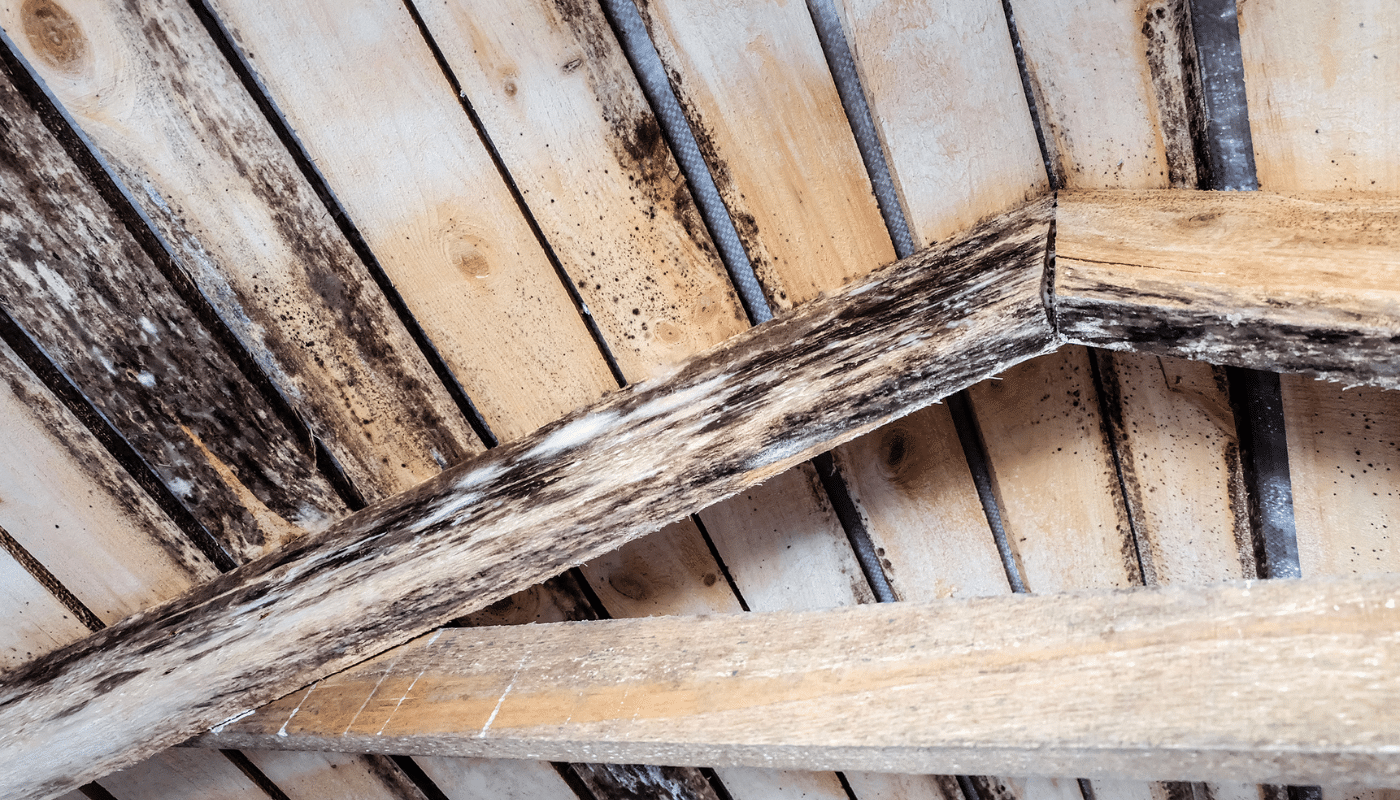
If you’ve spotted mold in your Cocoa Beach home, your first instinct might be to grab bleach and handle it yourself.
That reaction is completely understandable.
But in coastal Brevard County, DIY mold removal often creates bigger problems than it solves. Between high humidity, salt air exposure, storm activity, and year-round AC use, mold in Cocoa Beach homes is usually tied to deeper moisture issues.
Before you tackle it yourself, here’s what homeowners should know about the risks of DIY mold cleanup.
Why Mold Is Different in Coastal Homes
Cocoa Beach properties face constant environmental moisture.
Homes here deal with:
- Elevated coastal humidity
- Wind-driven rain
- Hurricane exposure
- Salt air corrosion
- Heavy reliance on air conditioning
Because moisture levels are naturally higher, mold growth can be more aggressive — especially when hidden behind walls or in attics.
Surface cleaning rarely addresses the full scope of the issue.
Risk #1: Bleach Doesn’t Fix the Problem
Bleach is the most common DIY solution.
But bleach:
- Does not penetrate porous materials like drywall or wood
- Does not remove mold roots inside materials
- Does not correct hidden moisture
It may lighten the stain temporarily. That doesn’t mean the mold is gone.
In Cocoa Beach homes, where humidity remains elevated, mold often returns quickly if moisture isn’t corrected.
Risk #2: Spreading Mold Spores
When mold is scrubbed or disturbed without containment, microscopic spores can become airborne.
Those spores can:
- Travel through HVAC systems
- Settle in new areas
- Trigger additional growth elsewhere
We’ve seen situations in Brevard County where a small bathroom mold issue turned into attic contamination because spores spread during DIY cleaning.
Containment is a key part of professional remediation for this reason.
Risk #3: Missing Hidden Moisture
Visible mold is often just the surface symptom.
In Cocoa Beach homes, mold frequently hides:
- Behind drywall after roof leaks
- Under laminate flooring after minor flooding
- Inside attic insulation
- Around air handler closets
If you clean the surface without identifying the moisture source, the problem continues behind the scenes.
Professional inspections use moisture meters and thermal imaging to detect damp areas that aren’t visible.
Risk #4: Coastal Slab Moisture
Many Brevard County homes are built on slab foundations.
After heavy storms or prolonged rain, ground saturation increases. Moisture can migrate upward through concrete and become trapped under flooring.
DIY cleaning of visible baseboard mold doesn’t address slab moisture.
Without identifying and managing that source, mold can reappear repeatedly.
Risk #5: Health and Safety Exposure
Disturbing mold without proper protection can expose you to higher concentrations of spores.
While reactions vary by individual, homeowners sometimes report:
- Throat irritation
- Sneezing
- Eye irritation
- Headaches
Professional remediation teams use:
- Respiratory protection
- HEPA air scrubbers
- Containment barriers
DIY cleanup often lacks those safeguards.
Risk #6: Improper Drying After Storms
After hurricanes or heavy storms in Cocoa Beach, homeowners often attempt to dry areas with fans alone.
Surface drying may make materials feel dry to the touch — but internal moisture can remain trapped inside walls or insulation.
Mold can begin developing within 24–48 hours in Florida’s warm climate.
Professional drying includes moisture measurement to ensure materials reach safe levels.
When DIY Cleaning Might Be Reasonable
Small, isolated spots on non-porous surfaces — such as tile — may be manageable.
However, if mold:
- Covers more than a small area
- Involves drywall or wood
- Is accompanied by musty odor
- Returns after cleaning
- Follows storm or water damage
Professional evaluation is strongly recommended.
What Professional Mold Remediation Looks Like
In Cocoa Beach homes, remediation typically includes:
- Containment of affected areas
- Removal of contaminated drywall or insulation
- Cleaning of structural framing
- HEPA air filtration
- Correction of moisture source
The final step — moisture correction — is the most important.
Without it, mold can return.
At Brevard Mold Inspections & Removal, moisture source identification is always the starting point.
The Role of Your AC System
Your AC system is critical for mold prevention in Brevard County.
If it is:
- Oversized
- Not maintained
- Running short cycles
- Experiencing clogged drain lines
It may cool your home without properly removing humidity.
In Cocoa Beach’s coastal climate, consistent AC maintenance is essential.
Preventing Mold in Cocoa Beach
The best strategy is prevention.
Homeowners should:
- Keep indoor humidity between 45–55%
- Service AC systems annually
- Flush condensate drain lines
- Inspect roof flashing after storms
- Ensure proper attic ventilation
- Run exhaust fans consistently
Homes in Satellite Beach, Cape Canaveral, Indian Harbour Beach, Merritt Island, and Melbourne face similar climate pressures.
Routine moisture control reduces the need for reactive cleanup.
When to Schedule a Professional Inspection
Consider calling for evaluation if:
- Mold returns after cleaning
- You smell persistent musty odors
- There was recent storm or water damage
- Flooring begins lifting
- Indoor humidity remains elevated
You don’t need a major outbreak to justify inspection.
Early detection prevents more extensive repairs later.
Brevard Mold Inspections & Removal provides professional inspections and remediation throughout Cocoa Beach and all of Brevard County.
In Florida’s coastal climate, mold is rarely just a surface issue.
Find the moisture. Fix it properly. And avoid the risks that often come with DIY cleanup.