
Hidden Mold Problems in Cocoa Beach: What Homeowners in Brevard County Should Know
If you live in Cocoa Beach, you’re used to humidity. It’s part of coastal life in Brevard County.
But what many homeowners don’t realize is how often mold grows where you can’t see it.
Hidden mold problems are far more common than large, obvious patches on a wall. In Cocoa Beach homes, mold often develops quietly behind drywall, under flooring, inside attics, or within HVAC systems — sometimes for months before anyone notices.
The key isn’t fear. It’s awareness.
In Florida’s coastal climate, moisture moves differently than in dry states. And when moisture lingers, mold follows.
Why Hidden Mold Is Common in Cocoa Beach
Cocoa Beach homes face constant environmental pressure:
- Direct ocean humidity
- Wind-driven rain
- Hurricane exposure
- Salt-air wear on building materials
- Year-round air conditioning
Even when there’s no visible flooding, moisture can enter through small openings — roof flashing, window seals, vent penetrations, or minor plumbing leaks.
In Florida, that moisture doesn’t dry quickly.
Instead, it gets trapped.
Once trapped inside drywall or insulation, mold can begin developing within 24–48 hours.
And because it’s concealed, homeowners may not realize it’s there.
The Most Common Places Hidden Mold Develops
In Cocoa Beach and nearby areas like Satellite Beach and Cape Canaveral, hidden mold tends to show up in predictable locations.
Behind Drywall
A small plumbing leak inside a wall can go unnoticed for weeks.
By the time staining appears, mold may already be widespread inside the cavity.
Under Flooring
Laminate and tile floors in slab homes can trap moisture beneath them.
Even small amounts of water from leaks or storm intrusion can remain against the concrete.
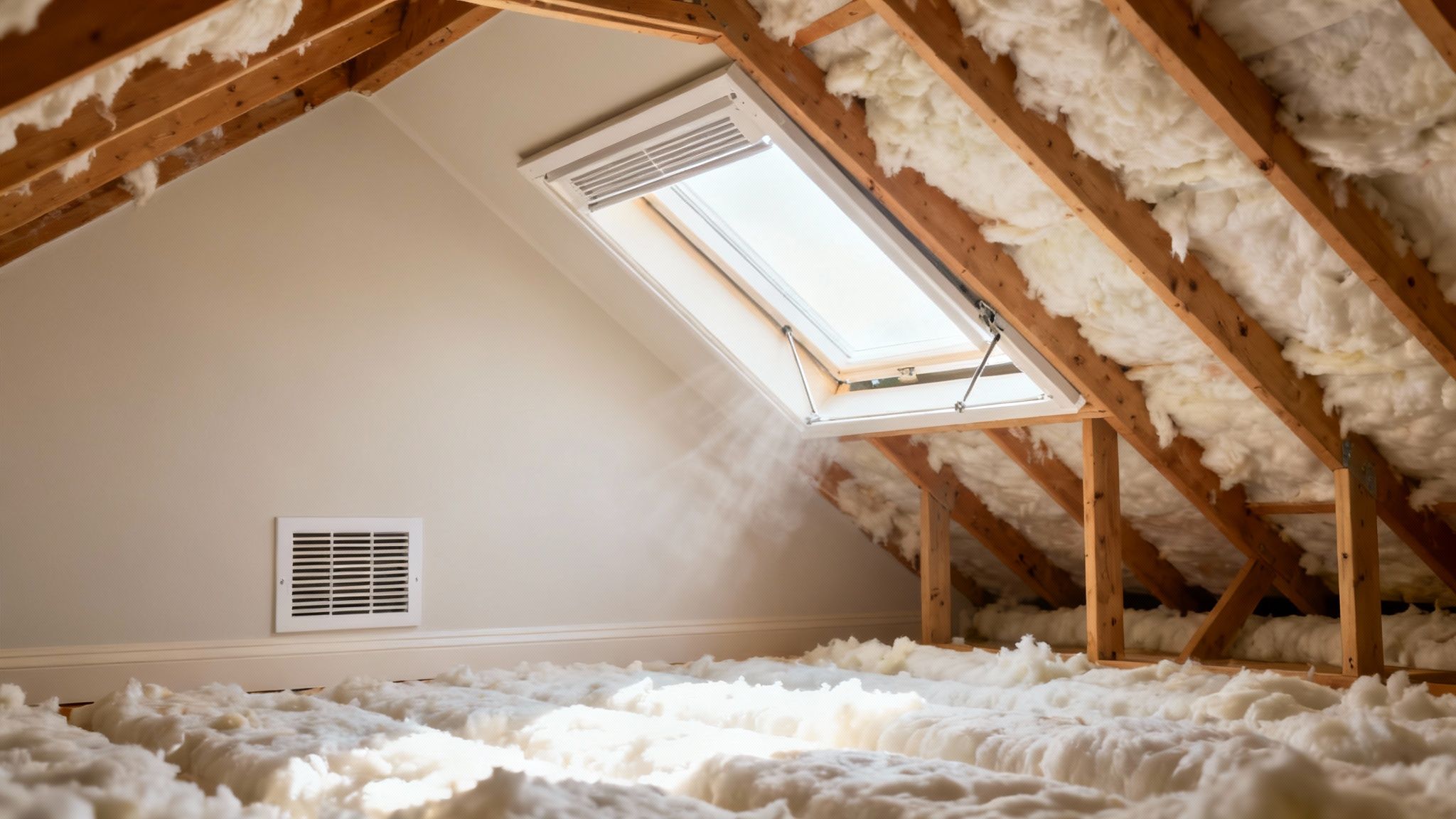
In Attics
Wind-driven rain during hurricanes often enters through vents or minor roof gaps.
Wet insulation holds moisture against roof decking for extended periods.
Around Windows and Sliding Doors
Salt air accelerates seal deterioration.
Storm pressure forces moisture into small gaps.
Inside HVAC Systems
Clogged condensate drain lines or dirty evaporator coils create hidden moisture within air handlers.
Because HVAC systems circulate air throughout the home, hidden contamination here can affect multiple rooms.
Signs There May Be Mold You Can’t See
Hidden mold often reveals itself indirectly.
Homeowners in Cocoa Beach frequently report:
- Persistent musty odors
- Repeated mold growth in the same spot
- Warped baseboards
- Peeling paint
- Increased indoor humidity
- Allergy-like symptoms that improve outside
Odor is often the earliest sign.
If a room smells damp despite cleaning, moisture may be present behind surfaces.
Why Florida’s Climate Makes Hidden Mold Worse
In dry climates, materials often dry naturally after minor leaks.
In Brevard County:
- Humidity slows evaporation
- Warm temperatures accelerate mold growth
- Insulation retains moisture
- Slab foundations hold dampness
Cocoa Beach homes experience elevated outdoor humidity almost year-round.
When indoor air is already moist, hidden materials dry slowly — if at all.
That’s why even small water events can turn into long-term hidden problems.
Hurricanes and Hidden Moisture
After hurricanes affecting Rockledge, Merritt Island, or Cocoa Beach, many homes experience minor water intrusion.
It may not look dramatic.
But wind-driven rain can:
- Soak attic insulation
- Enter behind siding
- Travel along framing
- Wet drywall from the inside
If not inspected within days, hidden moisture may remain trapped.
Weeks later, mold growth begins.
Storm season inspections are critical in coastal communities.
Why Surface Cleaning Doesn’t Solve Hidden Mold
When homeowners see small patches of mold, they often clean the visible area.
The problem?
Surface cleaning does not:
- Detect moisture inside walls
- Identify attic leaks
- Fix slab dampness
- Correct ventilation imbalance
- Remove mold inside cavities
If mold returns in the same location, hidden moisture is likely still present.
In Cocoa Beach’s humid environment, moisture control is always the foundation.
What a Professional Inspection Looks For
A proper mold inspection in Cocoa Beach focuses on finding hidden moisture.
A thorough evaluation typically includes:
Visual Assessment
Checking ceilings, walls, baseboards, windows, attic spaces, crawl spaces, and HVAC systems.
Moisture Mapping
Using moisture meters to detect dampness behind drywall and under flooring.
Infrared Imaging
Identifying temperature differences that may indicate trapped moisture.
Humidity Measurement
Evaluating overall indoor environmental balance.
Attic Inspection
Assessing insulation and roof decking after storms.
Brevard Mold Inspections & Removal approaches hidden mold investigations with attention to environmental patterns unique to Florida.
The goal is identifying the source — not just the symptom.
How Hidden Mold Is Properly Addressed
If hidden mold is confirmed, remediation focuses on:
- Correcting the moisture source
- Containing affected areas
- Removing contaminated materials
- Cleaning structural framing
- HEPA air filtration
- Thorough drying
In Florida’s climate, drying is critical before rebuilding.
Without restoring proper moisture levels, mold can return.
Removal without stabilization rarely lasts.
Preventing Hidden Mold in Cocoa Beach
Prevention requires proactive moisture management.
Homeowners can:
- Maintain indoor humidity between 45%–55%
- Service HVAC systems annually
- Flush condensate drain lines regularly
- Inspect attics after storms
- Seal windows and exterior gaps
- Repair roof damage promptly
- Address plumbing leaks immediately
After heavy storms or hurricanes, checking attic insulation and ceilings within 48 hours reduces hidden risks.
Small moisture problems are much easier to address early.
Why Local Experience in Brevard County Matters
Hidden mold in Florida behaves differently than in dry states.
Cocoa Beach homes face:
- Direct ocean humidity
- Salt-air material wear
- Hurricane wind pressure
- Slab foundation moisture
- Continuous AC operation
An inspector familiar with Brevard County understands how moisture travels in coastal homes.
Brevard Mold Inspections & Removal works throughout Cocoa Beach, Satellite Beach, Merritt Island, Rockledge, Melbourne, Palm Bay, and Titusville. Local experience ensures inspections reflect Florida’s climate realities.
A Practical, Balanced Perspective
Hidden mold problems in Cocoa Beach are not unusual.
But they are manageable when identified early.
If you’ve noticed persistent musty odors, recurring mold, or recent storm exposure, a professional inspection can provide clarity.
In Brevard County’s humid coastal environment, controlling moisture is the most effective way to prevent hidden mold from becoming a larger issue.
Stay proactive, monitor humidity, and address small problems before they grow.