
Hidden Mold Problems in West Melbourne: What Homeowners in Brevard County Should Know
If you live in West Melbourne and your home smells musty but you can’t see obvious mold, you’re not alone.
Across Brevard County, hidden mold is far more common than visible surface growth. Florida’s humidity, frequent storms, slab foundations, and year-round air conditioning create ideal conditions for moisture to accumulate quietly behind walls, under flooring, or inside attics.
The challenge with hidden mold isn’t just the growth itself — it’s that homeowners often don’t know it’s there until the issue becomes larger.
Let’s break down why hidden mold happens, where it typically forms, and how homeowners in West Melbourne can address it early and calmly.
Why Hidden Mold Is So Common in West Melbourne Homes
Florida’s climate makes moisture management essential.
Homes in West Melbourne face:
- High year-round humidity
- Heavy summer rainfall
- Hurricane-related wind-driven rain
- Slab foundations with potential ground moisture
- Long cooling seasons with constant AC use
Even small moisture events — like a slow plumbing leak or minor roof intrusion — can create damp conditions inside wall cavities.
Homes in nearby Melbourne and Palm Bay experience similar moisture patterns.
Because mold needs only moisture and organic material to grow, drywall backing, wood framing, and insulation become easy targets when water lingers.
Common Places Hidden Mold Develops
Hidden mold rarely starts in open view. It often develops in concealed areas such as:
Behind Drywall
A slow pipe leak inside a wall cavity can allow mold to spread without visible staining for weeks.
Under Kitchen or Bathroom Cabinets
Water supply line drips may soak cabinet bases and subflooring before homeowners notice damage.
Beneath Flooring
Slab moisture or minor flooding can affect flooring adhesives and padding.
Inside Attics
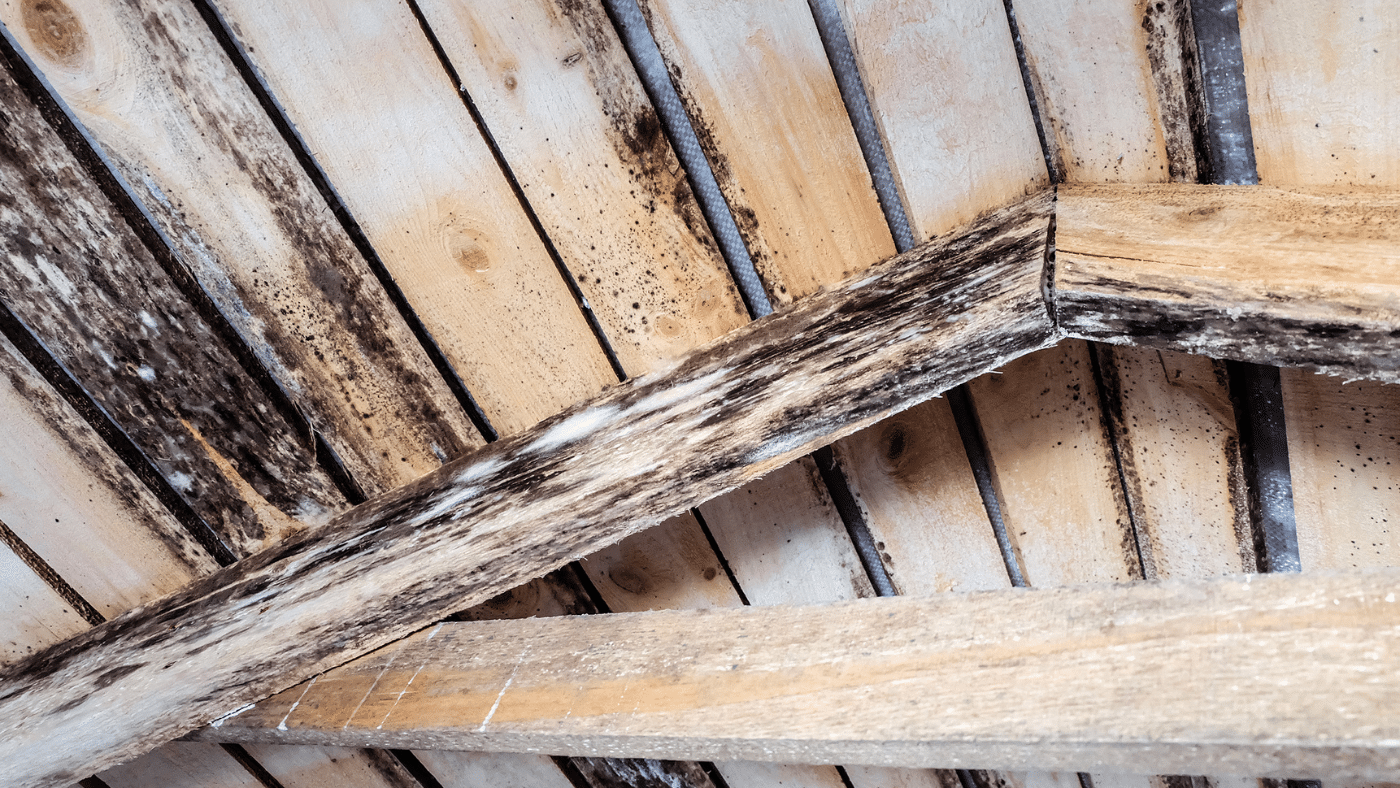
Blocked ventilation or roof leaks allow moisture to collect above ceiling drywall.
Inside HVAC Systems
Condensation issues inside air handlers or ductwork can support hidden growth.
Homes in Rockledge and Satellite Beach frequently show attic-related hidden mold during humid summer months.
Signs You May Have Hidden Mold
Because hidden mold isn’t visible, homeowners often notice indirect clues first.
Common warning signs include:
- Persistent musty odors
- Peeling paint or bubbling drywall
- Warped baseboards
- Unexplained staining
- Increased indoor humidity
- Past water damage history
If a musty odor lingers even after cleaning, moisture may still be present behind surfaces.
After storm season in West Melbourne, attic inspections often reveal hidden moisture from minor roof breaches.
Why Hidden Mold Often Follows Water Damage
Water damage doesn’t always look dramatic.
Even minor events can create long-term moisture:
- Overflowing AC drain lines
- Small roof leaks
- Plumbing supply line drips
- Window seal failures
- Improperly vented bathroom fans
When materials remain damp for more than 24 to 48 hours, mold can begin developing.
In Florida’s warm environment, growth can progress quickly inside concealed spaces.
The Importance of Professional Mold Inspection
Hidden mold requires professional evaluation because surface checks aren’t enough.
A structured inspection in West Melbourne typically includes:
Detailed Visual Assessment
Inspecting attics, crawl spaces, cabinets, and moisture-prone areas.
Moisture Detection
Using calibrated moisture meters to detect dampness behind walls or under flooring.
Thermal Imaging
Identifying temperature variations that suggest hidden moisture pockets.
Humidity Measurement
Ensuring indoor humidity remains within the safe 45–55% range.
Air Sampling (If Appropriate)
Air testing may reveal elevated spore levels when mold is not visible.
At Brevard Mold Inspections & Removal, inspections focus on identifying moisture sources first — because moisture is the root cause.
Why DIY Investigation Often Misses Hidden Mold
Homeowners often look for visible mold but may overlook concealed moisture.
Without professional tools:
- Wall cavities may appear dry externally but remain damp inside.
- Attic ventilation problems may not be obvious.
- Slab moisture migration may go unnoticed.
- AC condensation problems may be misdiagnosed.
Opening walls unnecessarily can create additional damage without solving the problem.
Proper inspection narrows the issue before removal begins.
What Happens If Hidden Mold Is Found?
If hidden mold is confirmed, remediation focuses on:
- Containment of the affected area
- Removal of contaminated porous materials
- Cleaning structural components
- Correcting the moisture source
In West Melbourne homes, moisture correction often includes:
- Roof repairs
- Clearing clogged AC drain lines
- Improving attic ventilation
- Addressing plumbing leaks
- Installing dehumidification solutions
Without moisture correction, mold will return — even if cleaned.
Preventing Hidden Mold in West Melbourne Homes
Prevention centers on consistent moisture management.
Homeowners can reduce risk by:
- Monitoring indoor humidity levels
- Servicing HVAC systems annually
- Flushing AC drain lines regularly
- Inspecting roofs after storms
- Ensuring proper attic ventilation
- Addressing plumbing leaks immediately
- Checking under sinks periodically
Homes in Merritt Island and Titusville benefit from the same proactive maintenance approach.
Florida’s humidity doesn’t take breaks — and neither should moisture prevention.
Why Local Experience Matters
Hidden mold in Brevard County behaves differently than in dry climates.
West Melbourne homes face:
- Persistent coastal humidity
- Elevated groundwater in some neighborhoods
- Frequent storm cycles
- Slab construction common throughout the area
An inspector unfamiliar with local building patterns may overlook common moisture entry points.
Brevard Mold Inspections & Removal understands how Florida’s climate affects homes in West Melbourne and surrounding cities.
Local experience leads to accurate diagnosis and practical solutions.
A Calm and Practical Next Step
If you suspect hidden mold in your West Melbourne home, start with inspection — not demolition.
Ask:
- Has there been recent water intrusion?
- Is humidity consistently elevated?
- Are musty odors persistent?
- Have repairs been made after storms?
A professional evaluation provides clarity and helps determine whether remediation is necessary.
In Brevard County’s demanding climate, early detection prevents structural damage and protects your home long-term.
With proper inspection and consistent moisture control, hidden mold problems can be identified early and resolved effectively.