
Humidity and Mold in Palm Bay: What Homeowners in Brevard County Should Know
If you live in Palm Bay, you’ve felt it.
That heavy air when you step outside in the morning. The way your glasses fog up. The way your AC seems to run nonstop from spring through late fall.
Humidity isn’t just uncomfortable in Brevard County — it’s one of the main drivers of mold problems inside homes.
In Palm Bay, we regularly inspect houses where there was no major flood, no broken pipe, no obvious roof leak. The issue was simply prolonged indoor humidity that stayed too high for too long.
If you’re concerned about moisture or musty smells in your home, here’s what you should understand about how humidity alone can lead to mold growth in Palm Bay and throughout Brevard County.
Why Palm Bay Homes Are Especially Vulnerable
Palm Bay sits inland compared to Cocoa Beach or Satellite Beach, but it still experiences the same subtropical climate.
High humidity levels are normal here.
For much of the year, outdoor humidity in Brevard County hovers between 70% and 90%. Even with air conditioning, indoor humidity can remain elevated if:
- The AC system is oversized
- The system isn’t running long enough to dehumidify properly
- Ductwork has leaks
- The home isn’t well-sealed
In many Palm Bay homes — especially slab-built houses constructed in the 1980s and 1990s — humidity management wasn’t a major design focus.
Over time, that constant moisture exposure creates ideal conditions for mold.
How Humidity Alone Can Cause Mold
Mold does not require standing water.
When indoor humidity stays above 60% consistently, surfaces can absorb moisture from the air itself.
Drywall, wood trim, baseboards, and even dust particles begin retaining moisture.
In Palm Bay homes, we frequently measure indoor humidity levels in the mid-60s to low-70s during summer months — even when the thermostat is set to 74 or 75 degrees.
That sustained moisture creates slow, quiet mold growth in areas like:
- Closet walls
- Guest bedrooms
- Behind furniture
- Attic decking
- Inside air handlers
It often develops gradually and goes unnoticed.
Signs Your Palm Bay Home May Have a Humidity Problem
Humidity-related mold issues usually begin subtly.
Persistent Musty Smell
Closets and closed-off rooms are often the first places homeowners notice a damp odor.
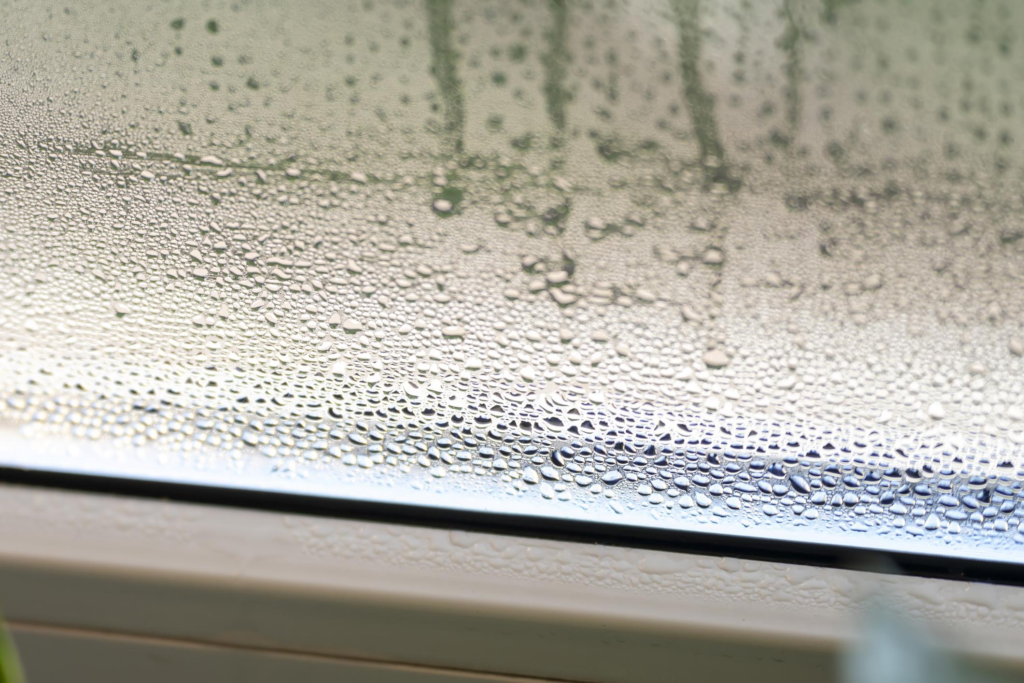
Condensation on Windows
If you see frequent window fogging indoors, humidity levels may be elevated.
Warped Baseboards or Door Frames
Wood materials expand when exposed to moisture over time.
AC Runs Constantly But Home Feels Damp
This is common in Palm Bay homes with oversized HVAC systems.
Mold Appearing in Multiple Rooms
When mold shows up in different areas without a single clear leak, humidity is often the underlying cause.
Unlike storm damage in Cocoa or roof leaks in Rockledge, humidity-driven mold can affect multiple areas at once.
The Role of HVAC Systems in Humidity Control
Air conditioning doesn’t just cool air — it removes moisture.
But not all systems do this effectively.
Oversized Units
In many Palm Bay neighborhoods, we see systems that cool the house quickly but shut off before removing enough humidity.
Short run cycles mean less dehumidification.
Poor Airflow
Clogged filters or duct leaks reduce moisture removal efficiency.
Clogged Drain Lines
Condensation that doesn’t drain properly can increase moisture inside the air handler.
Homes in Melbourne, Titusville, and Merritt Island experience similar HVAC-related humidity problems.
Humidity control isn’t automatic. It depends on system performance.
Why Slab Foundations Matter in Palm Bay
Many Palm Bay homes are built on concrete slabs.
Concrete can absorb and transmit moisture from the ground, especially during heavy rain seasons.
Even without visible flooding, soil saturation can increase moisture levels along flooring edges and baseboards.
Over time, that creates conditions for mold growth under:
- Laminate flooring
- Carpet padding
- Vinyl plank flooring
We frequently detect elevated moisture levels at floor transitions in slab homes across Palm Bay.
Attics and Humidity: A Hidden Concern
Attics in Brevard County reach extreme temperatures.
When warm, humid air enters the attic space and meets cooler surfaces, condensation can form on roof decking.
In Palm Bay and Viera homes, we regularly inspect attics where mold developed due to:
- Poor ventilation
- Improperly vented bathroom fans
- AC duct leaks
Attic mold often goes unnoticed until an inspection is performed.
Why Cleaning Surface Mold Doesn’t Solve Humidity Problems
If you wipe away visible mold without addressing indoor humidity, it usually returns.
Surface cleaning:
- Does not lower humidity
- Does not correct HVAC issues
- Does not fix ventilation problems
Bleach may lighten stains, but it doesn’t prevent recurrence if moisture remains elevated.
We’ve inspected homes in Palm Bay where homeowners repeatedly cleaned baseboards, only to see mold reappear months later.
Humidity was the root cause.
What a Humidity-Related Mold Inspection Involves
A professional mold inspection in Palm Bay focuses heavily on moisture evaluation.
At Brevard Mold Inspections & Removal, inspections typically include:
Indoor Humidity Measurement
We measure real-time humidity levels throughout the home.
Moisture Detection
Using moisture meters, we check walls, baseboards, flooring edges, and ceilings for elevated readings.
HVAC Evaluation
We assess:
- Drain lines
- Air handler condition
- Condensation patterns
- Duct connections
Attic Inspection
We check for ventilation issues and condensation-related mold growth.
Air Sampling (When Appropriate)
If indoor air quality concerns exist, samples may be sent to a certified laboratory.
The goal is to determine whether humidity alone is contributing to mold growth.
Preventing Mold in Palm Bay Homes
Humidity control is the key.
Keep Indoor Humidity Below 60%
Use dehumidifiers if necessary during peak summer months.
Ensure Proper HVAC Sizing
If your system short cycles frequently, it may not be removing enough moisture.
Seal Duct Leaks
Leaky ducts can draw humid attic air into the system.
Improve Ventilation
Make sure bathroom and kitchen exhaust fans vent outdoors.
Monitor Attic Conditions
Proper attic airflow reduces condensation buildup.
Act Quickly After Heavy Rains
Even without visible flooding, check baseboards and flooring edges.
Homes in Cocoa, Rockledge, Merritt Island, and Satellite Beach face similar humidity challenges — but Palm Bay’s widespread slab construction makes moisture management especially important.
Why Local Experience in Brevard County Matters
Humidity-driven mold problems in Palm Bay are different from leak-driven mold problems elsewhere.
Local inspectors understand:
- Year-round humidity levels
- Slab foundation behavior
- Hurricane season moisture spikes
- AC system performance in Florida
- Attic heat loads
At Brevard Mold Inspections & Removal, inspections are conducted with Brevard County’s climate in mind. What works in a dry state doesn’t apply here.
Understanding regional patterns helps identify problems early.
When to Schedule a Mold Inspection
You may want to consider an inspection if:
- Your home smells persistently damp
- Mold appears in multiple rooms
- You notice condensation on windows
- Flooring edges feel soft
- AC runs frequently but humidity feels high
- You’ve had recent roof or plumbing issues
Early evaluation often prevents more extensive remediation.
A Calm, Practical Next Step
Humidity is a constant in Palm Bay. Mold doesn’t have to be.
If you’re in Palm Bay or anywhere in Brevard County — including Melbourne, Rockledge, Merritt Island, Titusville, Cocoa, Cocoa Beach, Viera, Satellite Beach, or Cape Canaveral — and you’re concerned about moisture or mold, a professional inspection can provide clarity.
Brevard Mold Inspections & Removal offers careful, pressure-free evaluations focused on identifying humidity issues and explaining your options clearly.
Understanding how moisture is affecting your home is the first step toward protecting it long-term.