

Humidity and Mold in Palm Bay: What Homeowners in Brevard County Should Know
Humidity is a daily reality for homeowners in Palm Bay, and it’s one of the biggest reasons mold problems develop in Brevard County homes. You don’t need a flood, a burst pipe, or a major roof leak for mold to appear. In many cases, consistently high indoor humidity is enough to trigger mold growth quietly and steadily over time.
Palm Bay homes, along with those in Melbourne, West Melbourne, Rockledge, Viera, and Merritt Island, experience long stretches of warm, moisture-heavy air throughout the year. When that moisture isn’t properly controlled indoors, mold often follows. Understanding how humidity fuels mold growth and where problems typically start helps homeowners stay ahead of costly damage.
How Humidity Leads to Mold Growth
Mold needs moisture more than anything else. When indoor humidity stays elevated, moisture settles on walls, ceilings, furniture, and inside building materials. Over time, this moisture creates the perfect environment for mold spores to grow.
In Palm Bay, indoor humidity can rise even when it hasn’t rained. Warm outdoor air naturally holds more moisture, and when it enters a cooled home, condensation can form on cooler surfaces. If that moisture doesn’t dry out quickly, mold can begin growing without any obvious water damage.
Many homeowners are surprised to learn that mold can grow even when surfaces don’t feel wet to the touch.
Why Palm Bay Homes Are Especially Vulnerable
Palm Bay’s location and climate create constant humidity pressure on homes. High outdoor humidity levels are common most of the year, especially during spring and summer months.
Frequent afternoon storms raise moisture levels even higher. Even brief rain events can increase indoor humidity, particularly in homes with air leaks, older windows, or poor insulation.
Air conditioning systems help, but they don’t always remove enough moisture on their own. In some homes, AC systems cool the air quickly without fully dehumidifying it, allowing humidity to remain high indoors.
Slab foundations, which are common in Palm Bay, can also contribute. Moisture from the ground can migrate upward, increasing overall indoor humidity even without visible water intrusion.
Common Signs of High Humidity in the Home
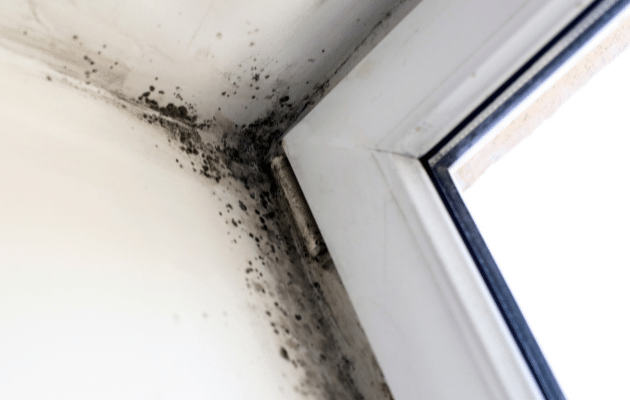
High humidity often shows warning signs before mold becomes visible. Persistent condensation on windows, mirrors, or vents is a common indicator.
Homeowners may notice a damp or musty smell that never fully goes away, especially in closets, spare bedrooms, or bathrooms. Furniture and fabrics may feel slightly damp, and doors may stick or swell.
In some Palm Bay homes, paint begins to peel, or drywall shows bubbling or soft spots. These are often signs that humidity has been affecting materials for an extended period.
Where Mold Commonly Develops Due to Humidity
Humidity-driven mold often appears in areas with limited airflow. Bathrooms are a frequent problem, especially when exhaust fans are inadequate or rarely used.
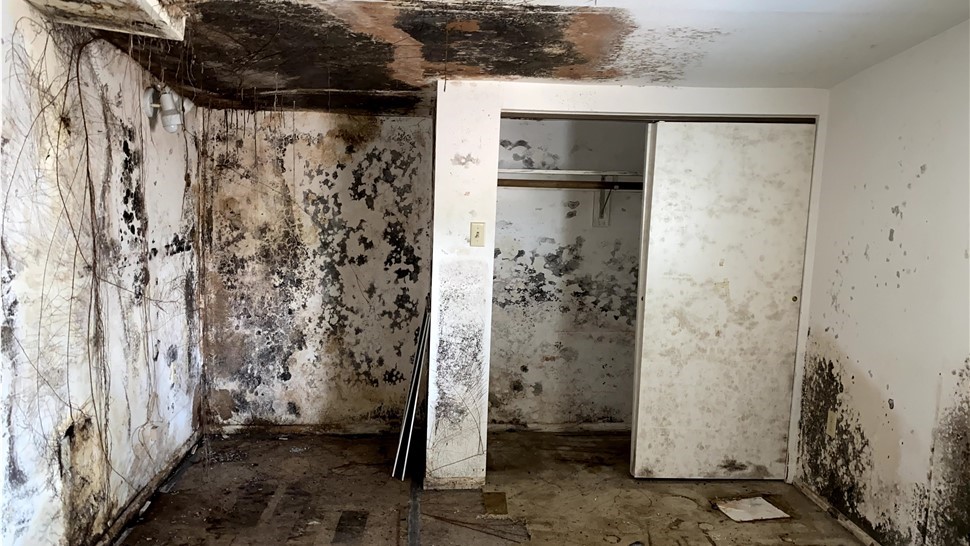
Closets, especially those on exterior walls, are another common trouble spot. Attics can also develop mold when warm, moist air rises and condenses on roof decking.
HVAC systems are particularly vulnerable. Condensation around air handlers, drain pans, and ductwork can support mold growth that spreads throughout the home.
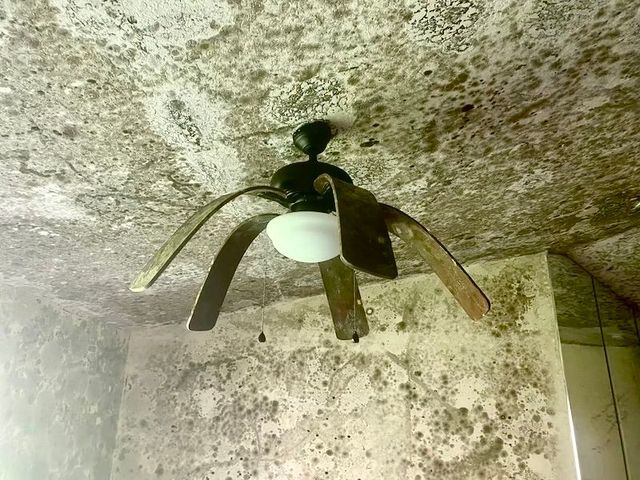
In Palm Bay homes, mold caused by humidity is often found in multiple areas at once rather than in a single obvious location.
Why Humidity Problems Often Go Unnoticed
Unlike leaks or floods, humidity issues develop slowly. There’s often no clear starting event that alerts homeowners to a problem.
Because high humidity feels normal in Florida, many homeowners assume it’s unavoidable and harmless. Over time, however, persistent humidity affects building materials, insulation, and indoor air quality.
By the time visible mold appears, humidity has usually been elevated for weeks or months.
The Limits of Air Conditioning Alone
Many homeowners rely solely on their AC system to control humidity. While air conditioning does remove moisture, it has limits.
Oversized systems may cool the home too quickly, shutting off before enough moisture is removed. Dirty coils, clogged drain lines, or poor airflow can also reduce dehumidification.
In Palm Bay’s climate, AC systems are often running near capacity. When humidity levels spike after storms or during prolonged wet weather, additional moisture control may be needed.
Why DIY Mold Cleaning Doesn’t Fix Humidity Issues
When mold appears, homeowners often focus on cleaning it away. While this may improve how an area looks, it doesn’t solve the underlying humidity problem.
As long as moisture levels remain high, mold is likely to return. In some cases, repeated cleaning spreads spores or masks a growing hidden issue.
Humidity-driven mold problems require moisture control first, not just surface treatment.
Professional Mold Inspection and Humidity Assessment
A professional mold inspection looks beyond visible growth. Inspectors evaluate moisture levels, ventilation, HVAC performance, and areas where humidity is likely to accumulate.
Moisture detection tools help identify damp materials inside walls, ceilings, or floors. Inspectors also look for signs of condensation and airflow issues that contribute to humidity buildup.
When appropriate, air or surface sampling may be used to better understand mold conditions. This information helps homeowners make informed decisions without guesswork.
Proper Mold Remediation in High-Humidity Homes
Effective mold remediation in Palm Bay homes addresses both the mold and the humidity that allowed it to grow.
Containment may be used to prevent spores from spreading during removal. Affected materials are cleaned or removed depending on severity.
Just as important, steps are taken to reduce ongoing moisture. This may include improving ventilation, adjusting HVAC performance, sealing air leaks, or addressing insulation issues.
Brevard Mold Inspections & Removal approaches humidity-related mold with a long-term prevention mindset rather than short-term cosmetic fixes.
Practical Ways to Reduce Humidity at Home
Managing humidity starts with awareness. Using bathroom and kitchen exhaust fans consistently helps remove moisture at the source.
Regular AC maintenance ensures proper airflow and drainage. Keeping doors and windows sealed reduces humid outdoor air intrusion.
After storms, monitoring indoor humidity and checking for condensation helps catch problems early. In some homes, supplemental dehumidification may be beneficial during peak humidity periods.
Consistency is key in Florida’s climate.
Why Local Experience in Brevard County Matters
Humidity behaves differently in Florida than in drier regions. Palm Bay homes face unique challenges due to climate, construction styles, and storm patterns.
Local experience means understanding how humidity affects slab foundations, attics, HVAC systems, and building materials common in Brevard County.
Professionals familiar with Palm Bay conditions can identify risks early and recommend solutions that actually work in this environment.
A Calm, Practical Next Step
If your home feels damp, musty, or prone to recurring mold, humidity may be the real issue. A professional inspection can help identify moisture problems before they lead to extensive damage.
Homeowners in Palm Bay and throughout Brevard County benefit from understanding how humidity affects their homes. Brevard Mold Inspections & Removal helps homeowners identify moisture-driven mold risks and take practical, responsible steps toward long-term protection.
Controlling humidity is one of the most effective ways to protect your home in Florida’s climate.