
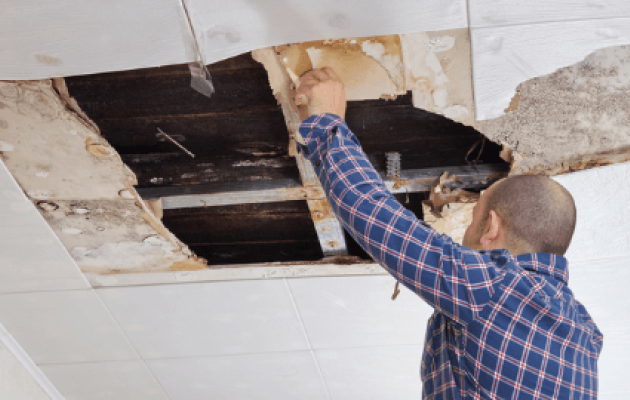
If you’ve discovered mold in your Cocoa home, one of the first questions is usually:
“Will my insurance cover this?”
It’s a fair question — and in Brevard County, the answer depends heavily on what caused the mold in the first place.
Between heavy summer storms, hurricane season, slab foundations, and year-round humidity, moisture problems are common in Cocoa. But insurance policies typically treat mold differently depending on whether it resulted from a sudden event or long-term conditions.
Here’s what homeowners should understand before filing a claim.
What Insurance Typically Looks For
In most cases, homeowners insurance may cover mold if it results from a sudden and accidental covered loss.
Examples might include:
- A pipe that bursts unexpectedly
- Storm-related roof damage
- Sudden appliance failure causing water intrusion
- Hurricane damage that allows rain into the home
If mold develops because of one of these events — and it’s reported promptly — coverage may apply depending on your specific policy.
However, mold caused by long-term moisture issues is often treated differently.
What Usually Isn’t Covered
Insurance companies commonly deny mold claims that stem from:
- Ongoing roof leaks
- Poor maintenance
- High indoor humidity
- Clogged AC drain lines
- Long-term slab moisture migration
- Deferred repairs
If the moisture issue existed for an extended period, insurers may consider it a maintenance problem rather than a sudden loss.
In Cocoa, where humidity remains elevated much of the year, insurers often scrutinize mold claims carefully.
The Importance of Timing
After a storm or water event in Brevard County, timing matters.
If your Cocoa home experiences:
- Roof damage during a hurricane
- Wind-driven rain intrusion
- Plumbing failure
It’s important to:
- Document the damage immediately
- Take steps to prevent further damage
- Notify your insurance company promptly
Delays can complicate coverage decisions.
Mold that develops weeks later without documentation of the initial water event may be harder to tie back to a covered cause.
Documentation Matters
If you suspect mold related to a recent water event, document everything:
- Photos of visible damage
- Date of the storm or leak
- Receipts for emergency mitigation
- AC repair records if relevant
- Communication with contractors
In Cocoa and surrounding areas like Rockledge and Merritt Island, hurricane-related claims are common — but clear documentation strengthens your case.
The Role of a Mold Inspection
Before filing or during the claims process, a professional mold inspection can help clarify:
- The extent of mold growth
- Whether moisture is ongoing
- Potential source of water intrusion
- Whether the damage appears recent or long-term
An inspection does not determine coverage — that’s the insurer’s role.
But it can provide objective information that helps explain what occurred.
At Brevard Mold Inspections & Removal, inspections focus on identifying moisture sources and documenting conditions accurately.
Hurricane-Related Mold in Cocoa
Cocoa homes are vulnerable during hurricane season.
Wind-driven rain can enter through:
- Roof flashing gaps
- Soffit openings
- Damaged shingles
- Window frame seals
Even if ceiling stains aren’t immediately visible, attic moisture may develop.
If mold growth follows a documented storm event, it may fall under storm-related damage coverage — depending on your policy.
This is where timing and documentation become critical.
Slab Moisture and Insurance
Many Cocoa homes are built on slab foundations.
After prolonged rain, moisture can migrate upward through concrete.
However, slab moisture migration is often viewed as a long-term environmental condition rather than a sudden event.
This type of mold claim is less likely to be covered unless tied to a specific, documented incident.
Understanding this distinction is important before assuming coverage.
AC-Related Mold and Coverage
Air conditioning systems are essential in Brevard County.
If a clogged condensate drain line causes sudden water overflow, coverage may apply if it’s considered accidental.
But if mold results from long-term lack of maintenance, coverage may be denied.
Routine servicing and maintenance records can sometimes make a difference.
What Mold Remediation Looks Like During a Claim
If mold remediation is approved under a claim, the process typically includes:
- Containment of affected areas
- Removal of contaminated drywall or insulation
- Cleaning of structural components
- HEPA air filtration
- Addressing the moisture source
In Cocoa homes, attic mold and ceiling drywall removal are common after storm-related events.
Even when insurance is involved, correcting the moisture source is essential to prevent recurrence.
Why Professional Guidance Matters
Insurance policies are complex.
Before assuming coverage — or assuming denial — it’s wise to:
- Review your specific policy
- Consult your insurance representative
- Obtain a professional inspection
A clear understanding of whether the mold resulted from a sudden event or long-term moisture helps guide next steps.
Local experience also matters. Cocoa homes face:
- Heavy rainfall
- Hurricane exposure
- High water tables
- Slab foundations
- Year-round cooling systems
These factors influence how moisture behaves inside the structure.
When to Schedule an Inspection
Consider scheduling a professional evaluation if:
- Mold appears after a recent storm
- There was a plumbing or appliance leak
- Ceiling staining developed suddenly
- Flooring begins lifting after heavy rain
- You’re unsure whether damage is new or ongoing
Early evaluation can prevent additional damage and provide clarity during the claims process.
Brevard Mold Inspections & Removal provides mold inspections and remediation throughout Cocoa, Rockledge, Merritt Island, Melbourne, Palm Bay, Titusville, Viera, Satellite Beach, and Cape Canaveral.
In Brevard County, mold and insurance claims often come down to one question:
Was the moisture sudden — or ongoing?
Understanding that difference helps homeowners make informed decisions and protect their property properly.