

Mold in Attics in Cocoa Beach: What Homeowners in Brevard County Should Know
Attic mold is one of the most common — and most overlooked — problems in Cocoa Beach homes. Because attics are rarely visited, mold can grow undetected for months or even years. By the time it’s discovered, the issue often extends well beyond a small patch on the roof decking.
In Cocoa Beach and throughout Brevard County, attic mold is strongly tied to coastal humidity, storms, heat buildup, and ventilation issues. Many homeowners are surprised to learn that attic mold is often not caused by a roof leak at all. Understanding why attic mold forms, how it spreads, and what actually fixes it can help homeowners protect both their home and their investment.
Why Attic Mold Is So Common in Cocoa Beach
Cocoa Beach sits directly along the coast, where humidity remains high year-round. Warm, moist air constantly moves through homes, and much of that air eventually rises into the attic.
Attics are typically hotter than the rest of the house. When humid air enters a hot attic and encounters cooler roof decking or framing, condensation can form. Over time, this moisture creates ideal conditions for mold growth.
Storms add another layer of risk. Wind-driven rain can enter through roof penetrations, vents, or flashing. Even minor moisture intrusion can soak insulation or roof decking without leaving visible ceiling stains below.
In Brevard County homes, attic mold is often the result of combined moisture sources rather than a single obvious event.
What Attic Mold Really Is
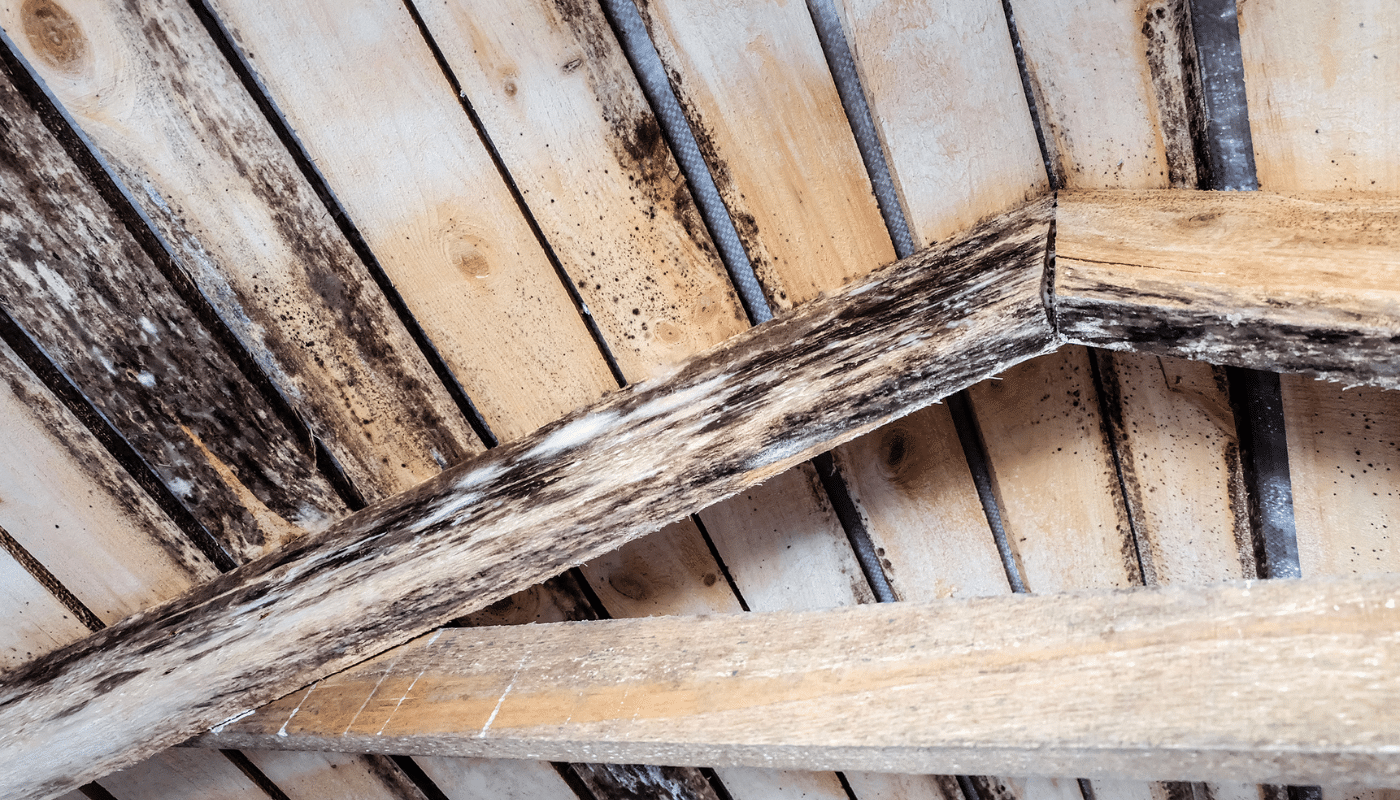
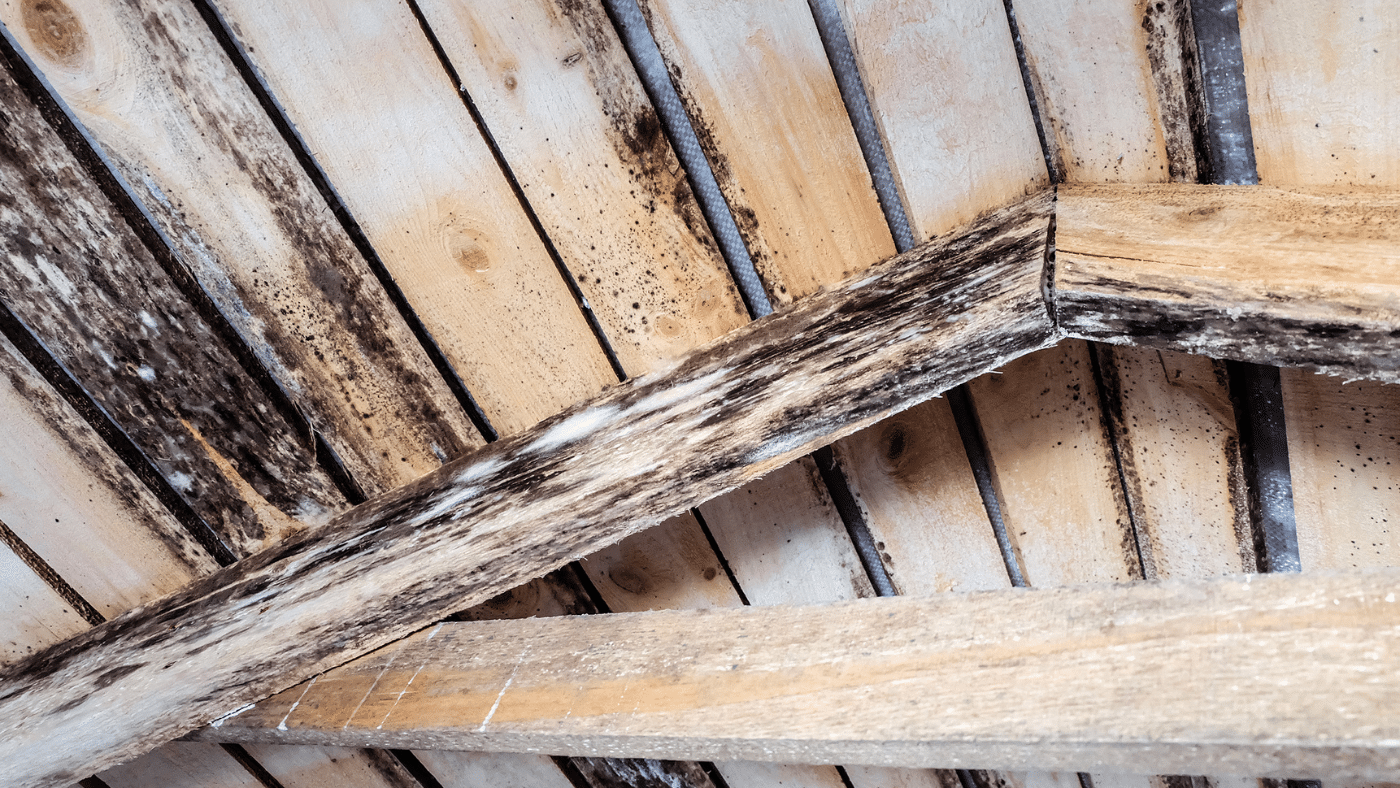
Attic mold usually appears as dark staining or fuzzy growth on roof decking, trusses, rafters, and sometimes insulation. It often spreads across large sections of wood rather than staying in one small area.
Because attic spaces are dark, warm, and poorly ventilated, mold can grow aggressively once moisture is present. Homeowners may not notice anything inside the living space until odors, ceiling discoloration, or HVAC issues begin.
In Cocoa Beach homes, attic mold is frequently discovered during inspections, roof work, or real estate transactions rather than routine maintenance.
Common Causes of Attic Mold
One of the most common causes is poor ventilation. Attics that cannot release hot, humid air trap moisture against roof decking.
Bathroom exhaust fans venting into the attic instead of outdoors are another major contributor. Every shower sends warm, moist air directly into the attic, dramatically increasing humidity levels.
Roof leaks, even small ones, can introduce moisture that soaks insulation and wood. Because attics dry slowly, that moisture can linger long enough for mold to develop.
Air leaks from the living space below also play a role. Warm, humid indoor air can escape into the attic through gaps around light fixtures, attic hatches, and duct penetrations.
Signs Attic Mold May Be Present
Attic mold often doesn’t announce itself clearly. One of the first signs homeowners notice is a musty odor that seems to come and go, especially during hot or humid weather.
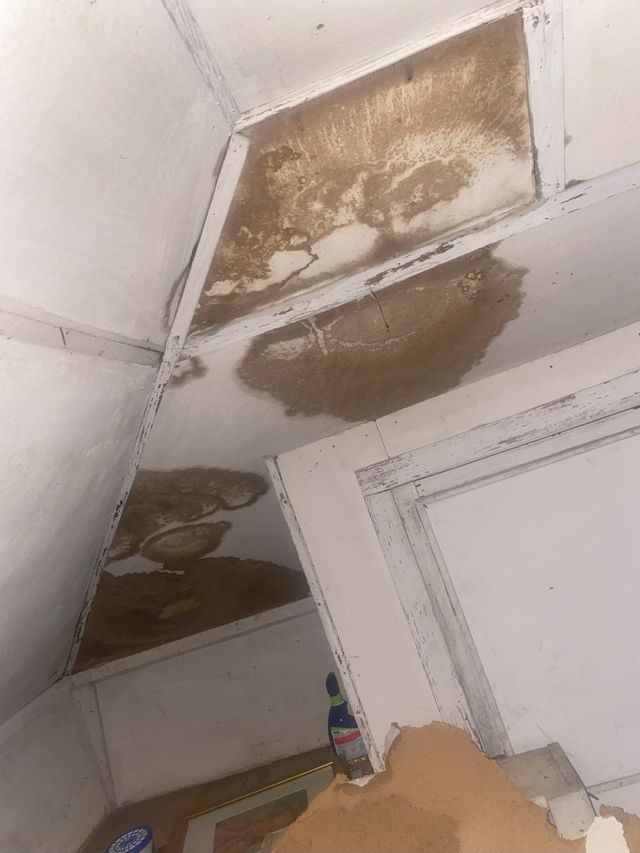
Ceiling discoloration, bubbling paint, or staining may appear later, once moisture has affected drywall below the attic.
Some homeowners notice higher indoor humidity or HVAC odors without realizing the attic is the source. Because air from the attic can influence indoor conditions, attic mold can affect the entire home.
Why Attic Mold Is Often Missed
Most homeowners rarely enter their attic. When they do, it’s usually for storage or brief inspections that don’t include close examination of roof decking.
Mold in attics also tends to spread across darker wood surfaces, making it harder to spot without proper lighting. Insulation can hide mold growth beneath it, especially when growth is occurring on the underside of roof decking.
In Cocoa Beach homes, attic mold is frequently well-established before it’s discovered.
Why DIY Attic Mold Cleaning Is Risky
Some homeowners attempt to clean attic mold themselves once they discover it. This is risky for several reasons.
Scrubbing or disturbing mold without containment can release spores into the attic and allow them to enter the living space below. In homes with ductwork running through the attic, spores can spread even further.
Surface cleaning also fails to address the moisture problem. Without correcting ventilation, fan venting, or air leaks, mold is likely to return.
Attic mold requires a controlled, methodical approach, not just surface treatment.
Professional Mold Inspection for Attic Issues
A professional mold inspection focuses on understanding why mold developed, not just where it is. Inspectors examine roof decking, framing, insulation, ventilation paths, and moisture conditions.
Moisture detection tools help identify damp materials that may not look wet. Inspectors also evaluate exhaust fan routing, attic ventilation design, and air leakage from below.
When appropriate, air or surface sampling may be used to better understand mold conditions. Testing supports decisions but does not replace identifying moisture sources.
A proper inspection provides clarity about whether the issue is localized or widespread.
Proper Mold Remediation for Attics
Effective attic mold remediation addresses both mold growth and moisture control. Containment is used to prevent spores from spreading into the home during work.
Mold-affected wood surfaces are treated or removed depending on severity. In some cases, insulation must be removed and replaced if it has been contaminated or saturated.
Just as important, the underlying causes are corrected. This may include improving attic ventilation, rerouting bathroom exhaust fans outdoors, sealing air leaks, or repairing roof issues.
Brevard Mold Inspections & Removal approaches attic mold with a prevention-focused mindset, ensuring conditions are stabilized rather than temporarily cleaned.
Preventing Attic Mold Going Forward
Prevention starts with proper ventilation. Attics need balanced intake and exhaust ventilation to release heat and moisture.
Bathroom and kitchen exhaust fans must vent outdoors, never into the attic. Sealing air leaks between the living space and attic reduces the amount of humid air entering the attic.
Regular roof inspections help catch leaks early. After storms, attics should be checked for moisture, even if no interior damage is visible.
In Cocoa Beach’s climate, attic moisture management is ongoing, not one-time.
Why Local Experience in Brevard County Matters
Attic mold in coastal Florida behaves differently than in drier regions. Cocoa Beach homes face salt air, constant humidity, storms, and construction styles that trap heat and moisture.
Local experience means understanding how these conditions affect attic spaces specifically. It also means knowing which ventilation and moisture-control strategies actually work long-term in Brevard County.
Professionals familiar with local conditions can identify attic mold risks that generic advice often misses.
A Calm, Practical Next Step
If your Cocoa Beach home has musty odors, ceiling issues, or a history of storms or ventilation problems, the attic is worth checking. Mold in attics rarely resolves on its own and often spreads silently over time.
A professional inspection can provide clear answers without pressure or assumptions. Homeowners across Brevard County benefit from understanding attic conditions early rather than discovering problems during major repairs or home sales.
Brevard Mold Inspections & Removal helps homeowners identify attic mold, understand moisture causes, and take practical steps toward long-term protection. Addressing attic mold early helps preserve the structure of your home and prevents larger problems down the road.