
Mold in Attics in Cocoa Beach: What Homeowners in Brevard County Should Know
Attic mold is a frequent and often hidden issue for homeowners in Cocoa Beach. Because attics aren’t part of daily living space, problems can develop quietly for months before anyone notices. By the time mold is discovered, it’s often spread across roof decking, trusses, or insulation—even though ceilings below may still look fine.
Cocoa Beach’s coastal climate makes attics especially vulnerable. High humidity, salt air, storms, and constant air-conditioning create conditions where moisture can build up and linger above the living space. Understanding why attic mold develops, where it hides, and how to address it correctly helps homeowners prevent long-term damage and repeated issues.
Why Attics Are High-Risk Areas in Coastal Homes
Attics experience extreme conditions. During much of the year, Cocoa Beach attics are hot while outdoor humidity remains high. Warm, moisture-laden air naturally rises from the living space below and moves into the attic through small gaps, ceiling penetrations, and access hatches.
When that warm air meets cooler roof decking—especially at night or during temperature swings—condensation can form. Over time, repeated condensation dampens wood and insulation, creating ideal conditions for mold growth.
Limited airflow in many attics allows moisture to stay trapped longer than it should, increasing the risk.
Why Attic Mold Is Common in Cocoa Beach
Coastal humidity slows drying everywhere, including attics. Even without rain, moisture in the air remains high enough to support condensation on attic surfaces.
Storms add another layer of risk. Wind-driven rain can enter through roof penetrations, vents, or flashing without causing immediate ceiling stains. Moisture often collects in insulation and roof decking first.
Bathroom exhaust fans that vent into the attic instead of outdoors are a major contributor. Each shower sends warm, moist air directly into the attic, where it condenses on wood framing.
HVAC systems can also play a role. Ductwork running through attics may sweat if insulation is damaged or airflow is poor, adding moisture to the space.
Common Causes of Mold in Attics
Roof leaks are a frequent cause, even when they’re small. A minor leak can soak insulation and roof decking long before visible damage appears indoors.
Poor attic ventilation is another major factor. Blocked or unbalanced intake and exhaust vents trap hot, humid air.
Improperly vented bathroom fans are one of the most overlooked issues in Cocoa Beach homes. Instead of removing moisture from the house, they deposit it into the attic.
Condensation from ductwork or AC components can also introduce moisture, especially in hot attic environments.
Where Mold Typically Appears in Attics
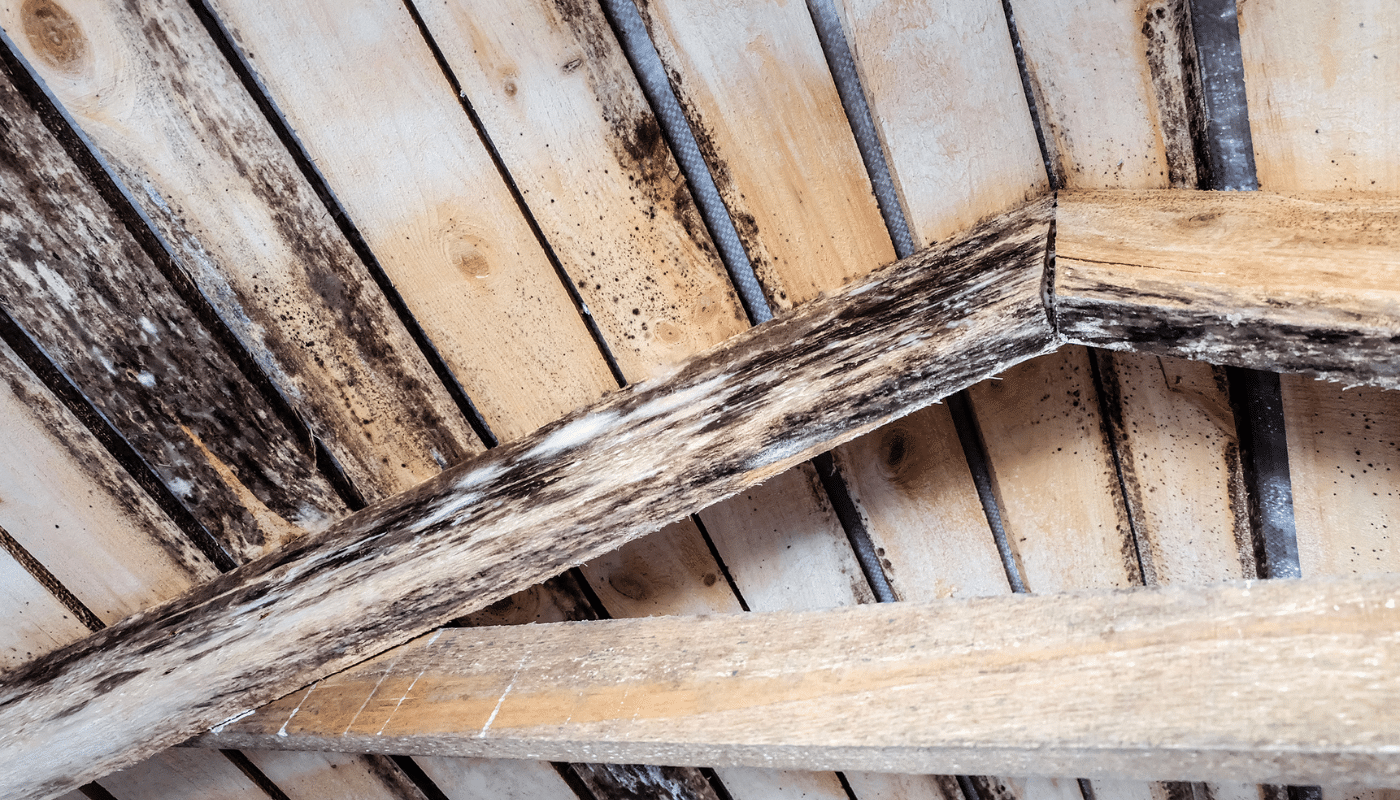
Roof decking is the most common location. Mold often shows as dark staining or patchy growth on the underside of the sheathing.
Trusses and rafters may also develop mold where condensation forms repeatedly. These areas dry slowly due to limited airflow.
Around roof penetrations—such as vents, chimneys, or skylights—mold may appear if flashing is compromised.
Insulation can hold moisture against wood surfaces, supporting mold growth even when it looks dry on top.
Early Signs of Attic Mold Problems
Attic mold rarely announces itself clearly at first.
Musty odors are often the earliest sign, especially after rain or when the AC runs. These smells can travel down into living spaces through wall cavities or HVAC systems.
Ceiling discoloration, peeling paint, or small stains may appear later, once moisture has been present for some time.
Indoor humidity that feels higher than usual can also be an indirect clue that attic moisture is affecting the home.
Why Attic Mold Often Goes Undetected
Most homeowners don’t inspect their attic regularly. Out of sight allows moisture and mold to develop unnoticed.
Because attic mold doesn’t always cause immediate leaks or visible interior damage, it can grow for months before discovery. Many cases are found during roof work, HVAC service, or home inspections.
By the time mold is identified, it often covers a large surface area.
Why DIY Attic Mold Cleanup Is Risky
Attic mold is not a surface-level problem that can be safely handled with household cleaners.
Scrubbing mold in an attic without containment releases spores into the air. Those spores can enter living spaces through ceiling penetrations or ductwork.
Bleach and common cleaners don’t penetrate wood effectively and don’t address moisture sources. Mold frequently returns once conditions remain damp.
Attics also present safety risks—heat, limited footing, and low visibility—making DIY work hazardous.
Professional Mold Inspection for Attic Concerns
A professional mold inspection focuses on moisture behavior and building conditions.
Inspectors evaluate roof decking, framing, insulation, ventilation, ductwork, and roof penetrations. Moisture meters help determine whether wood is actively damp or just stained.
Thermal imaging may identify temperature differences that suggest condensation or leaks. When appropriate, air or surface sampling may support findings.
The goal is understanding why mold developed, not just confirming it’s there.
Proper Mold Remediation in Attics
Effective attic mold remediation addresses both mold growth and the moisture source.
Containment prevents spores from spreading into living areas. Mold-affected surfaces may be cleaned, treated, or removed depending on severity.
In many cases, contaminated insulation must be removed and replaced. Ventilation issues are corrected, bathroom fans rerouted outdoors, and roof leaks repaired.
HVAC duct insulation may need repair to prevent sweating. Moisture control is essential so mold doesn’t return.
Brevard Mold Inspections & Removal approaches attic mold with a prevention-focused mindset rather than cosmetic cleanup.
How Attic Mold Can Affect the Entire Home
Attics are connected to the rest of the house through airflow.
Mold odors and moisture can migrate into walls, ceilings, and HVAC systems, affecting indoor comfort. Many homeowners notice persistent musty smells without realizing the attic is the source.
Once moisture movement is corrected and mold addressed, overall indoor conditions often improve.
Preventing Attic Mold in Cocoa Beach Homes
Prevention starts with proper ventilation. Attics need balanced intake and exhaust to release hot, humid air.
Bathroom exhaust fans must vent outdoors—not into attics. Fans should be used consistently during showers.
Roof penetrations and flashing should be inspected regularly, especially after storms. Ductwork in attic spaces should be properly insulated and sealed.
Monitoring indoor humidity and addressing moisture early reduces the load on attic spaces.
Why Local Experience in Brevard County Matters
Attic mold in Cocoa Beach is shaped by coastal conditions—salt air, humidity, storms, slab construction, and long cooling seasons.
Local experience means knowing where attic mold typically develops and how moisture moves in Brevard County homes. Solutions that work in dry climates often fail here.
Professionals familiar with the area know how to correct attic mold issues in a way that holds up long-term.
A Calm, Practical Takeaway
Mold in attics is common in Cocoa Beach, but it’s rarely a mystery. It almost always points to moisture, ventilation, or airflow issues that can be corrected.
If your home has musty odors, a history of storms or roof issues, or hasn’t had the attic checked in years, it’s worth taking a closer look. Early assessment prevents small problems from becoming extensive repairs.
Homeowners throughout Brevard County benefit from understanding what’s happening above the ceiling, not just what’s visible indoors. Brevard Mold Inspections & Removal helps homeowners identify attic mold issues, correct moisture problems, and protect their homes long-term.
Handled properly, attic mold becomes a solvable building issue—not a hidden problem waiting to grow.