
Mold in Attics in West Melbourne: What Homeowners in Brevard County Should Know
Attic mold is a common discovery for homeowners in West Melbourne, often found by accident during a repair, inspection, or after a storm. Because attics aren’t living spaces, problems can go unnoticed for long periods. In Brevard County’s hot, humid climate, that delay can allow moisture and mold to spread quietly above the ceiling.
Understanding why attic mold develops locally, what signs to watch for, and how it’s properly addressed helps homeowners respond calmly and avoid repeat issues.
Why Attics Are Vulnerable to Mold
Attics sit at the intersection of heat, humidity, and airflow. During much of the year, attic temperatures rise well above indoor levels. When warm, moist air enters and can’t escape, moisture settles on cooler surfaces like roof decking, nails, and framing.
In West Melbourne homes, this moisture often comes from indoor air moving upward, small roof leaks, or poor ventilation. Over time, repeated moisture cycles create the right conditions for mold to grow on wood and insulation.
Because attics are out of sight, mold can develop extensively before anyone notices.
Local Factors That Increase Attic Mold Risk
Brevard County has one of the most mold-friendly climates in the country, and several local factors make attics especially susceptible.
High humidity is present most of the year, even outside the rainy season. Moist air can enter the attic through gaps, penetrations, and inadequate air sealing.
Heavy rain, tropical storms, and hurricanes can introduce water through damaged shingles, flashing, or roof penetrations. Even minor roof leaks can wet roof decking and insulation without obvious signs inside the home.
Many West Melbourne homes also rely heavily on air conditioning. When warm attic air meets cooler surfaces, condensation can form, especially if ventilation is limited or unbalanced.
Common Causes of Attic Mold
Attic mold usually traces back to one or more moisture sources.
Poor ventilation is a frequent issue. When intake and exhaust vents aren’t properly balanced, humid air becomes trapped instead of moving out.
Roof leaks are another common cause. Small leaks around vents, chimneys, or flashing can allow water to drip onto decking and framing over time.
Air leaks from the living space below can also contribute. Gaps around attic access points, recessed lighting, or duct penetrations allow warm, humid indoor air to rise into the attic.
Improperly installed or damaged insulation can worsen the problem by creating cold spots where moisture condenses.
Signs Homeowners May Notice
Attic mold often shows indirect signs before it’s seen.
A musty or earthy odor may be noticeable inside the home, especially after rain or when the air conditioning runs. Some homeowners notice staining on ceilings or around attic access points.
In some cases, energy bills increase because damp insulation loses effectiveness. Others discover attic mold during a home inspection, roof repair, or when replacing insulation.
Because attics are rarely visited, visible mold is often advanced by the time it’s found.
Where Mold Commonly Appears in Attics
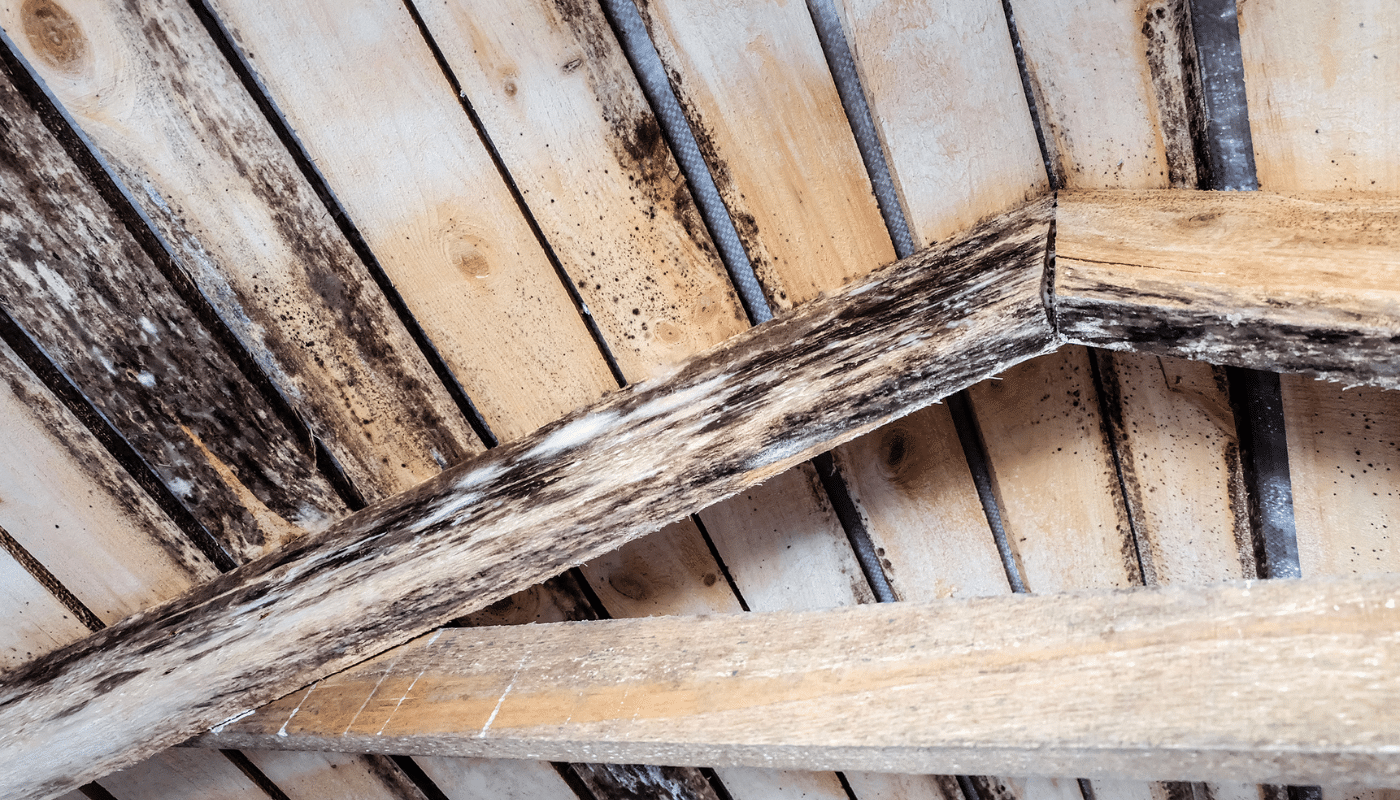
In West Melbourne homes, attic mold typically appears on the underside of roof decking, trusses, rafters, and around nails. These areas cool at night and collect condensation.
Insulation can also be affected. When insulation becomes damp, it can support mold growth and reduce its ability to regulate temperature.
Around roof penetrations—such as vents, skylights, or exhaust ducts—moisture problems are common if flashing or sealing has failed.
HVAC ductwork running through the attic can also contribute. Condensation on uninsulated or damaged ducts can drip onto surrounding materials.
Why Attic Mold Shouldn’t Be Ignored
Ignoring attic mold allows moisture and growth to continue spreading.
Over time, mold can damage roof decking, framing, and insulation, leading to more extensive repairs. Persistent moisture can also attract pests and contribute to wood deterioration.
Surface cleaning alone doesn’t solve the problem. If moisture sources and ventilation issues aren’t corrected, mold is likely to return.
Addressing attic mold early typically limits both the scope of remediation and long-term costs.
What a Professional Attic Mold Inspection Involves
A professional inspection focuses on identifying both mold and moisture conditions.
The process usually begins with a visual assessment of the attic, including roof decking, framing, insulation, and ventilation components. Inspectors look for staining, discoloration, and signs of condensation or leaks.
Moisture meters may be used to detect damp materials, and thermal imaging can help identify temperature differences that suggest airflow or insulation issues.
If needed, surface or air samples may be collected and sent to an independent laboratory to better understand the type and extent of mold present.
Local professionals such as Brevard Mold Inspections & Removal focus on explaining findings clearly so homeowners understand what’s happening and why.
How Attic Mold Is Properly Remediated
Effective attic mold remediation addresses both removal and prevention.
Containment is used to prevent mold spores from spreading during cleanup. Affected surfaces are cleaned or treated using appropriate methods, and severely contaminated materials may need to be removed.
Just as important is correcting the underlying cause. This may involve repairing roof leaks, improving attic ventilation, sealing air leaks from the living space, or upgrading insulation.
The goal is not just to remove mold, but to create conditions where it’s unlikely to return.
Preventing Attic Mold in West Melbourne Homes
Prevention starts with moisture control and airflow.
Proper attic ventilation helps move humid air out before it can condense. Intake and exhaust vents should be balanced and unobstructed.
Air sealing between the living space and attic reduces the movement of humid indoor air upward. Sealing attic access points and penetrations makes a noticeable difference.
Regular roof inspections help catch small leaks early, especially after storms. Insulation should be kept dry and properly installed to avoid cold spots.
Maintaining HVAC systems and duct insulation also helps reduce condensation in the attic.
After Storms and Heavy Rain
Storms are a common trigger for attic mold in Brevard County.
After heavy rain or hurricanes, homeowners should inspect attics for signs of leaks, wet insulation, or staining on roof decking. Even small moisture issues should be dried promptly.
Early drying and repairs are key to preventing mold from developing after storm-related water intrusion.
Why Local Experience Matters
Attic mold behaves differently depending on climate and construction.
West Melbourne homes face specific challenges related to humidity, storm exposure, slab foundations, and Florida-specific building practices. Local experience helps professionals recognize common patterns and identify the most likely moisture sources.
This local knowledge leads to more accurate inspections and more effective solutions.
A Practical Next Step for Homeowners
If you suspect mold in your attic or have concerns after a leak or storm, a professional inspection can provide clarity without unnecessary alarm.
Understanding whether mold is present and why it developed is the first step toward resolving the issue. With accurate information and local expertise, West Melbourne homeowners can address attic mold confidently and protect their homes for the long term.