Mold in Attics in West Melbourne: What Homeowners in Brevard County Should Know
For many homeowners in West Melbourne, the attic is one of the least-visited parts of the house—and unfortunately, one of the most common places for mold to develop. In Brevard County’s warm, humid climate, attics experience extreme temperature swings, trapped moisture, and limited airflow. These conditions make attic mold a frequent issue, even in homes that otherwise appear dry and well maintained.
Mold in attics isn’t a reflection of poor housekeeping or neglect. It’s usually the result of moisture moving in ways homeowners can’t easily see. Understanding why attic mold forms in West Melbourne homes, how to spot early warning signs, and what to do about it can help prevent minor issues from turning into costly repairs.
Why Attics Are So Vulnerable to Mold in West Melbourne
Attics sit at the intersection of indoor air and outdoor heat. In West Melbourne, attic temperatures can soar during the day and cool rapidly at night. When warm, moist air enters the attic and meets cooler surfaces, condensation can form.
Common local factors that increase attic mold risk include:
- High year-round humidity in Brevard County
- Hot attic temperatures combined with cooler roof decking
- Inadequate attic ventilation
- Bathroom or kitchen exhaust fans venting into the attic
- Roof leaks after heavy rain or storms
- AC ductwork running through hot attic spaces
Because attics are dark, enclosed, and often poorly ventilated, moisture can linger long enough for mold to grow unnoticed.
How Mold Typically Starts in Attics
Attic mold usually doesn’t begin with a dramatic leak. More often, it starts quietly after repeated moisture exposure over time.
Common starting points include:
- Small roof leaks around flashing or vents
- Moist air leaking from living spaces into the attic
- Improperly vented bathroom fans
- Condensation forming on roof sheathing
- Ductwork sweating due to temperature differences
Once moisture settles on wood framing, roof decking, or insulation, mold spores—already present in Florida’s air—can begin to grow.
Signs of Attic Mold Homeowners Often Miss
Because attics are rarely accessed, mold problems there often go unnoticed until secondary signs appear inside the home.
Warning signs may include:
- Musty odors that seem stronger upstairs
- Discoloration or staining on ceilings
- Increased humidity indoors
- Allergy-like discomfort that improves outside the home
- Visible mold spotted during AC or roof service
By the time these signs appear, attic mold may have already been present for some time.
Where Mold Commonly Grows in Attics
In West Melbourne homes, attic mold is frequently found in specific locations where moisture collects.
Common areas include:
- Roof sheathing and decking
- Wooden trusses and rafters
- Insulation near roof penetrations
- Around attic access openings
- Near exhaust fan discharge points
- Around HVAC ductwork
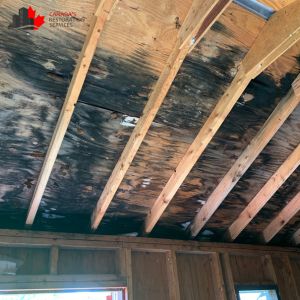
Mold may appear as dark staining, fuzzy growth, or widespread discoloration on wood surfaces.
Why West Melbourne Homes Face Unique Attic Challenges
West Melbourne experiences the same humidity and storm patterns as the rest of Brevard County, but many homes also have modern, energy-efficient designs. While efficient construction improves comfort, it can also trap moisture if airflow isn’t balanced correctly.
Additional local contributors include:
- Homes kept sealed and air-conditioned most of the year
- Attics exposed to intense solar heat
- Rapid moisture buildup after afternoon storms
- Limited natural attic ventilation
These conditions make attic moisture management especially important.
Why Ignoring Attic Mold Makes the Problem Worse
Attic mold rarely stays confined to one small area. If moisture continues, mold can spread across roof decking, framing, and insulation.
Ignoring attic mold can lead to:
- Worsening wood deterioration
- Reduced insulation performance
- Odors migrating into living spaces
- Increased indoor humidity problems
- More extensive remediation later
Addressing attic mold early is usually simpler and less disruptive than waiting until damage spreads.
Why DIY Attic Mold Cleaning Often Fails
Some homeowners attempt to clean attic mold themselves using sprays or surface treatments. While this may lighten stains temporarily, it usually doesn’t solve the real issue.
DIY approaches often fail because:
- Moisture sources are not corrected
- Mold roots remain in porous wood
- Ventilation problems persist
- Insulation contamination is overlooked
Without addressing why moisture is present, mold will almost always return.
The Role of Professional Attic Mold Inspections
A professional attic mold inspection focuses on identifying both mold growth and the moisture conditions that allowed it to form.
An inspection typically includes:
- Visual evaluation of attic framing and decking
- Moisture detection to locate damp materials
- Assessment of attic ventilation
- Review of exhaust fan routing
- Inspection of ductwork and insulation
The goal is to understand whether mold is active, how widespread it is, and what needs to be corrected.
Brevard Mold Inspections & Removal takes a calm, methodical approach to attic mold inspections, helping West Melbourne homeowners understand the situation clearly—without exaggeration or pressure.
How Attic Mold Is Properly Remediated
Proper attic mold remediation goes beyond surface cleaning. It focuses on safe removal and long-term prevention.
A correct remediation process may include:
- Containment to prevent spores from spreading
- Removing or treating contaminated materials
- Correcting ventilation or exhaust issues
- Sealing air leaks from living spaces
- Ensuring the attic can dry properly going forward
Every attic is different, so remediation plans are tailored to the home’s construction and moisture patterns.
Attic Mold vs Roof or Ventilation Problems
In many cases, attic mold is a symptom—not the root problem. Roof leaks, poor ventilation, or improper exhaust fan placement are often the real causes.
That’s why remediation without fixing airflow or moisture sources rarely lasts. Successful attic mold solutions always address:
- How moisture entered the attic
- Why it couldn’t escape
- How to prevent future buildup
Preventing Attic Mold in West Melbourne Homes
Prevention focuses on moisture control and airflow—two areas homeowners can manage with consistency.
Effective prevention steps include:
- Ensuring bathroom fans vent outdoors, not into attics
- Keeping attic ventilation balanced and unobstructed
- Sealing attic access points properly
- Inspecting roofs after storms
- Monitoring insulation and ductwork for condensation
Routine attic checks—especially after heavy rain—can catch issues early.
Why Local Brevard County Experience Matters
Attic mold behaves differently in Florida than in cooler or drier regions. West Melbourne homes face intense heat, humidity, and storm exposure that directly affect attic conditions.
Local professionals understand:
- How fast attic mold can develop
- Where moisture typically enters Florida attics
- How construction styles affect airflow
- How storms impact roof and attic systems
Brevard Mold Inspections & Removal brings that local knowledge to every attic inspection, focusing on realistic, long-term solutions for Brevard County homes.
A Calm, Practical Next Step for Homeowners
Finding mold in an attic can be unsettling, but it doesn’t have to be overwhelming. With proper inspection, targeted remediation, and moisture control, attic mold issues can be resolved effectively.
If your West Melbourne home has musty odors, past roof leaks, or hasn’t had the attic checked in years, a professional evaluation can provide clarity. Understanding attic conditions early is one of the best ways to protect your home, your comfort, and your investment—without unnecessary worry.