
Mold in Attics in West Melbourne: What Homeowners in Brevard County Should Know
Attic mold is one of the most overlooked problems homeowners face in West Melbourne. Because attics are out of sight, mold often grows quietly for months or even years before anyone realizes there’s an issue. By the time it’s discovered, the growth is usually more extensive than expected.
In Brevard County’s hot, humid climate, attics are especially vulnerable. High outdoor humidity, heavy rain, storms, and poor airflow combine to create conditions where moisture becomes trapped. Understanding why attic mold is so common in West Melbourne, how it develops, and what actually stops it from spreading helps homeowners protect both their homes and their investment.
Why Attics Are a Common Mold Location
Attics experience extreme temperature changes. During much of the year, attic temperatures in West Melbourne climb well above outdoor temperatures. When humid air enters these spaces, moisture condenses on cooler surfaces like roof decking, nails, and framing.
Unlike living spaces, attics often have limited airflow. When moisture enters, it can take a long time to dry. If moisture remains long enough, mold can begin growing on wood and insulation.
Because homeowners rarely visit their attics, mold can spread extensively before it’s noticed.
Why Attic Mold Is So Common in West Melbourne
West Melbourne shares the same climate challenges as the rest of Brevard County: high humidity, frequent storms, and long cooling seasons.
During summer months, warm, moist outdoor air easily enters attics through soffit vents, roof vents, and small gaps. After storms, humidity levels spike and stay elevated for days.
Many homes also have bathroom exhaust fans that vent into the attic instead of outdoors. This sends warm, moist air directly into the attic space every time someone showers.
Roof leaks, even small ones, are another major contributor. Water can soak insulation and roof decking long before stains appear on interior ceilings.
Common Causes of Attic Mold
One of the most frequent causes is poor ventilation. Attics need balanced airflow to remove heat and moisture. When ventilation is inadequate or blocked, moisture builds up.
Bathroom fans venting into the attic are another major issue. This is especially common in older homes or homes with improperly installed fans.
Roof leaks from damaged shingles, flashing, or vents allow rainwater to enter attic spaces. Even slow leaks can keep wood damp enough to support mold growth.
AC ductwork running through attics can also contribute. Poorly insulated ducts may sweat in humid conditions, introducing moisture into the attic.
Where Mold Typically Appears in Attics
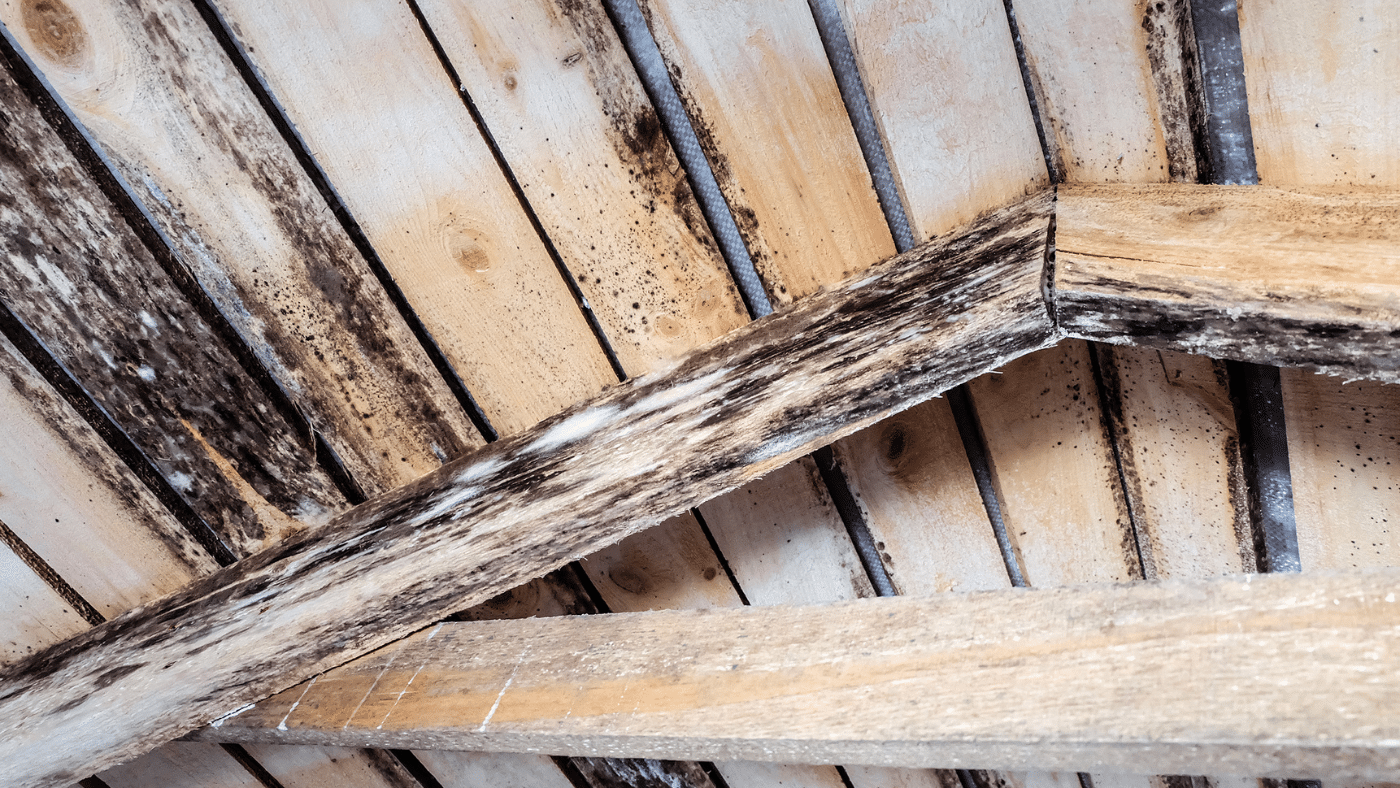
Roof decking is one of the most common locations. Mold often forms on the underside of the roof where condensation occurs.
Wood framing, trusses, and rafters are also frequent problem areas. These materials absorb moisture easily and dry slowly in stagnant air.
Insulation can become damp and support mold growth, especially after roof leaks or prolonged humidity.
Around roof penetrations such as vents, chimneys, and skylights, mold often appears due to minor water intrusion.
Early Signs of Attic Mold
Because attics are rarely seen, early signs are often indirect. Musty odors inside the home are one of the most common clues.
Homeowners may notice staining on ceilings, especially after storms. Increased indoor humidity or persistent damp smells can also point to attic moisture issues.
In some cases, mold is discovered during roof repairs, HVAC work, or home inspections rather than through obvious symptoms.
Why Attic Mold Is Often Missed
Attic mold doesn’t usually cause immediate, visible damage inside the home. Ceilings can look fine while mold spreads above them.
Many homeowners don’t enter their attic regularly, and some attics are difficult to access safely. Without routine checks, mold can grow unnoticed.
In West Melbourne homes, attic mold is frequently discovered only after it has become well established.
How Attic Mold Can Affect the Rest of the Home
Even though mold may be confined to the attic, its effects are not. Air moves between attics and living spaces through small gaps, light fixtures, and access hatches.
Odors and moisture can migrate downward, affecting indoor comfort. In some cases, attic mold contributes to musty smells throughout the home.
If insulation is affected, attic mold can also impact energy efficiency by reducing insulation performance.
Why DIY Attic Cleaning Is Risky
Attic mold is not a simple cleaning project. Scrubbing or spraying mold without containment can release spores into the air.
Because attics are connected to living spaces, disturbed spores can spread throughout the home. DIY efforts also rarely address ventilation or moisture issues, which are the real cause.
Without correcting airflow, roof leaks, or humidity problems, attic mold almost always returns.
Professional Mold Inspection for Attic Issues
A professional mold inspection evaluates both mold growth and moisture conditions in the attic.
Inspectors look at roof decking, framing, insulation, ventilation, and roof penetrations. Moisture meters help identify damp materials that don’t appear wet.
Thermal imaging may be used to locate temperature differences that indicate moisture problems. When appropriate, air or surface sampling may be used to support findings.
An inspection helps homeowners understand whether attic mold is localized or part of a larger moisture issue.
Proper Mold Remediation in Attics
Effective attic mold remediation addresses both the mold and the conditions that caused it.
Containment is used to prevent spores from spreading during removal. Mold-affected materials may be cleaned or removed depending on severity.
Just as important, moisture sources must be corrected. This may include improving ventilation, rerouting bathroom fans outdoors, repairing roof leaks, or insulating ductwork.
Brevard Mold Inspections & Removal approaches attic mold with a long-term prevention mindset, not surface-level treatment.
Preventing Attic Mold Going Forward
Proper ventilation is essential. Attics need balanced intake and exhaust airflow to remove heat and moisture.
Bathroom exhaust fans should always vent outdoors, never into attic spaces. Roof and flashing should be inspected regularly, especially after storms.
Ductwork in attics should be properly insulated to prevent condensation. After heavy rain or hurricanes, attic inspections help catch problems early.
In West Melbourne’s climate, attic moisture management is an ongoing responsibility.
Why Local Experience in Brevard County Matters
Attic mold in Brevard County behaves differently than in dry climates. High humidity, storms, slab construction, and long cooling seasons all influence attic conditions.
Local experience means knowing where attic mold typically develops in West Melbourne homes and how moisture moves through these structures.
Professionals familiar with Brevard County conditions can recommend solutions that actually work long-term.
A Calm, Practical Takeaway
Attic mold in West Melbourne is common, but it doesn’t have to become a major problem. The key is identifying moisture early and correcting ventilation and leak issues before mold spreads.
If your home has musty odors, a history of roof leaks, or hasn’t had its attic checked in years, an inspection can provide valuable clarity.
Homeowners across Brevard County benefit from early assessment and moisture-focused solutions. Brevard Mold Inspections & Removal helps homeowners identify attic mold issues, understand the causes, and take practical steps to protect their homes.
Addressed correctly, attic mold becomes a manageable issue rather than a costly surprise.