Mold in Bathrooms in Cocoa: What Homeowners in Brevard County Should Know
In Cocoa, bathrooms are one of the most common places homeowners deal with mold—and it’s not because bathrooms are dirty. It’s because bathrooms combine water, steam, warmth, and limited airflow, which are exactly the conditions mold needs to grow. In Brevard County’s already humid climate, bathrooms often become the first area where moisture problems show up.
Bathroom mold isn’t just a cosmetic issue. It’s usually a sign that moisture isn’t escaping the space the way it should. Understanding why mold develops in Cocoa bathrooms, where it hides, and how to prevent it helps homeowners stop repeat growth and protect the rest of the home.
Why Bathrooms in Cocoa Are So Prone to Mold
Cocoa’s climate makes bathroom moisture harder to control than in drier regions. Even when bathrooms look clean, moisture can linger long after showers end.
Local factors that increase bathroom mold risk include:
- High year-round humidity
- Frequent daily shower use
- Steam trapped in enclosed bathrooms
- Inadequate or unused exhaust fans
- Homes kept closed and air-conditioned most of the year
- Slow drying due to warm, humid air
When moisture can’t escape quickly, mold growth becomes likely.
How Mold Develops in Bathrooms
Mold spores are always present in Florida air. They become a problem when they land on surfaces that stay damp long enough to grow.
In bathrooms, mold often develops because:
- Steam settles on walls and ceilings
- Water splashes onto porous surfaces
- Moisture stays trapped behind fixtures
- Condensation forms on cooler surfaces
Over time, even small amounts of daily moisture can lead to visible mold growth.
Common Places Mold Grows in Cocoa Bathrooms
Bathroom mold doesn’t grow randomly. It appears where moisture lingers the longest and airflow is limited.
High-risk areas include:
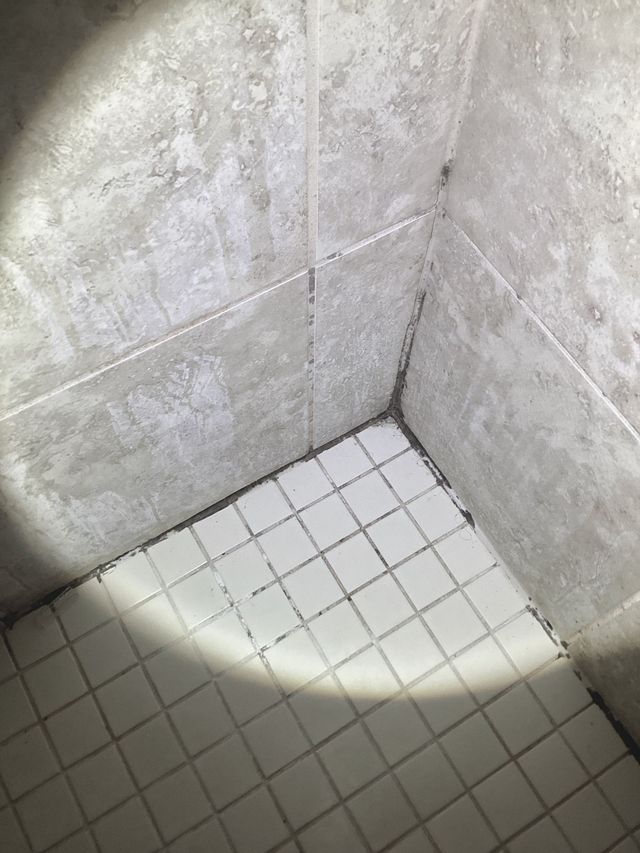
- Shower walls and grout lines
- Bathroom ceilings above showers
- Around tubs and shower doors
- Behind toilets and vanities
- Under sinks with small plumbing leaks
- Around exhaust fan housings
Visible mold is often just part of what’s happening behind the scenes.
Hidden Bathroom Mold Homeowners Often Miss
One of the biggest issues with bathroom mold is that it’s often hidden, even when visible spots seem minor.
Hidden mold commonly develops:
- Behind drywall near showers and tubs
- Under flooring around toilets
- Inside wall cavities from slow leaks
- Behind mirrors and vanities
- Around plumbing penetrations
Hidden moisture allows mold to spread quietly before it becomes obvious.
Why Bathroom Ceilings Are a Common Problem
Bathroom ceilings are especially vulnerable to mold in Cocoa homes.
This happens because:
- Steam rises and settles overhead
- Paint may not be moisture-resistant
- Fans don’t remove steam fast enough
- Humid air lingers after showers
Ceiling mold often signals ventilation problems rather than surface cleanliness issues.
The Role of Exhaust Fans in Mold Prevention
Bathroom exhaust fans are one of the most important tools for mold prevention—but only when they work properly.
Common fan-related issues include:
- Fans that are too small for the space
- Fans that vent into the attic instead of outside
- Fans that aren’t used long enough
- Dirty or poorly maintained fans
If steam isn’t removed quickly, moisture soaks into walls and ceilings.
Mold in Bathrooms After Plumbing Leaks
Bathroom mold often follows plumbing issues that seemed minor at first.
Common sources include:
- Slow toilet seal leaks
- Dripping supply lines under sinks
- Shower valve leaks behind walls
- Tub or shower drain issues
Because these leaks are hidden, mold can grow for weeks or months before detection.
Why DIY Bathroom Mold Cleaning Often Fails
Many homeowners try cleaning bathroom mold with bleach or household cleaners. While this may improve appearance temporarily, mold often returns.
DIY cleanup fails because:
- Bleach doesn’t penetrate porous materials
- Moisture sources remain unchanged
- Scrubbing spreads mold spores
- Hidden mold is left untouched
Without fixing ventilation or moisture issues, bathroom mold usually comes back.
How Bathroom Mold Can Spread Beyond the Bathroom
Bathroom mold doesn’t always stay contained. Moist air and spores can move into other parts of the home.
This can lead to:
- Mold appearing in nearby rooms
- Persistent musty odors
- Increased indoor humidity
- Mold growth in closets or hallways
Bathrooms often act as the starting point for broader moisture problems.
The Value of a Professional Mold Inspection
A professional mold inspection looks beyond surface mold and focuses on why moisture is staying in the bathroom.
An inspection may include:
- Checking ventilation performance
- Inspecting walls and ceilings for moisture
- Evaluating plumbing areas for hidden leaks
- Measuring humidity levels
- Identifying hidden mold behind surfaces
This approach helps stop repeat growth rather than just cleaning symptoms.
Brevard Mold Inspections & Removal works with Cocoa homeowners to identify bathroom mold causes clearly and recommend practical, long-term solutions.
Mold Testing and Bathroom Mold Concerns
Mold testing isn’t always needed for bathroom mold, but it can help when:
- Odors persist outside the bathroom
- Mold keeps returning despite cleanup
- Hidden growth is suspected
- Documentation is needed
Testing is most effective when guided by inspection findings.
Proper Mold Remediation for Bathrooms
Effective bathroom mold remediation focuses on removal and prevention.
A proper approach may include:
- Removing contaminated drywall or materials
- Cleaning remaining surfaces appropriately
- Fixing plumbing leaks
- Improving ventilation
- Managing humidity levels
Cosmetic cleaning alone doesn’t solve the problem.
Preventing Bathroom Mold in Cocoa Homes
Preventing bathroom mold is about consistency, not extreme measures.
Helpful prevention steps include:
- Running exhaust fans during and after showers
- Leaving bathroom doors open to improve airflow
- Fixing leaks promptly
- Using moisture-resistant paint on ceilings
- Cleaning fans and vents regularly
- Monitoring indoor humidity
Small daily habits make a big difference.
Bathroom Mold After Storms or Power Outages
Storms and power outages can worsen bathroom mold problems.
After outages:
- Exhaust fans don’t run
- Humidity rises quickly indoors
- Moisture lingers longer than usual
- Mold can begin developing within days
Post-storm checks help catch problems early.
Why Local Cocoa Experience Matters
Bathroom mold behaves differently in Florida than in dry climates. Cocoa homes face challenges tied to humidity, storms, slab foundations, and long cooling seasons.
Local professionals understand:
- How Cocoa’s climate affects bathroom moisture
- Where mold commonly hides behind fixtures
- How ventilation systems behave locally
Local experience leads to more accurate evaluations and lasting solutions.
A Calm, Practical Takeaway for Homeowners
Mold in bathrooms is common in Cocoa—but it doesn’t have to be a recurring problem. In most cases, it’s a sign that moisture isn’t leaving the space fast enough, not that the bathroom is unclean.
If mold keeps returning in your bathroom, or if odors and humidity don’t seem to improve, a professional inspection can provide clarity. Addressing moisture and ventilation properly is the most effective way to stop bathroom mold and protect your home in Brevard County’s humid environment.