
Mold in Bathrooms in Rockledge: What Homeowners in Brevard County Should Know
Bathrooms are one of the most common places for mold to develop — especially in Rockledge and throughout Brevard County. Between daily showers, high humidity, limited ventilation, and Florida’s warm climate, bathrooms naturally create the kind of environment mold prefers.
For homeowners in Rockledge, Melbourne, Viera, and Cocoa, bathroom mold isn’t unusual. But understanding why it forms, when it becomes a larger issue, and how to properly address it can prevent small problems from turning into structural concerns.
In Florida, moisture doesn’t need much time to settle in. The key is knowing what’s normal surface mildew — and what signals something more serious.
Why Bathrooms in Brevard County Are High-Risk Areas
Bathrooms generate moisture daily. Every hot shower releases steam into the air. In a humid climate like Rockledge, that moisture doesn’t always dissipate quickly.
Several Florida-specific factors make things worse:
High outdoor humidity
Even with the bathroom fan running, outside air entering the home is already moisture-heavy.
Frequent AC use
Air conditioning can cool surfaces, creating condensation when humid air contacts walls and ceilings.
Inadequate ventilation
Many older homes in Titusville and Cocoa have bathroom fans that vent into attics instead of outdoors.
Poor airflow
Closed doors, tight spaces, and blocked vents allow humidity to linger.
Because Brevard County homes often remain closed up most of the year, trapped moisture builds quickly.
How Mold Develops in Bathrooms
Mold needs three things:
- Moisture
- Organic material
- Warm temperatures
Bathrooms provide all three.
Common bathroom mold locations in Rockledge homes include:
- Ceiling drywall
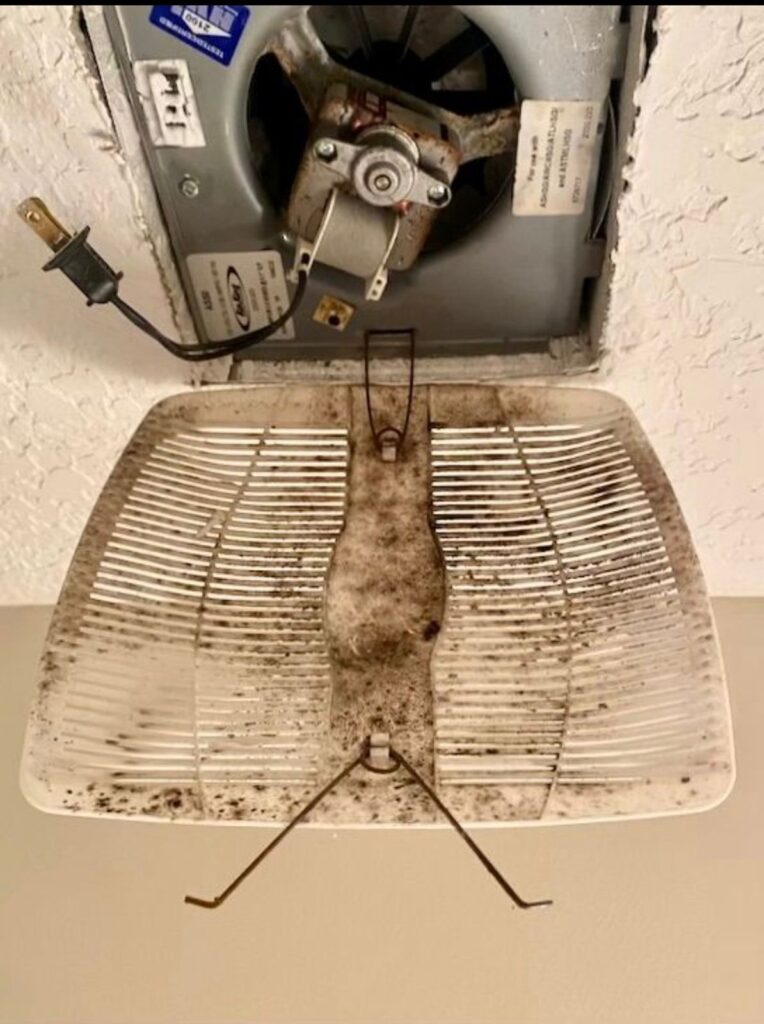
- Around exhaust fans
- Shower grout and caulking
- Behind tile
- Under vanities
- Around window frames
- Baseboards near tubs
Surface mildew on grout is common and often manageable with regular cleaning. But when moisture gets behind walls or under flooring, hidden mold can develop.
Signs Bathroom Mold May Be More Than Surface-Level
Most homeowners can identify minor mildew on tile. But certain signs suggest deeper moisture issues:
- Peeling or bubbling paint
- Soft drywall near shower areas
- Persistent musty odor
- Dark staining spreading beyond grout lines
- Warped baseboards
- Loose tiles
In homes in Palm Bay or Satellite Beach, we sometimes see mold forming behind bathroom walls due to small plumbing leaks that went unnoticed for months.
If mold keeps returning quickly after cleaning, that’s often a moisture signal.
The Role of Ventilation in Rockledge Homes
Ventilation is one of the biggest factors in bathroom mold prevention.
Common ventilation issues in Brevard County include:
- Exhaust fans that are too small for the bathroom size
- Fans clogged with dust
- Ducts disconnected in the attic
- Fans venting directly into attic spaces
- Homeowners not running fans long enough
Bathroom fans should typically run for at least 20–30 minutes after showering. In Florida’s climate, this extended run time helps remove lingering humidity.
If a fan vents into the attic instead of outside, it can create attic mold problems in addition to bathroom issues.
Why DIY Cleaning Isn’t Always Enough
For minor surface mildew, routine cleaning works. But many homeowners rely on bleach alone.
Here’s where problems arise:
- Bleach lightens staining but doesn’t remove moisture from drywall
- Hidden leaks remain undetected
- Humidity levels remain elevated
- Ventilation issues continue
Repeated surface cleaning without correcting the moisture source often leads to recurring mold.
If the problem spreads beyond grout and caulking, it’s time to evaluate moisture conditions.
What a Professional Bathroom Mold Inspection Includes
When bathroom mold appears more extensive, a structured inspection provides clarity.
At Brevard Mold Inspections & Removal, a bathroom evaluation typically includes:
Visual Assessment
Examining ceilings, walls, under sinks, and adjacent rooms.
Moisture Meter Testing
Checking drywall, flooring, and cabinetry for elevated moisture.
Ventilation Evaluation
Ensuring exhaust fans are properly sized and vented outside.
Thermal Imaging
Identifying cooler wall areas that may indicate hidden moisture.
Mold Testing (If Needed)
Air or surface samples may be collected for laboratory analysis when documentation is necessary.
Testing is often helpful during real estate transactions or recurring problems.
The goal is to determine whether the issue is surface-level or structural.
Proper Mold Remediation in Bathrooms
If mold extends beyond simple surface staining, remediation focuses on correcting moisture first.
The process may include:
- Repairing plumbing leaks
- Improving ventilation
- Removing damaged drywall
- Cleaning structural framing
- Replacing compromised insulation
- Installing proper exhaust venting
- Confirming moisture levels return to normal
Containment may be used to prevent spore spread into adjacent rooms during repairs.
Effective remediation stabilizes the environment so mold does not return.
Preventing Bathroom Mold in Brevard County
Prevention in Florida requires routine habits and maintenance.
Homeowners in Rockledge can:
- Run bathroom exhaust fans consistently
- Leave doors open after showers to improve airflow
- Wipe down wet surfaces
- Repair leaks immediately
- Monitor indoor humidity (ideal range 45–55%)
- Service HVAC systems annually
- Inspect attic venting for proper exhaust routing
In coastal communities like Cocoa Beach and Cape Canaveral, exterior humidity adds additional pressure on interior moisture control.
Small daily habits make a noticeable difference.
Older vs. Newer Bathrooms
Older homes in Cocoa or Titusville may lack modern ventilation systems.
Newer homes in Viera or Palm Bay may be tightly sealed for energy efficiency, which can trap humidity if airflow isn’t balanced.
Each construction style requires slightly different moisture management strategies.
Understanding how your bathroom is built helps determine prevention steps.
Why Local Expertise Matters
Bathroom mold in Brevard County behaves differently than in dry climates.
Rockledge homes face:
- Constant humidity
- High groundwater influence
- Hurricane-driven rain
- Year-round AC use
- Coastal salt exposure
A local inspection professional understands how these environmental factors influence indoor moisture patterns.
Brevard Mold Inspections & Removal evaluates bathroom mold issues with Florida-specific knowledge, helping homeowners respond calmly and effectively.
A Practical Next Step
If mold in your Rockledge bathroom keeps returning, spreads beyond grout, or is accompanied by musty odors, it’s worth having it evaluated.
A professional inspection can:
- Identify hidden moisture
- Confirm whether structural materials are affected
- Evaluate ventilation systems
- Provide practical next steps
Often, the solution is improved airflow or minor repairs. Other times, early intervention prevents larger damage.
Bathrooms naturally produce moisture. In Brevard County’s humid climate, managing that moisture consistently protects both your home and your comfort.
With proper ventilation, routine maintenance, and local expertise, bathroom mold can be controlled — and prevented — effectively.