
Mold in Crawl Spaces in Melbourne: What Homeowners in Brevard County Should Know
Crawl space mold is one of the most misunderstood problems homeowners face in Melbourne. Because crawl spaces are out of sight and rarely visited, mold can develop and spread for a long time before anyone realizes there’s an issue. By the time symptoms appear inside the home, the crawl space has often been dealing with moisture for months.
In Brevard County’s humid climate, crawl spaces are especially vulnerable. High groundwater levels, heavy rain, coastal humidity, and poor airflow all contribute to moisture buildup beneath homes. Understanding why crawl space mold is so common in Melbourne, where it usually starts, and how it affects the rest of the house helps homeowners address the real problem instead of just the symptoms.
Why Crawl Spaces Are Prone to Mold
Crawl spaces sit directly above the ground, which means they are constantly exposed to moisture. In Florida, the soil beneath homes often holds moisture year-round, especially after rain.
Warm, humid air enters crawl spaces through vents, gaps, and foundation openings. When that air cools, moisture condenses on cooler surfaces like wood framing, insulation, and subfloors. Limited airflow prevents proper drying, creating ideal conditions for mold growth.
Because crawl spaces are dark, warm, and rarely disturbed, mold can grow undetected for long periods.
Why Crawl Space Mold Is Common in Melbourne
Melbourne experiences high humidity most of the year, even outside the rainy season. That humidity doesn’t stop at ground level. It moves into crawl spaces through soil evaporation and air movement.
Heavy rain and storms can saturate the ground around foundations, increasing moisture levels underneath homes. Poor drainage around the property makes this worse.
Many crawl spaces in Brevard County are vented, which allows humid outdoor air to enter freely. While vents were once thought to help, in Florida’s climate they often increase moisture instead of reducing it.
All of these factors make crawl space mold a common issue in Melbourne homes.
Common Causes of Crawl Space Mold
Ground moisture is one of the biggest contributors. Bare soil releases moisture into the crawl space, especially when there is no proper vapor barrier.
Poor drainage around the home allows water to collect near the foundation and seep underneath. Downspouts that discharge too close to the house make the problem worse.
Plumbing leaks under the home are another frequent cause. Even slow leaks can keep wood and insulation damp enough to support mold growth.
HVAC ductwork running through crawl spaces can also contribute. Poorly insulated ducts may sweat in humid conditions, adding moisture to the space.
Where Mold Typically Grows in Crawl Spaces
Wood framing and floor joists are common locations because wood absorbs moisture easily and dries slowly.
Subflooring above the crawl space often shows mold growth when moisture rises from below. This can affect flooring inside the home.
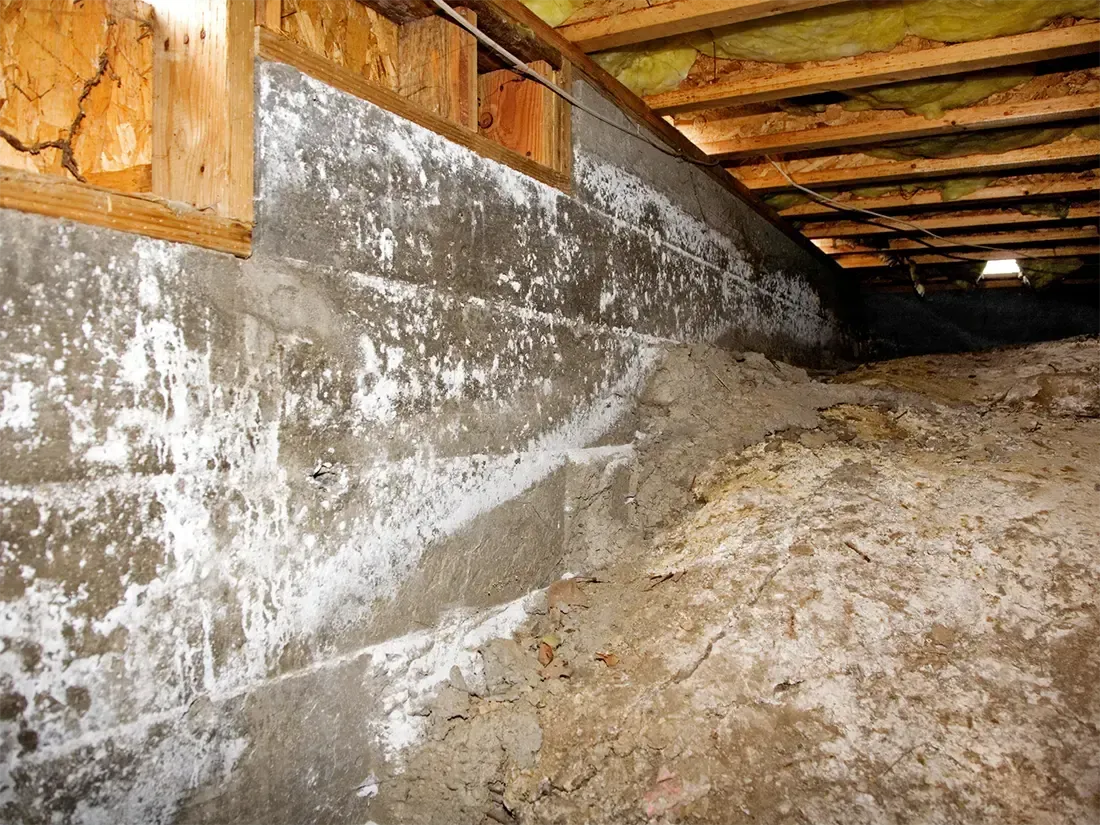
Insulation in crawl spaces frequently becomes moldy when it traps moisture against wood or concrete surfaces.
Foundation walls and piers may also show mold growth, especially where moisture collects or airflow is poor.
Signs Crawl Space Mold May Be Affecting the Home
Crawl space mold often shows up indirectly. One of the most common signs is a persistent musty odor inside the home, especially near floors or in rooms above the crawl space.
Floors may feel damp, cool, or slightly warped. Increased indoor humidity that’s hard to control can also point to crawl space moisture problems.
In some cases, homeowners notice mold on baseboards or lower walls, which can be linked to moisture rising from below.
These signs often appear long after mold has become established in the crawl space.
How Crawl Space Mold Affects Indoor Air
Air moves upward from crawl spaces into living areas through gaps, plumbing penetrations, and ductwork. This means conditions below the home directly affect indoor comfort.
Moist air, odors, and mold-related particles can enter the home, making it feel damp or musty even when everything looks clean.
In Melbourne homes, crawl space mold is a common reason indoor humidity feels high despite normal AC operation.
Why Crawl Space Mold Is Often Missed
Most homeowners rarely inspect their crawl spaces. Access points may be difficult to reach, and the space itself may feel unpleasant or unsafe to enter.
Because there’s no visible mold inside the home at first, moisture problems below often go unnoticed. By the time symptoms appear upstairs, mold below may already be widespread.
This delay is one reason crawl space mold problems can become extensive before they’re addressed.
Why DIY Crawl Space Cleanup Rarely Works
Crawl space mold is not a simple cleaning job. Scraping or spraying mold without containment can release spores into the air, which then move into the home.
DIY efforts also rarely address moisture sources like ground vapor, drainage issues, or ventilation problems. Without correcting these, mold will almost always return.
Crawl spaces also present safety concerns, including limited access, poor air quality, and the risk of damaging structural components.
Professional Mold Inspection for Crawl Spaces
A professional mold inspection evaluates both mold growth and moisture conditions in the crawl space.
Inspectors look at soil moisture, drainage patterns, wood framing, insulation, plumbing lines, and HVAC components. Moisture meters help identify damp materials that don’t appear wet.
Inspections also assess how air moves between the crawl space and the living area. When appropriate, air or surface sampling may be used to support findings.
The goal is to understand the full scope of the issue and what’s driving it.
Proper Mold Remediation in Crawl Spaces
Effective crawl space mold remediation addresses both mold removal and moisture control.
Containment is used to prevent spores from spreading during work. Mold-affected materials may be cleaned or removed depending on severity.
Moisture solutions often include installing or repairing vapor barriers, improving drainage, sealing air gaps, and addressing plumbing or HVAC issues.
In some cases, crawl space encapsulation or dehumidification may be recommended to stabilize conditions long-term.
Brevard Mold Inspections & Removal approaches crawl space mold with a prevention-focused mindset rather than surface-level treatment.
Preventing Crawl Space Mold Going Forward
Controlling ground moisture is key. Proper vapor barriers help prevent moisture from rising into the crawl space.
Ensuring good drainage around the home reduces water buildup near the foundation. Downspouts should direct water away from the structure.
Plumbing should be checked periodically for leaks under the home. Ductwork should be insulated to prevent condensation.
Regular crawl space inspections help catch moisture problems early before mold develops.
Why Local Experience in Brevard County Matters
Crawl space mold behaves differently in Florida than in dry climates. High humidity, sandy soil, heavy rain, and local construction styles all affect moisture movement.
Local experience means understanding where crawl space mold typically develops in Melbourne homes and which solutions actually work in this environment.
Professionals familiar with Brevard County conditions can identify risks early and recommend long-term solutions instead of temporary fixes.
A Calm, Practical Takeaway
Crawl space mold in Melbourne is common, but it doesn’t have to become a major problem. The key is recognizing moisture early and addressing it where it starts — beneath the home.
If your house smells musty, feels damp, or has a history of moisture issues, the crawl space is worth checking. A professional inspection can provide clarity and direction without pressure.
Homeowners throughout Brevard County benefit from understanding how crawl spaces affect the rest of the home. Brevard Mold Inspections & Removal helps homeowners identify crawl space mold issues, understand their causes, and take practical steps to protect their homes long-term.
When crawl space moisture is controlled, the entire home becomes more comfortable, stable, and easier to maintain.