
Mold in Crawl Spaces in Satellite Beach: What Homeowners in Brevard County Should Know
Crawl spaces are one of the most common and most overlooked places for mold growth in Satellite Beach homes. Because crawl spaces are out of sight and rarely accessed, moisture problems can go unnoticed for long periods, allowing mold to spread quietly beneath the home. By the time a homeowner realizes something is wrong, the issue has often grown well beyond a small area.
In coastal areas like Satellite Beach, Cocoa Beach, Merritt Island, and Cape Canaveral, crawl space mold is especially common. High humidity, salt air, frequent rain, and groundwater conditions all contribute to persistent moisture under homes. Understanding why crawl space mold develops, how it affects the rest of the house, and what to do about it is critical for homeowners across Brevard County.
What Crawl Space Mold Really Is
Crawl space mold develops when moisture remains trapped beneath a home long enough for mold spores to grow. Mold spores are always present in the air, but they only become a problem when moisture and organic materials, such as wood framing or insulation, are available.
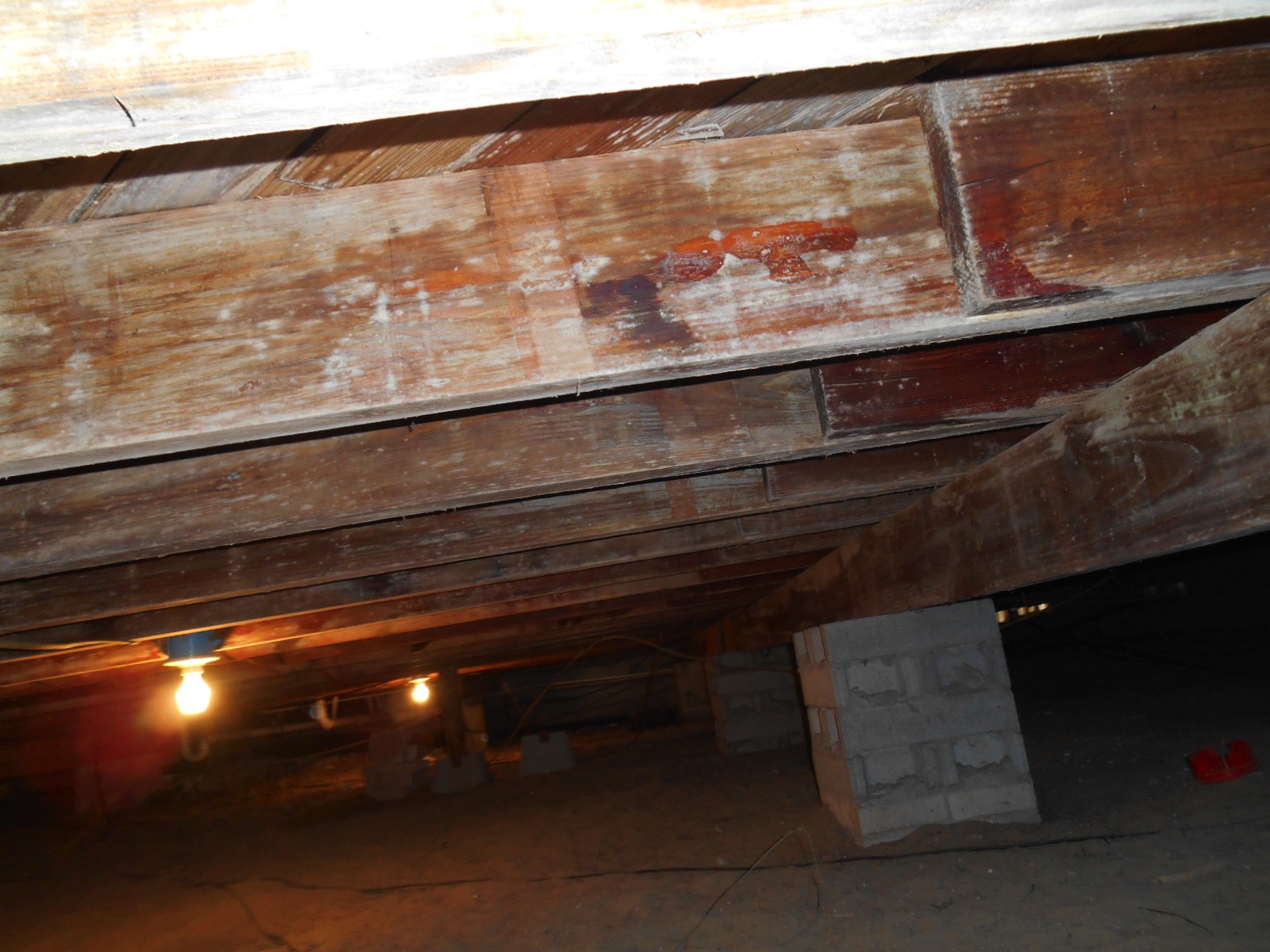
In crawl spaces, mold commonly grows on floor joists, subflooring, support beams, insulation, and vapor barriers. It may appear as dark staining, fuzzy growth, or patchy discoloration on wood surfaces.
Many Satellite Beach homeowners are surprised to learn that crawl space mold can exist even when the rest of the home looks clean and dry.
Why Crawl Space Mold Is So Common in Satellite Beach and Brevard County
Satellite Beach’s coastal environment creates constant moisture pressure under homes. High humidity levels persist throughout the year, and salt-laden air increases moisture retention on building materials.
Frequent rainstorms and tropical systems raise groundwater levels, allowing moisture to migrate into crawl spaces through soil, vents, and foundation openings. Even without standing water, damp soil can release moisture upward into the crawl space.
Poor ventilation is another major factor. Older crawl spaces often rely on passive vents that allow humid outdoor air to enter. Instead of drying the space, this air increases moisture levels, especially during Florida’s humid months.
In Brevard County, many crawl spaces were not originally designed for long-term moisture control, making mold a recurring issue.
Common Signs Homeowners Notice
Crawl space mold often reveals itself indirectly. One of the most common signs is a musty odor inside the home, especially near floors, closets, or lower-level rooms.
Some homeowners notice warped flooring, cupping wood floors, or soft spots underfoot. Increased indoor humidity, even with the air conditioning running, can also indicate moisture problems below the home.
In more advanced cases, pests, damp insulation, or visible mold around floor vents may point to crawl space issues. These signs often mean moisture and mold have been present for some time.
Where Mold Commonly Grows in Crawl Spaces
Floor joists and subflooring are the most common locations for crawl space mold. These wooden components readily absorb moisture and provide organic material for mold growth.
Insulation installed between floor joists often traps moisture, creating ideal conditions for mold. Vapor barriers that are damaged, improperly installed, or missing altogether allow ground moisture to rise into the crawl space.
Foundation walls, support piers, and areas near plumbing penetrations are also frequent trouble spots. In Satellite Beach homes, coastal moisture can affect multiple crawl space areas at once.
Hidden Causes Homeowners Often Miss
Many crawl space mold problems stem from issues that homeowners rarely see. Ground moisture is a major contributor, especially when vapor barriers are thin, torn, or absent.
Improper grading around the home can direct rainwater toward the foundation, increasing moisture beneath the house. Blocked or poorly designed drainage systems worsen the problem after heavy rain.
Plumbing leaks under the home, even slow ones, can keep crawl space materials damp without obvious signs inside the living space. HVAC ductwork running through crawl spaces can also sweat, adding moisture to the environment.
In coastal areas like Satellite Beach, these factors often combine, making crawl space mold persistent if not properly addressed.
Why Ignoring Crawl Space Mold Makes It Worse
Because crawl space mold is out of sight, it’s often left alone. Unfortunately, crawl space conditions directly affect the rest of the home.
Air from the crawl space can move upward into living areas, carrying moisture and odors with it. Over time, mold can weaken wood framing, reduce insulation effectiveness, and increase overall humidity indoors.
Ignoring crawl space mold can also lead to higher energy bills, as damp insulation performs poorly. The longer the issue is left untreated, the more extensive remediation often becomes.
Professional Crawl Space Mold Inspection Explained
A professional crawl space mold inspection focuses on identifying both moisture sources and mold growth beneath the home. This includes a thorough visual inspection of wood framing, insulation, vapor barriers, and foundation walls.
Moisture detection tools help identify damp materials and high-humidity conditions. Inspectors also evaluate ventilation, drainage, and airflow patterns within the crawl space.
When appropriate, air or surface sampling may be used to better understand the extent of mold growth. Laboratory analysis provides objective information to guide remediation decisions.
A proper inspection helps homeowners understand the full scope of the problem and what steps make sense next.
Proper Mold Remediation for Crawl Spaces
Effective crawl space mold remediation involves more than surface cleaning. Containment may be used to prevent mold spores from spreading during removal.
Mold-affected materials such as insulation or damaged vapor barriers may need to be removed and replaced. Wood surfaces are treated using appropriate methods based on severity.
Correcting moisture sources is critical. This may involve installing or repairing vapor barriers, improving drainage, sealing foundation openings, or addressing plumbing and HVAC issues.
In Florida homes, remediation must always account for ongoing humidity. Brevard Mold Inspections & Removal approaches crawl space mold with a prevention-focused mindset, not just short-term cleanup.
Preventing Crawl Space Mold Going Forward
Preventing crawl space mold in Satellite Beach starts with moisture control. A properly installed vapor barrier helps block ground moisture from entering the space.
Managing drainage around the home is essential. Water should flow away from the foundation, not toward it. Crawl space ventilation strategies should be evaluated based on local conditions, as traditional venting is not always effective in humid climates.
Regular inspections help catch moisture issues early. After heavy rain or storms, crawl spaces should be checked for dampness or water intrusion.
Consistent maintenance reduces the risk of recurring mold problems.
Why Local Experience in Brevard County Matters
Crawl space mold in Brevard County is shaped by coastal climate, soil conditions, and local construction practices. What works in dry regions often fails in Florida’s humid environment.
Local experience means understanding how Satellite Beach’s coastal moisture, storms, and groundwater affect crawl spaces. It also means knowing which solutions are effective long-term in this area.
Professionals familiar with Brevard County conditions can identify problems quickly and recommend practical, climate-appropriate solutions.
A Calm, Practical Next Step
If you suspect crawl space mold or notice musty odors, humidity issues, or flooring problems, a professional inspection can provide clarity without pressure. Early identification helps prevent structural damage and ongoing moisture problems.
Homeowners in Satellite Beach and throughout Brevard County benefit from working with experienced local professionals. Brevard Mold Inspections & Removal helps homeowners identify crawl space mold issues and take practical steps toward long-term protection.
Addressing crawl space mold early supports a healthier home and helps preserve the structure beneath it.