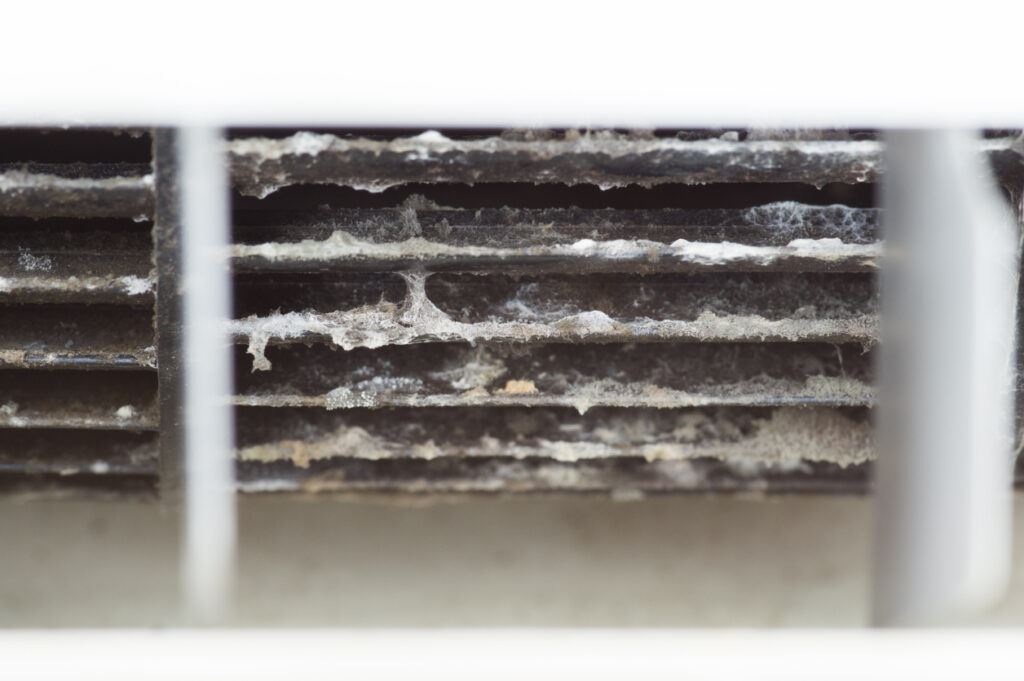
Mold in HVAC Systems in Indian Harbour Beach: What Homeowners in Brevard County Should Know
In Indian Harbour Beach, air conditioning is essential almost year-round. Between coastal humidity, salt air, and warm temperatures, HVAC systems work constantly to keep homes comfortable. Unfortunately, those same conditions also make HVAC systems one of the most common places for mold growth in Brevard County homes.
Because HVAC components are hidden and continuously circulating air, mold in these systems often goes unnoticed until homeowners start smelling musty odors or experiencing ongoing comfort and air quality issues. Understanding how mold develops in HVAC systems, why it’s common in Indian Harbour Beach, and how to address it properly can help protect both your home and your indoor environment.
What Mold in an HVAC System Really Means
Mold in an HVAC system usually doesn’t mean the entire system is contaminated. In most cases, mold begins growing in specific areas where moisture and organic debris collect.
Common HVAC mold locations include:
- Evaporator coils
- Condensate drain pans and drain lines
- Air handlers
- Insulated ductwork
- Supply and return vents
Dust naturally accumulates inside HVAC systems. When condensation mixes with that dust and doesn’t dry properly, mold can begin growing quietly. Because the system moves air throughout the home, mold in one section can affect multiple rooms without visible signs near the source.
Why HVAC Mold Is Common in Indian Harbour Beach
Indian Harbour Beach’s coastal environment plays a major role in HVAC mold problems. Salt-laden ocean air carries moisture that easily enters homes, even when windows and doors are closed. Indoor humidity levels stay elevated much of the year, placing constant demand on air-conditioning systems.
Several local factors increase HVAC mold risk:
- Constant AC operation due to warm coastal climate
- High humidity levels that slow drying
- Salt air that accelerates corrosion and moisture retention
- Condensation from evaporator coils
- Power interruptions after storms that stop airflow
Homes throughout Satellite Beach and Cocoa Beach face similar challenges, but barrier-island communities like Indian Harbour Beach often experience higher baseline humidity, making HVAC moisture issues more persistent.
Common Signs of Mold in HVAC Systems
HVAC mold problems often develop gradually. Many homeowners notice changes before seeing any visible growth.
Common warning signs include:
- Musty or mildew-like odors when the AC runs
- Odors strongest near vents or returns
- Excess indoor humidity despite air conditioning
- Visible residue or staining around vents
- Condensation forming repeatedly on vents or ductwork
Some residents report irritation or allergy-like symptoms, but these signs alone don’t confirm mold. They do, however, suggest moisture or air quality issues that should be evaluated.
Hidden Causes Homeowners Often Overlook
Mold in HVAC systems is rarely caused by just one issue. In Indian Harbour Beach homes, several hidden factors often combine.
Clogged condensate drain lines can cause water to back up into drain pans. Dirty evaporator coils hold moisture and dust together. Poorly insulated ductwork can sweat, especially in attics. Leaky ducts may pull humid attic air directly into the system.
Past water damage near air handlers — even years earlier — can also contribute. Homes in Merritt Island, Rockledge, and Titusville frequently show HVAC mold long after the original moisture issue is forgotten.
Why DIY Cleaning or Ignoring HVAC Mold Makes Things Worse
Many homeowners try to handle HVAC mold with vent sprays, duct fogging, or household cleaners. While these approaches may reduce odors temporarily, they rarely address the source of the problem.
Surface treatments don’t remove mold growing on coils, insulation, or inside ducts. Improper cleaning can disturb mold growth and spread spores throughout the system. Ignoring the issue allows moisture to continue feeding mold, increasing the likelihood of recurring problems.
Without correcting why moisture is present, mold is very likely to return.
How Professional Mold Inspection Helps With HVAC Issues
A professional mold inspection focuses on moisture, airflow, and system conditions — not just visible mold.
A proper inspection may include:
- Visual inspection of air handlers, coils, and vents
- Moisture readings around HVAC components
- Inspection of drain pans and condensate lines
- Evaluation of ductwork and insulation
- Air or surface sampling when appropriate
Testing is used to support decision-making, not to create alarm. The goal is to understand whether mold is present, where moisture is coming from, and what steps make sense next.
Homeowners across Brevard County often work with Brevard Mold Inspections & Removal for calm, accurate assessments of HVAC-related mold concerns.
Proper Mold Removal and Remediation for HVAC Systems
Effective remediation always starts by correcting moisture problems. Without fixing drainage, airflow, or humidity issues, mold is likely to return.
A proper remediation approach may include:
- Containment to prevent cross-contamination
- Cleaning or replacing affected HVAC components
- Treating surfaces safely and appropriately
- Thorough drying of HVAC areas
- Addressing system design or maintenance issues
Florida homes require remediation strategies tailored to constant AC use and high humidity — one-size-fits-all solutions rarely last.
Preventing Mold in HVAC Systems Going Forward
Prevention focuses on moisture control and regular maintenance.
Helpful prevention steps include:
- Scheduling routine HVAC maintenance
- Keeping condensate drain lines clear
- Using high-quality air filters
- Ensuring proper insulation around ductwork
- Monitoring indoor humidity levels
- Inspecting systems after storms or power outages
Coastal homes in Indian Harbour Beach benefit from proactive maintenance due to salt air and elevated humidity.
Why Local Brevard County Experience Matters
HVAC mold behaves differently in Florida than in other regions. Indian Harbour Beach homes face salt air exposure, frequent storms, and near-constant humidity that require local understanding.
Coastal properties experience different airflow and moisture patterns than inland homes in Palm Bay or Viera. Local experience helps professionals recognize these patterns and recommend realistic solutions suited to Brevard County homes.
A Calm, Practical Next Step for Homeowners
If you’re noticing musty odors, excess humidity, or concerns tied to your HVAC system, a professional inspection can provide clarity. Identifying moisture issues early helps prevent larger mold problems later.
Brevard Mold Inspections & Removal works with homeowners in Indian Harbour Beach and throughout Brevard County to provide inspections, testing, and guidance focused on long-term solutions and homeowner confidence.