
Mold in HVAC Systems in Palm Bay: What Homeowners in Brevard County Should Know
Mold in HVAC systems is one of the most common — and most overlooked — issues homeowners face in Palm Bay. Because air conditioning runs most of the year in Brevard County, HVAC systems constantly deal with moisture. When that moisture isn’t draining or drying properly, mold can begin growing inside the system and quietly affect the entire home.
Many homeowners don’t realize the HVAC system is involved until musty odors keep returning, certain rooms feel damp, or mold appears near vents despite repeated cleaning. In Palm Bay’s humid environment, HVAC-related mold is often the root cause.
Why HVAC Mold Is So Common in Palm Bay
Palm Bay experiences high humidity year-round, even during periods without rain. Moist outdoor air, long cooling cycles, and frequent storms all put pressure on HVAC systems to remove moisture continuously.
Air conditioners work by pulling warm, humid air across cold evaporator coils. Moisture condenses out of the air and should drain away. When drain lines clog, coils stay dirty, airflow is restricted, or insulation is compromised, moisture remains inside the system.
Storms and power interruptions can also raise indoor humidity quickly. Once moisture builds up inside HVAC components, mold can begin growing without any obvious water damage elsewhere in the home.
How Mold Develops Inside HVAC Systems
Mold doesn’t need standing water. It needs moisture, organic material, and time.
Dust, skin cells, and debris inside HVAC systems provide food. Condensation supplies moisture. Warm temperatures inside air handlers and ducts keep conditions favorable.
Once mold begins growing inside an HVAC system, it doesn’t stay contained. Airflow distributes moisture, odors, and spores throughout the home, making the problem feel widespread even if the source is localized.
Common HVAC Areas Where Mold Forms
Air handlers are one of the most frequent locations. Mold often develops around evaporator coils, inside drain pans, and on internal insulation when moisture does not drain properly.
Drain lines are another major contributor. A partially clogged drain can allow water to back up and sit stagnant, feeding mold growth.
Ductwork can also be affected. In Palm Bay homes, ducts running through attics or other warm spaces may sweat if insulation is damaged or airflow is poor.
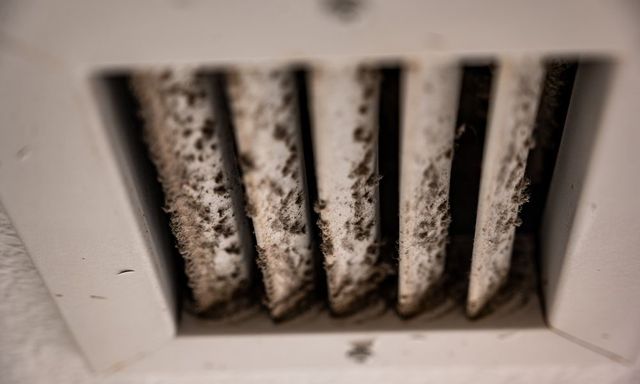
Supply vents and return grilles sometimes show visible mold, but these are often symptoms of deeper contamination inside the system.
Signs Mold May Be Coming From the HVAC System
A musty or damp smell when the AC turns on is one of the most common warning signs. The odor may fade as the system runs, then return later.
Some rooms may feel more humid than others even when the thermostat is set low. Condensation around vents, ceiling stains near duct runs, or visible mold near air handlers often point to HVAC moisture issues.
If mold keeps returning near vents after cleaning, the source is likely inside the system.
Why HVAC Mold Is Often Missed
HVAC systems are largely hidden from view. Homeowners don’t regularly open air handlers or inspect duct interiors, allowing mold to grow unnoticed.
When visible mold appears near vents, it’s often treated as a surface issue. Cleaning vent covers does not address mold growing deeper inside the system.
In Palm Bay homes, HVAC mold is frequently discovered during inspections, renovations, or when persistent comfort complaints can’t be explained otherwise.
The Role of Humidity and System Performance
Air conditioning helps control humidity, but only when systems are properly designed and maintained.
Oversized systems cool the home quickly but shut off before removing enough moisture. Dirty coils, clogged filters, and restricted airflow reduce dehumidification.
Ductwork in hot spaces can sweat when insulation is missing or damaged, adding moisture back into the system and surrounding materials.
In many cases, HVAC mold signals performance issues rather than a single failure.
Why DIY Cleaning Doesn’t Fix HVAC Mold
Homeowners often try replacing filters, spraying disinfectants, or cleaning vents. These steps may temporarily improve odors but rarely solve the underlying problem.
Mold inside air handlers and ductwork is not accessible without proper equipment and containment. Sprays and foggers do not correct moisture sources and can spread spores further.
Without fixing drainage, airflow, insulation, or humidity issues, HVAC mold almost always returns.
Professional Mold Inspection for HVAC Concerns
A professional mold inspection focuses on moisture conditions and HVAC performance.
Inspectors evaluate air handlers, drain pans, coils, ductwork, and nearby building materials. Moisture meters help identify damp areas that are not visibly wet.
Thermal imaging may be used to locate condensation or temperature differences that suggest moisture problems. When appropriate, air or surface sampling may support findings.
The goal is understanding why mold developed, not just confirming that it exists.
Proper Mold Remediation for HVAC Systems
Effective HVAC mold remediation addresses both mold growth and the conditions that allowed it to develop.
Containment prevents spores from spreading during cleaning or removal. Mold-affected components are cleaned or replaced depending on severity and material type.
Drainage issues are corrected, airflow is improved, and insulation problems are addressed. In some cases, sections of ductwork or internal insulation must be removed if contamination is extensive.
Stabilizing indoor humidity is critical so the system stays dry going forward. Brevard Mold Inspections & Removal approaches HVAC mold with a prevention-focused mindset rather than surface-level treatment.
How HVAC Mold Affects the Rest of the Home
Because HVAC systems circulate air throughout the home, mold inside the system can influence every room.
Odors may appear in multiple areas. Moisture can be redistributed through ductwork. Homes may feel damp even when surfaces look clean.
Correcting HVAC mold often improves overall comfort once moisture and airflow issues are resolved.
Preventing HVAC Mold in Palm Bay Homes
Regular HVAC maintenance is one of the most effective prevention steps. Drain lines and pans should be kept clear, coils cleaned, and filters changed consistently.
Ductwork should be properly insulated and sealed to prevent condensation. Air handlers should be checked periodically for signs of moisture or mold.
Using exhaust fans in bathrooms and kitchens reduces the moisture load the HVAC system must handle. Monitoring indoor humidity helps catch problems early.
After storms or power outages, HVAC systems should be inspected before returning to normal operation.
Why Local Experience in Brevard County Matters
HVAC mold issues in Brevard County are shaped by coastal humidity, storms, slab foundations, and constant system use. Solutions that work in dry climates often fail here.
Local experience means understanding how Palm Bay homes respond to humidity and where HVAC systems are most vulnerable.
Professionals familiar with local conditions know how to correct problems in ways that hold up long-term.
A Calm, Practical Takeaway
If your Palm Bay home smells musty when the AC runs, feels damp despite normal cooling, or shows recurring mold near vents or air handlers, the HVAC system may be involved.
Understanding the source of the issue is far more effective than repeated cleaning. A professional inspection can clarify what’s happening and help prevent small moisture problems from becoming larger ones.
Homeowners across Brevard County benefit from early assessment and moisture-focused solutions. Brevard Mold Inspections & Removal helps homeowners identify HVAC mold conditions, understand moisture issues, and take practical steps to restore comfort and stability to their homes.
When HVAC mold is handled correctly, the entire home benefits — not just the air system itself.