

Mold in HVAC Systems in Palm Bay: What Homeowners in Brevard County Should Know
In Palm Bay, the HVAC system runs almost year-round. It keeps homes cool, manages humidity, and circulates air through every room. Unfortunately, those same conditions also make HVAC systems one of the most common places for mold to develop in Brevard County homes.
Many homeowners are surprised to learn that mold problems don’t always start on walls or ceilings. In Florida, they often begin inside the air conditioning system itself. Because HVAC components are hidden, mold can grow for a long time before anyone realizes there’s an issue. Understanding how mold develops in HVAC systems, why Palm Bay homes are especially vulnerable, and what actually fixes the problem helps homeowners avoid repeated frustration.
What Mold in an HVAC System Really Means
When people talk about mold in the HVAC system, they are rarely talking about one single spot. Mold can grow in several parts of the system, including the air handler, evaporator coil area, drain pan, drain line, ductwork, and supply vents.
These components regularly deal with condensation. Warm, humid Florida air passes over cold surfaces inside the system, creating moisture. When that moisture doesn’t drain properly or stays present too long, mold can begin to grow.
In Palm Bay homes, HVAC mold is often hidden behind access panels or inside ducts, spreading quietly while the system continues to operate normally.
Why HVAC Mold Is So Common in Palm Bay
Palm Bay’s climate creates constant pressure on air conditioning systems. High humidity is present most of the year, even when there hasn’t been recent rain. This means HVAC systems are constantly removing moisture from indoor air.
Storms and heavy rainfall increase indoor humidity even further. After summer storms or tropical systems, AC units often work harder and produce more condensation.
Slab foundations, common throughout Palm Bay, can also contribute to higher indoor humidity levels. Moisture migrating upward from the ground adds to the overall load the HVAC system must manage.
When drain lines clog, pans overflow, or airflow is restricted, moisture stays inside the system long enough for mold to develop.
Common Signs Homeowners Notice
Mold in an HVAC system doesn’t always produce obvious visual signs. One of the most common clues is a musty or stale odor when the air conditioning turns on, especially after the system has been off for a while.
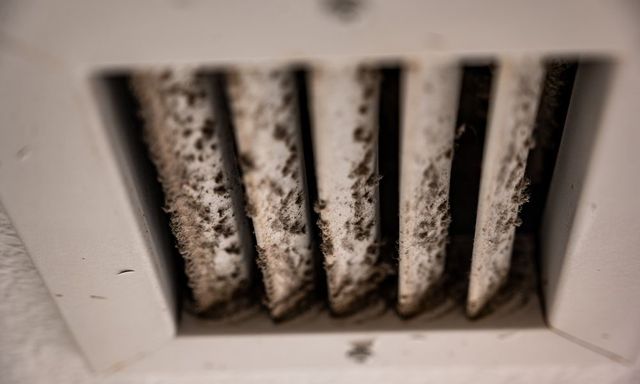
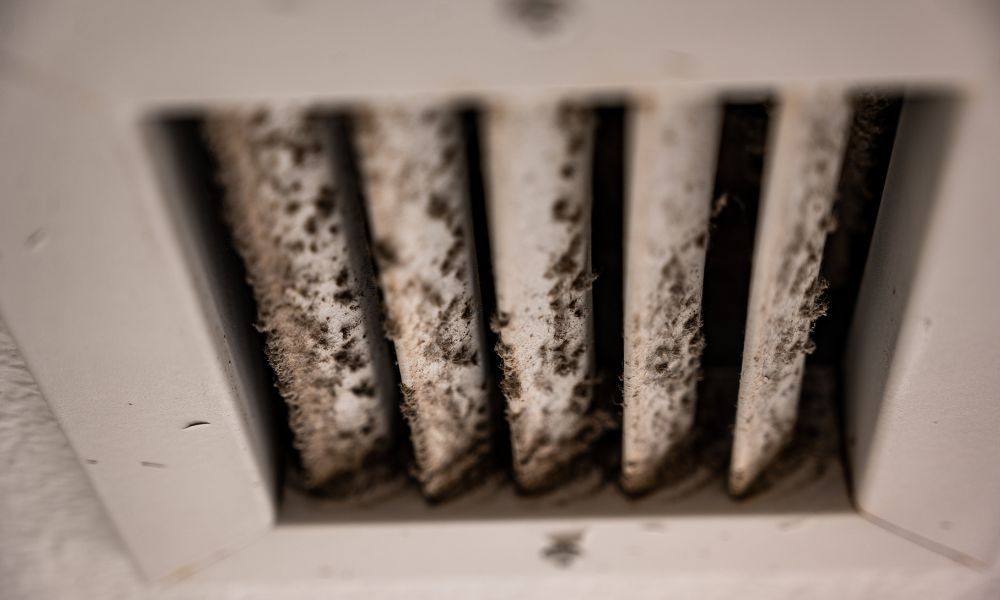
Some homeowners notice certain rooms feel more humid than others or that the home never seems to feel fully dry. Dark discoloration around supply vents, dust that returns quickly after cleaning, or condensation near vents can also indicate moisture issues inside the system.
In some cases, homeowners only discover HVAC mold after repeated cleaning fails to resolve odors.
Where Mold Commonly Grows in HVAC Systems
The air handler is one of the most common locations. Drain pans and nearby insulation often stay damp when drainage is poor.
Evaporator coils can also support mold growth if moisture and debris collect in that area. Ductwork, especially insulated ducts, can harbor mold when condensation forms inside.
Closets or utility rooms housing HVAC equipment are also frequent trouble spots due to limited airflow and trapped moisture.
In Palm Bay homes, mold is often found in more than one HVAC component at the same time.
Hidden Causes Homeowners Often Miss
Many HVAC mold problems begin with small issues that are easy to overlook. A partially clogged drain line can cause repeated overflow without obvious water damage.
Dirty filters restrict airflow, increasing condensation inside the system. Poorly insulated ductwork can sweat during humid conditions, dripping moisture onto surrounding materials.
Improper system sizing can also play a role. An oversized AC system may cool the home quickly without removing enough humidity, leaving moisture behind.
After water damage or storms, HVAC systems may be exposed to elevated humidity levels without homeowners realizing it.
Why DIY Cleaning Doesn’t Fix HVAC Mold
Homeowners often try replacing filters or wiping visible vents when mold is suspected. While filter changes are important, they do not address mold growing inside the system.
Spraying cleaners into vents or wiping visible components rarely reaches the source of the problem. In some cases, disturbing mold without containment can spread spores further through the duct system.
Without correcting the moisture issue, mold inside HVAC systems almost always returns. HVAC mold problems require a targeted, system-wide approach.
Professional Mold Inspection for HVAC Systems
A professional mold inspection focuses on identifying moisture and mold conditions inside and around the HVAC system. This includes inspecting the air handler, drain pan, coils, ductwork, and surrounding building materials.
Moisture detection tools help locate damp areas inside walls or ceilings near HVAC components. These tools are especially important in slab homes, where moisture movement is often hidden.
When appropriate, air or surface sampling may be used to better understand conditions. Testing supports decision-making but does not replace identifying moisture sources.
A proper inspection provides clarity instead of guesswork.
Proper Mold Remediation for HVAC Mold
Effective remediation addresses both mold growth and the conditions that allowed it to develop. Containment may be used to prevent spores from spreading during cleaning or material removal.
Affected HVAC components are cleaned or treated using appropriate methods. In some cases, damaged insulation or materials near the system may need to be removed and replaced.
Correcting moisture issues is critical. This may involve repairing drain lines, improving airflow, adjusting system performance, or addressing indoor humidity.
Brevard Mold Inspections & Removal approaches HVAC mold with a prevention-focused mindset, helping homeowners stabilize conditions rather than repeatedly treating symptoms.
Preventing Mold in HVAC Systems Going Forward
Prevention starts with regular HVAC maintenance. Keeping drain lines clear and pans in good condition helps prevent water buildup.
Changing filters regularly improves airflow and reduces condensation. Ductwork should be properly insulated to prevent sweating during humid periods.
Managing indoor humidity is equally important. Bathroom and kitchen exhaust fans help reduce moisture before it reaches the HVAC system.
After storms or water damage, HVAC systems should be checked for moisture exposure, even if no immediate issues are visible.
Why Local Experience in Brevard County Matters
HVAC mold issues in Brevard County are shaped by local climate, construction styles, and weather patterns. Palm Bay homes face challenges that differ from drier regions.
Local experience means understanding how humidity, storms, slab foundations, and Florida building practices affect HVAC systems. It also means knowing where mold is most likely to develop inside local homes.
Professionals familiar with Brevard County conditions can identify risks early and recommend solutions that make sense for this environment.
A Calm, Practical Next Step
If you notice musty odors, humidity problems, or recurring issues connected to your HVAC system, mold may be part of the picture. A professional inspection can help clarify what’s happening without pressure or assumptions.
Homeowners in Palm Bay and throughout Brevard County benefit from understanding HVAC-related mold early rather than waiting for the problem to spread. Brevard Mold Inspections & Removal helps homeowners identify HVAC mold conditions, understand moisture sources, and take practical steps toward long-term solutions.
Addressing mold in HVAC systems early helps restore comfort, protect the system, and prevent the issue from returning.