
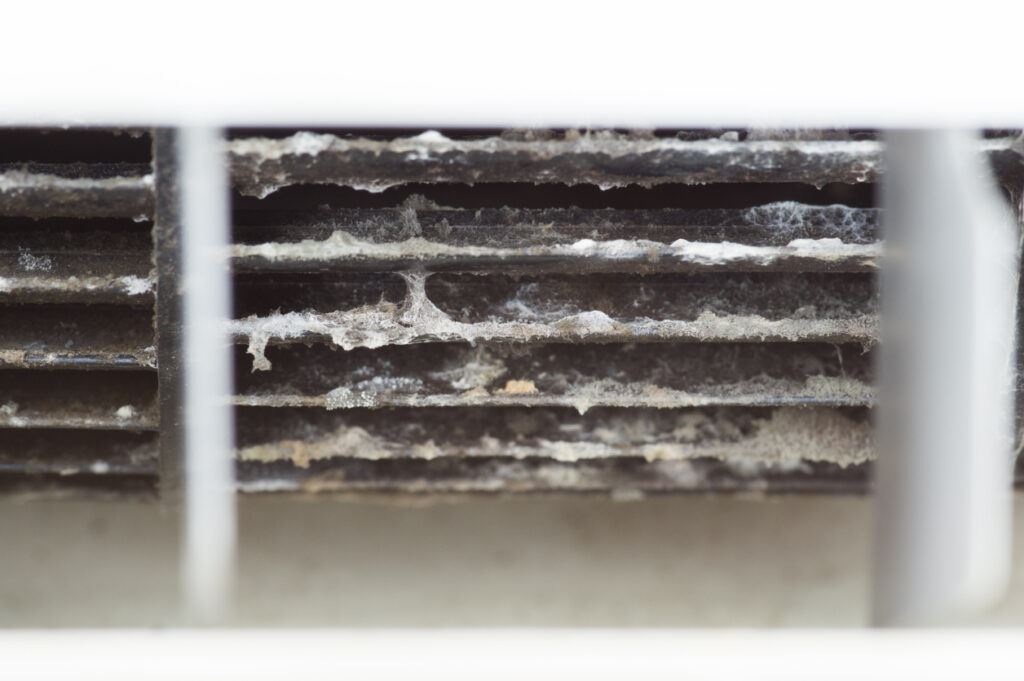
Mold in HVAC Systems in Titusville: What Homeowners in Brevard County Should Know
For homeowners in Titusville and throughout Brevard County, the HVAC system is one of the most important parts of the home. It runs almost year-round, fighting heat, humidity, and moisture that are part of daily life in Florida. Unfortunately, that same system can also become one of the most common places for mold to grow if conditions are right.
Mold in HVAC systems is a frequent issue in Titusville, Melbourne, Palm Bay, Merritt Island, Cocoa, and nearby areas. Because HVAC components are hidden and constantly moving air, mold problems often go unnoticed until they begin affecting indoor air quality, comfort, or the condition of the home itself. Understanding how mold develops in HVAC systems and why it’s so common in Brevard County can help homeowners take the right steps early.
What Mold in an HVAC System Really Means
When people hear “mold in the HVAC,” they often imagine dirty vents. In reality, mold growth usually starts deeper inside the system. Common locations include the air handler, evaporator coil area, drain pan, drain line, ductwork, and supply vents.
These components regularly deal with condensation. As warm, humid Florida air passes over cold coils, moisture forms. When that moisture doesn’t drain properly or lingers due to poor airflow, mold can begin to grow on nearby surfaces.
In Titusville homes, mold in HVAC systems is often hidden behind access panels or inside ducts, spreading quietly while the system continues to operate.
Why HVAC Mold Is So Common in Brevard County
Brevard County’s climate creates constant challenges for HVAC systems. High humidity levels persist most of the year, even during cooler months. Coastal moisture from nearby areas like Cocoa Beach, Cape Canaveral, and Satellite Beach adds even more humidity to the indoor environment.
Air conditioning systems in Florida run far more often than in other regions. This continuous operation produces large amounts of condensation. If drain lines clog, pans overflow, or insulation becomes damp, moisture remains inside the system.
Storms and heavy rainfall also play a role. After hurricanes or severe summer storms, moisture levels rise dramatically, and HVAC systems work harder to compensate. In slab homes common in Titusville and Rockledge, moisture intrusion can further increase indoor humidity, placing additional strain on AC systems.
All of these factors make HVAC systems a prime location for mold growth in Brevard County homes.
Common Signs Homeowners Notice
Mold in an HVAC system doesn’t always present obvious visual signs. One of the most common indicators is a persistent musty or stale odor when the air conditioning turns on. This smell often becomes stronger when the system first starts running.
Some homeowners notice that certain rooms feel more humid than others or that the air feels heavy even when the AC is running. Supply vents may show dark discoloration, dust buildup that returns quickly, or visible staining around registers.
In some cases, homeowners notice increased condensation around vents or on nearby ceilings and walls. These signs often point to moisture problems inside the HVAC system that may be feeding mold growth.
How Mold Enters and Spreads Through HVAC Systems
Mold spores are naturally present in outdoor and indoor air. Once they enter an HVAC system, moisture allows them to settle and grow. This often begins near the evaporator coil or drain pan, where condensation is most common.
When mold develops inside the system, airflow can carry spores throughout the home. Ductwork provides an ideal pathway, especially if insulation inside ducts becomes damp.
In Titusville homes, mold often spreads unnoticed because HVAC components are out of sight and rarely inspected unless there is a performance issue.
Overlooked Causes of HVAC Mold
Many HVAC mold problems start with small issues that go unnoticed. A partially clogged drain line can cause repeated overflow. A cracked drain pan can leak moisture into surrounding materials. Poorly insulated ductwork can sweat during humid conditions.
Improper system sizing is another factor. An oversized AC system may cool the home too quickly without removing enough humidity, leaving excess moisture in the air. Poor airflow due to dirty filters or blocked returns can also contribute to condensation buildup.
After water damage or roof leaks, HVAC systems may be exposed to elevated moisture levels without homeowners realizing it. These conditions create ideal environments for mold growth.
Why DIY Cleaning Is Not Enough
Homeowners often attempt to clean vents or replace filters when they suspect HVAC mold. While regular filter changes are important, they do not address mold growing inside the system.
Spraying cleaners into vents or wiping visible areas rarely reaches the source of the problem. In some cases, disturbing mold without proper containment can spread spores further through the duct system.
Without identifying and correcting the moisture source, mold is likely to return even after surface cleaning. HVAC mold problems require a targeted, system-wide approach.
Professional HVAC Mold Inspection Explained
A professional mold inspection focuses on identifying moisture and mold conditions inside and around the HVAC system. This typically includes a visual inspection of the air handler, drain pan, coils, and accessible ductwork.
Moisture detection tools help identify damp materials around HVAC components and inside nearby walls or ceilings. These tools are especially important in slab homes, where moisture movement is not always visible.
When appropriate, air or surface sampling may be performed to better understand the extent of mold growth. Laboratory analysis provides objective information that helps guide next steps without speculation.
A thorough inspection gives homeowners clarity about whether mold is present and where it’s coming from.
Proper Mold Remediation for HVAC Systems
Effective remediation focuses on both removing mold and correcting the conditions that allowed it to grow. Containment may be used to prevent spores from spreading during cleaning or removal.
Affected HVAC components are cleaned or treated using appropriate methods. In some cases, damaged insulation or materials may need to be removed and replaced.
Correcting moisture issues is critical. This may involve repairing drain lines, improving airflow, adjusting system sizing, or addressing humidity control. In Florida homes, remediation must always consider ongoing moisture challenges.
Brevard Mold Inspections & Removal approaches HVAC mold issues with a prevention mindset, helping homeowners reduce the risk of recurring problems.
Preventing Mold in HVAC Systems Going Forward
Prevention starts with regular HVAC maintenance. Keeping drain lines clear and pans in good condition helps prevent water buildup. Changing filters regularly improves airflow and reduces moisture retention.
Managing indoor humidity is equally important. Proper system sizing, good ventilation, and consistent AC operation help maintain balanced moisture levels.
After storms or water damage, HVAC systems should be checked for moisture exposure. Early detection can prevent long-term mold growth inside ducts or air handlers.
For coastal and high-humidity areas like Titusville, mold prevention is an ongoing process rather than a one-time task.
Why Local Experience in Brevard County Matters
HVAC mold issues in Brevard County are shaped by local climate, construction styles, and weather patterns. What works in dry climates may not apply in Florida homes.
Local experience means understanding how humidity, storms, slab foundations, and coastal air affect HVAC systems. It also means knowing where mold is most likely to develop in local homes.
Professionals familiar with Titusville and surrounding areas can identify risks that others may overlook.
A Calm, Practical Next Step
If you suspect mold in your HVAC system or notice ongoing moisture issues, a professional inspection can provide clear answers without pressure. Identifying problems early helps protect your home and maintain indoor comfort.
Homeowners across Brevard County, including Titusville, Melbourne, Palm Bay, and Merritt Island, benefit from working with experienced local professionals. Brevard Mold Inspections & Removal helps homeowners assess HVAC-related mold concerns and take practical steps toward long-term solutions.
Addressing HVAC mold early supports a healthier home environment and helps prevent costly repairs down the road.