
Mold in Rental Properties in Palm Bay: What Homeowners in Brevard County Should Know
Mold issues in rental properties are a common concern for property owners in Palm Bay. Florida’s humidity, heavy rainfall, and year-round air conditioning create conditions where moisture problems can develop quickly—sometimes between tenant turnovers, and sometimes while a property is fully occupied.
For landlords and property managers, mold is not just a maintenance issue. It affects tenant comfort, property condition, and long-term value. Understanding how mold develops in rental homes, where it’s most often found, and how to address it properly helps owners protect their investment and reduce repeat problems.
Why Rental Properties Are Vulnerable to Mold
Rental homes face many of the same moisture challenges as owner-occupied homes, but a few factors make them more vulnerable.
Tenants may not always notice or report small leaks right away. A slow drip under a sink, a clogged AC drain line, or a minor roof leak can continue for weeks before anyone realizes there’s an issue.
Rental properties may also sit vacant between tenants. When air conditioning is turned down or off, indoor humidity can rise quickly, especially during summer months. Moisture builds up, and mold can begin growing even without visible water damage.
Frequent turnover, varying living habits, and delayed maintenance can all contribute to ongoing moisture problems if they aren’t carefully managed.
Palm Bay and Brevard County Mold Conditions
Brevard County has a climate that naturally supports mold growth, and Palm Bay is no exception.
High humidity is present most of the year. Warm, moist air enters homes through doors, windows, and small gaps in the building envelope. If that moisture becomes trapped, it settles into drywall, insulation, and wood framing.
Palm Bay also experiences heavy rain, seasonal storms, and hurricane activity. Roof leaks, window intrusion, and exterior drainage issues can introduce moisture that isn’t always immediately visible.
Most homes in the area are built on slab foundations, which can trap moisture beneath flooring after plumbing leaks or water intrusion. Combined with constant air conditioning, these factors make mold a recurring issue in many rental properties.
Common Mold Locations in Rental Homes
In Palm Bay rental properties, mold is often found in predictable areas.
Bathrooms are one of the most common locations due to daily moisture from showers and limited ventilation. Mold may appear on ceilings, around exhaust fans, or along grout and caulking.
Kitchens and laundry rooms are also frequent problem areas. Plumbing leaks under sinks, behind appliances, or around washing machines can go unnoticed.
HVAC systems are another major source. Condensation drain issues, dirty coils, or damaged duct insulation can allow moisture to build up inside air handlers and ductwork.
Behind walls and under flooring are common hidden locations, especially after past leaks that were never fully dried.
Signs of Mold Tenants or Owners May Notice
Mold in rental properties often shows subtle signs before becoming obvious.
Musty or earthy odors are one of the most common complaints from tenants. These smells may be stronger when the air conditioning runs or after the property has been closed up.
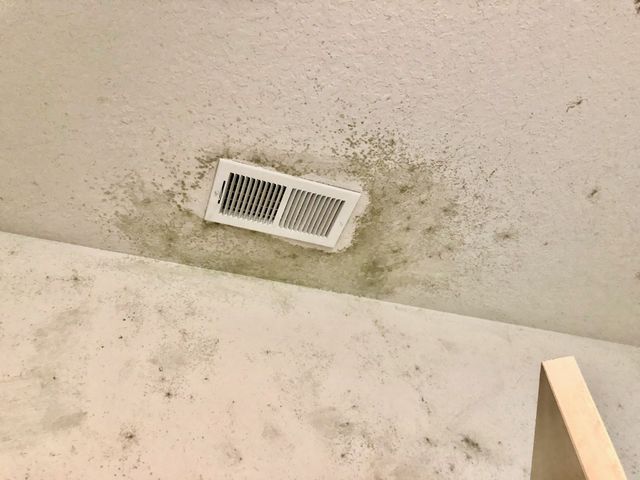
Visible discoloration on walls, ceilings, baseboards, or near vents can also raise concerns. In some cases, paint may peel or bubble due to moisture behind the surface.
Owners may notice higher humidity levels, warped flooring, or soft drywall during inspections or tenant turnover.
Because tenants may not always recognize early signs, routine inspections play an important role in catching issues early.
Why Mold Issues in Rentals Can Escalate Quickly
Mold problems in rental properties tend to escalate faster when moisture is ongoing.
If leaks aren’t addressed promptly, mold has time to spread into surrounding materials. Surface cleaning may temporarily hide the issue without resolving the underlying moisture problem.
In Florida’s climate, mold does not typically go away on its own. Once moisture is present, growth often continues until conditions are corrected.
Early evaluation and proper remediation usually prevent larger, more expensive repairs later.
The Role of Professional Mold Inspection in Rentals
Professional mold inspections are especially valuable for rental properties.
An inspection typically includes a visual evaluation of common problem areas, as well as moisture detection to locate hidden dampness behind walls or under flooring.
Moisture meters and thermal imaging tools help identify issues that aren’t visible during routine walk-throughs. When appropriate, air or surface samples may be collected and sent to an independent laboratory for analysis.
Testing can help clarify whether mold is present, how widespread it may be, and whether remediation is needed.
Local professionals such as Brevard Mold Inspections & Removal focus on providing clear, practical information so property owners can make informed decisions.
Mold Remediation in Rental Properties
When mold is confirmed, proper remediation focuses on both removal and prevention.
Containment is used to prevent mold from spreading during cleanup. Affected materials are cleaned or removed depending on the extent of contamination and the surface involved.
Correcting the moisture source is essential. This may involve plumbing repairs, roof repairs, HVAC maintenance, or ventilation improvements.
In rental properties, addressing the root cause helps reduce future tenant complaints and repeat remediation costs.
Preventing Mold Between Tenants
Turnover periods are a critical time for mold prevention.
Keeping the air conditioning running at appropriate settings helps control humidity when a property is vacant. Regular inspections during vacancy help catch leaks early.
Bathrooms, kitchens, and HVAC systems should be checked carefully before new tenants move in. Small repairs at this stage often prevent larger problems later.
Clear communication with tenants about reporting leaks and moisture issues promptly also makes a significant difference.
Long-Term Mold Prevention Strategies for Landlords
Preventing mold in rental properties requires consistency.
Routine HVAC maintenance helps prevent condensation issues. Drain lines should be kept clear, filters replaced, and ductwork inspected as needed.
Exterior drainage and gutters should be maintained to keep water away from foundations. Plumbing systems should be inspected regularly, especially in older properties.
Periodic moisture inspections can identify risk areas before mold develops.
Why Local Experience Matters
Mold in rental properties is not the same everywhere.
Palm Bay homes face specific challenges related to humidity, storms, slab foundations, and Florida-specific HVAC systems. Local experience helps professionals understand where mold is most likely to occur and how to prevent it effectively.
Professionals familiar with Brevard County can tailor inspections and recommendations to local conditions, reducing guesswork for property owners.
A Practical Next Step for Palm Bay Property Owners
If you own or manage a rental property in Palm Bay and suspect mold—or want to prevent it—a professional inspection can provide clarity without unnecessary disruption.
Understanding moisture conditions early helps protect your property, support tenant comfort, and avoid recurring problems. With accurate information and local expertise, rental property owners in Brevard County can manage mold concerns confidently and responsibly.