
Mold in Rental Properties in Palm Bay: What Homeowners in Brevard County Should Know
Mold issues in rental properties are a common concern in Palm Bay, and they can quickly become stressful for both property owners and tenants. Florida’s humidity, heavy rainfall, and long cooling season make mold a frequent topic in rental homes, apartments, and multi-family properties throughout Brevard County.
In most cases, mold problems in rentals are not caused by neglect or bad intentions. They develop when moisture isn’t fully controlled, communicated, or addressed early. Understanding why mold is common in Palm Bay rental properties, where it usually develops, and how it should be handled helps property owners protect their investment while maintaining a stable, livable environment for tenants.
Why Rental Properties Are Especially Vulnerable to Mold
Rental properties experience more frequent occupancy changes, varied lifestyles, and less consistent maintenance than owner-occupied homes. These factors alone don’t cause mold, but they can make moisture issues harder to detect early.
Tenants may not recognize early warning signs like musty odors, condensation, or minor leaks. Small issues can go unreported or seem insignificant until mold becomes visible.
In Palm Bay’s climate, moisture doesn’t need much time to turn into a problem. High humidity allows damp materials to stay wet longer, increasing the likelihood of mold growth in rental units.
Palm Bay Climate and Its Impact on Rentals
Palm Bay experiences high humidity for much of the year, even outside the rainy season. Moist air enters homes through doors, windows, ventilation openings, and small gaps in the building envelope.
Heavy summer rains and seasonal storms add to the moisture load. Wind-driven rain can enter through roofs, windows, and exterior penetrations without obvious flooding.
Air conditioning systems run most of the year in rental properties. While AC removes humidity, issues like clogged drain lines, dirty coils, or poor airflow can introduce moisture into walls, ceilings, and closets.
Slab foundations, common in Palm Bay, can also allow ground moisture to migrate upward after prolonged rain.
Common Mold Locations in Rental Properties
Bathrooms are one of the most frequent problem areas. Daily showers produce steam, and if exhaust fans are weak, rarely used, or vented incorrectly, moisture lingers.
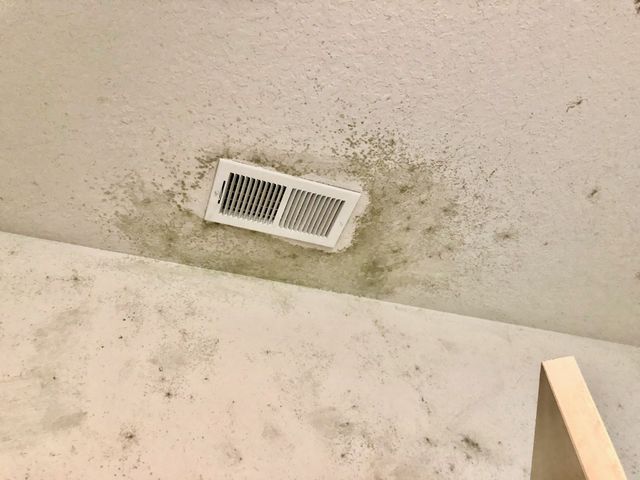
HVAC systems are another common source. Mold can develop inside air handlers, drain pans, ductwork, or around supply vents when condensation isn’t managed properly.
Behind drywall is a frequent hidden location. Leaks from plumbing, roofs, or windows can allow moisture into wall cavities, where mold grows out of sight.
Under flooring, especially carpet or laminate, moisture can remain trapped after spills, leaks, or high humidity periods.
Closets, particularly those on exterior walls, often develop mold due to limited airflow and trapped humidity.
Water Damage and Mold in Rentals
Many mold problems in rental properties begin after water damage that seemed minor at the time. A leaking appliance, overflowing toilet, roof leak, or AC issue can introduce moisture that isn’t fully dried.
If drying focuses only on visible surfaces, moisture can remain inside walls, floors, or insulation. In Florida’s climate, that’s often enough for mold to develop within days.
In Palm Bay rentals, mold is frequently discovered weeks after a water event, when odors or visible growth finally appear.
Early Signs Tenants or Owners May Notice
Musty or damp odors are often the first sign of a problem. These smells may be stronger when the AC turns on or after periods of rain.
Visual signs can include staining on ceilings or walls, bubbling paint, peeling baseboards, or discoloration around vents or bathrooms.
Some units may feel more humid than others, even when the thermostat is set low. This often points to ventilation or HVAC moisture issues.
When mold keeps returning after cleaning, it usually indicates an unresolved moisture source.
Why Mold in Rentals Is Often Missed Early
Communication gaps are a major reason. Tenants may delay reporting moisture or mold concerns, assuming they’re minor or temporary.
Property owners may not see the unit frequently enough to notice subtle changes. Routine maintenance visits don’t always include moisture checks behind walls or inside HVAC systems.
By the time mold is visible, it’s often been developing for some time.
The Role of Tenant Habits and Moisture
Tenant behavior can influence moisture levels, but it’s rarely the sole cause of mold. Long, hot showers without ventilation, drying clothes indoors, or keeping windows closed constantly can increase humidity.
However, well-functioning ventilation, properly sized HVAC systems, and moisture-resistant construction should handle normal daily use. Persistent mold problems usually indicate building or system issues, not just lifestyle factors.
Clear communication and education help reduce misunderstandings around responsibility.
Why DIY Mold Cleanup Is Risky in Rentals
Surface cleaning may temporarily improve appearance, but it does not address hidden growth or moisture sources.
Scrubbing mold without containment can spread spores, especially through shared HVAC systems in multi-unit properties. This can turn a localized issue into a building-wide problem.
Without identifying and correcting moisture issues, mold almost always returns, leading to repeated complaints and repairs.
Professional Mold Inspection in Rental Properties
A professional mold inspection focuses on moisture first. Inspectors evaluate HVAC systems, bathrooms, walls, ceilings, attics, and areas with known water damage.
Moisture meters and thermal imaging help locate damp materials behind surfaces. These tools are especially useful in rental units where access may be limited.
When appropriate, air or surface sampling may be used to support findings and provide documentation. Testing supports decisions but does not replace identifying moisture sources.
Inspections provide clarity for property owners and help guide appropriate next steps.
Mold Remediation in Rental Units
Effective remediation addresses both mold growth and the conditions that caused it.
Containment is used to prevent spores from spreading during removal, especially important in occupied or multi-unit properties.
Mold-affected materials may be cleaned or removed depending on severity. Drywall, insulation, or flooring often require removal when contamination is deep.
Correcting moisture issues is essential. This may include plumbing repairs, roof repairs, HVAC servicing, ventilation improvements, or humidity control.
Brevard Mold Inspections & Removal approaches rental property mold with a prevention-focused mindset, helping owners reduce repeat issues.
Preventing Mold in Palm Bay Rental Properties
Consistent maintenance is key. HVAC systems should be serviced regularly to prevent condensation and drainage problems.
Bathrooms should have functional exhaust fans vented outdoors. Leaks should be repaired promptly, even if they seem minor.
Routine inspections between tenants help catch moisture issues early. Clear guidelines for tenants on ventilation and reporting concerns also make a difference.
After storms, roofs, attics, and exterior openings should be checked promptly.
Why Local Experience in Brevard County Matters
Mold issues in Palm Bay rentals are shaped by local climate, building styles, and weather patterns. Advice that works elsewhere often doesn’t apply here.
Local experience means understanding how humidity, storms, slab foundations, and AC systems affect rental properties specifically.
Professionals familiar with Brevard County conditions can identify risks early and recommend solutions that work long-term.
A Practical Takeaway for Property Owners
Mold in rental properties is a moisture management issue first, not a personal or behavioral one. Early detection, clear communication, and consistent maintenance prevent most problems from escalating.
If your Palm Bay rental has musty odors, recurring mold, or a history of water issues, understanding what’s happening beneath the surface is the most productive step.
Homeowners and landlords across Brevard County benefit from proactive inspections and moisture-focused solutions. Brevard Mold Inspections & Removal helps property owners identify mold risks, understand underlying causes, and protect both their properties and tenants.
Handled correctly, mold in rental properties becomes a manageable maintenance issue rather than an ongoing source of conflict or costly repairs.