
Mold in Rental Properties in Titusville: What Homeowners in Brevard County Should Know
Mold issues in rental properties are a frequent concern for property owners in Titusville. With high humidity, frequent storms, and year-round air conditioning, mold can develop in rentals even when tenants believe they’re doing everything right. For landlords, mold complaints can quickly become stressful, especially when the source isn’t obvious.
In Brevard County, mold in rental properties is almost always a building and moisture issue first. Understanding how mold develops, where it’s commonly found in rentals, and how to address it properly helps owners protect their properties, maintain tenant relationships, and avoid repeat problems.
Why Rental Properties Are More Prone to Mold Issues
Rental homes often experience changing occupancy patterns, different daily habits, and less consistent maintenance than owner-occupied homes.
Tenants may not run exhaust fans regularly, may shut off AC while away, or may not notice small leaks early. Even when tenants are careful, Titusville’s climate makes moisture control challenging.
Turnover between tenants can also hide developing problems. A vacant unit with the AC off can build up humidity quickly, allowing mold to start before the next tenant moves in.
Common Mold Locations in Titusville Rental Homes
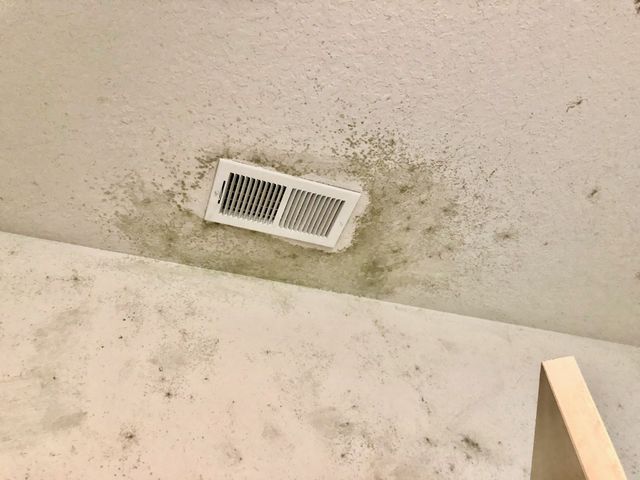
Bathrooms are one of the most frequent problem areas. Shower steam, poor ventilation, and inconsistent fan use often lead to ceiling and wall mold.
HVAC systems are another major contributor. Condensation inside air handlers, clogged drain lines, and ductwork issues can support mold growth that affects the entire unit.
Kitchens and laundry areas may develop mold due to appliance leaks or poor airflow.
Hidden areas like behind drywall, under flooring, inside wall cavities, and above ceilings are also common, especially after past leaks or storm-related moisture.
Why Mold Complaints Often Appear Suddenly
Many landlords are surprised when a tenant reports mold “out of nowhere.”
In reality, mold often develops slowly after:
- Small plumbing leaks
- AC drain line issues
- Elevated indoor humidity
- Past water damage that never fully dried
By the time mold becomes visible or odors are noticeable, moisture has often been present for weeks or months.
Tenant Habits vs. Building Conditions
Mold issues in rentals are often blamed on tenant behavior, but the full picture is usually more complex.
While ventilation habits matter, mold rarely develops without a moisture source. Poorly performing HVAC systems, inadequate ventilation, or hidden leaks are often the real drivers.
Addressing building conditions is far more effective than focusing solely on tenant behavior.
Why Surface Cleaning Doesn’t Solve Rental Mold Issues
Tenants often try cleaning visible mold with household cleaners. This may improve appearance temporarily but rarely fixes the problem.
Cleaning does not remove moisture from walls, ceilings, or HVAC systems. Mold can continue growing beneath surfaces and return quickly.
Repeated cleaning without addressing moisture often leads to recurring complaints and frustration on both sides.
The Importance of a Professional Mold Inspection
A professional mold inspection helps remove guesswork.
Inspectors evaluate moisture sources, HVAC systems, ventilation, and building materials throughout the rental property. Moisture meters and thermal imaging help locate damp areas behind walls and ceilings.
When appropriate, air or surface sampling may support findings, but the primary goal is understanding why mold is present and how extensive it is.
An inspection provides clear documentation and direction for next steps.
Mold Remediation in Rental Properties
Proper remediation focuses on both mold removal and moisture correction.
Containment prevents mold spores from spreading to other units or areas. Mold-affected materials may be cleaned or removed depending on severity and material type.
HVAC issues, plumbing leaks, ventilation problems, or drainage concerns must be corrected. Without fixing moisture, mold will return regardless of cleanup quality.
Brevard Mold Inspections & Removal approaches rental property mold with a prevention-focused mindset rather than cosmetic cleanup.
Why Ignoring Mold in Rentals Is Risky
Delaying action often leads to larger repairs.
Moisture can spread into walls, floors, and ceilings, increasing remediation costs. Mold odors can move into adjacent units, especially in multi-family properties.
Early evaluation and correction almost always cost less than waiting.
Preventing Mold Between Tenants
Vacancy periods are critical.
Leaving the AC off allows humidity to rise quickly. Running the system regularly during vacancies helps control moisture.
Units should be inspected for leaks, condensation, and ventilation issues before new tenants move in. Bathrooms, HVAC closets, and kitchens deserve extra attention.
Simple preventive steps during turnover can prevent months of future problems.
Setting Clear Expectations With Tenants
Clear communication helps reduce mold issues.
Providing guidance on using exhaust fans, reporting leaks promptly, and maintaining reasonable thermostat settings helps tenants understand their role.
However, expectations should always be paired with proper building maintenance. Prevention works best when both sides do their part.
Why Local Experience in Brevard County Matters
Mold behavior in Titusville rentals is shaped by local conditions—humidity, storms, slab foundations, and constant cooling cycles.
Local experience helps identify where mold typically develops in rental properties here and which solutions actually last.
Generic approaches often fail in Brevard County’s environment.
A Calm, Practical Takeaway
Mold in rental properties in Titusville is common, but it’s manageable with the right approach. It’s rarely caused by a single factor and almost always tied to moisture conditions within the building.
If a tenant reports recurring mold, musty odors, or damp conditions, a professional inspection can provide clarity and direction without conflict.
Homeowners and property owners across Brevard County benefit from addressing mold proactively rather than reactively. Brevard Mold Inspections & Removal helps property owners identify mold issues, correct moisture problems, and protect their investments long-term.
Handled properly, mold in rental properties becomes a solvable maintenance issue—not an ongoing source of stress for owners or tenants.