
Mold Inspection in Merritt Island: What Homeowners in Brevard County Should Know
If you’re considering a mold inspection for your Merritt Island home, you’re probably dealing with one of a few common situations:
A musty smell that won’t go away.
Visible staining on a ceiling or wall.
Recent storm damage.
Or a real estate transaction that requires documentation.
In Brevard County, mold inspections are not uncommon. Between lagoon humidity, coastal storms, hurricane season, slab construction, and year-round AC use, moisture issues are part of life here.
The key is understanding what a mold inspection actually includes — and what you should expect from the process.
Why Mold Inspections Are Common in Merritt Island
Merritt Island sits between the Indian River Lagoon and the Banana River. That means elevated humidity levels throughout the year.
Homes here face:
- High water tables
- Coastal humidity
- Wind-driven rain
- Hurricane-related roof stress
- Slab foundation moisture
- Constant air conditioning operation
Even small leaks can lead to mold growth within 24–48 hours in Florida’s climate.
Because drying happens more slowly here than in dry states, hidden moisture can linger long after a storm passes.
A mold inspection focuses on identifying that hidden moisture.
What a Mold Inspection Actually Involves
A professional mold inspection in Merritt Island is more than a quick visual glance.
It is a structured evaluation designed to answer two main questions:
- Is mold present?
- Where is the moisture coming from?
The second question is often more important than the first.
Step 1: Visual Assessment
The inspection typically begins with a thorough walkthrough of the home.
Areas commonly evaluated include:
- Ceilings and walls
- Baseboards
- Under sinks
- Around windows and sliding doors
- HVAC closets
- Attic spaces
- Crawl spaces (if present)
In Merritt Island homes, attic inspections are especially important due to storm exposure and ventilation concerns.
The visual assessment often reveals patterns that point toward the moisture source.
Step 2: Moisture Mapping
Moisture meters are used to detect elevated moisture levels behind surfaces.
This helps identify:
- Damp drywall
- Wet insulation
- Moist subflooring
- Hidden plumbing leaks
In slab homes common throughout Merritt Island and Rockledge, moisture may travel upward from small leaks.
Moisture mapping helps locate those hidden areas without unnecessary demolition.
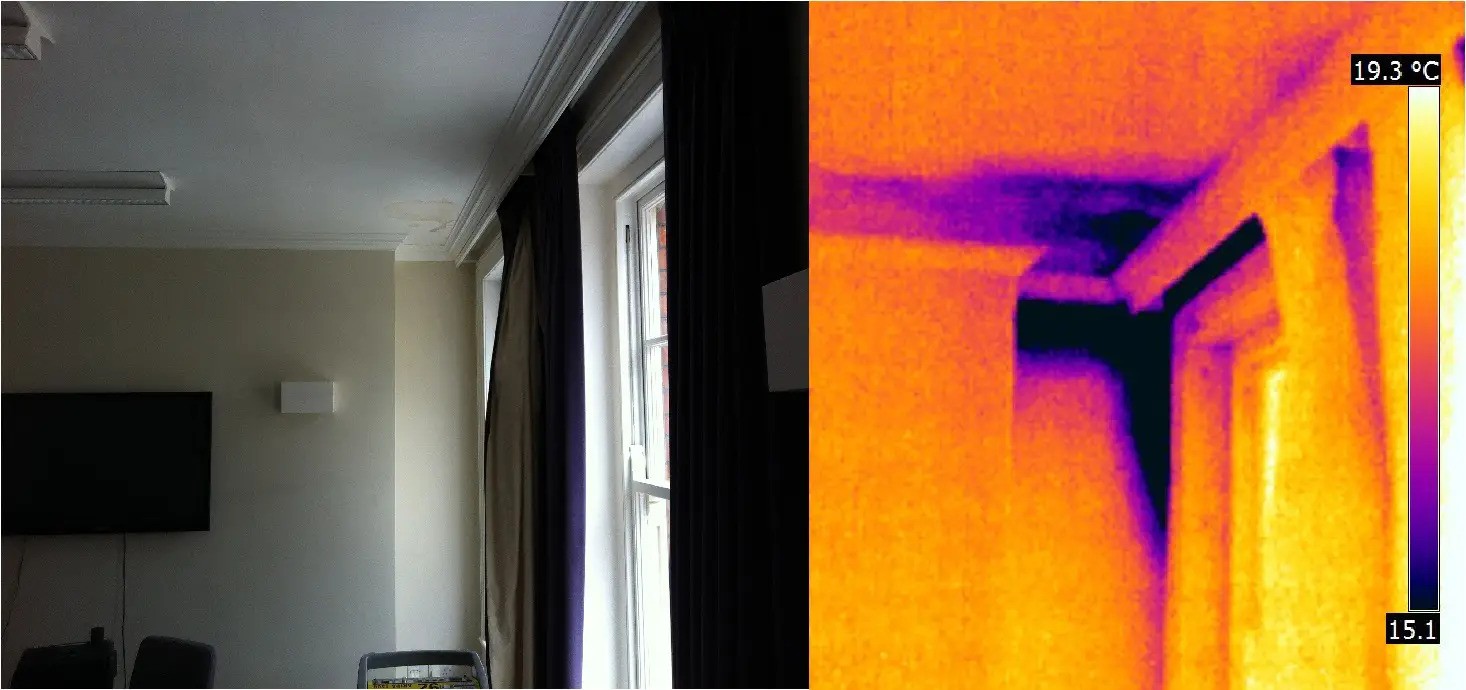
Step 3: Infrared Imaging
Infrared cameras detect temperature differences in building materials.
Cooler areas can sometimes indicate trapped moisture.
While infrared imaging does not confirm mold on its own, it helps guide further testing.
This tool is especially helpful after hurricanes affecting Cocoa Beach or Satellite Beach, when water intrusion may not be immediately visible.
Step 4: Humidity Measurement
Indoor relative humidity plays a major role in mold development.
In Merritt Island, indoor humidity should ideally stay between 45%–55%.
If levels consistently exceed 60%, mold growth becomes more likely.
Measuring humidity helps determine whether environmental imbalance is contributing to the problem.
Step 5: Mold Testing (If Needed)
Not every inspection requires mold testing.
Testing may be recommended when:
- There is strong odor but no visible mold
- Real estate documentation is required
- Health concerns are part of the situation
- The extent of contamination is unclear
Testing options may include:
- Air sampling
- Surface sampling
- Bulk material sampling
Outdoor samples are typically taken for comparison because mold spores are naturally present in Brevard County’s air.
Testing provides data — but moisture correction remains the solution.
Common Mold Sources in Merritt Island Homes
During inspections, we frequently trace mold back to:
- Roof leaks after hurricanes
- AC condensate drain clogs
- Poor attic ventilation
- Window seal deterioration
- Plumbing leaks
- Crawl space humidity
Because Merritt Island is surrounded by water, humidity levels are consistently elevated.
This increases the importance of proper ventilation and moisture management.
Why Early Inspection Matters
Waiting too long to schedule an inspection can allow moisture problems to spread.
In Florida’s climate:
- Insulation holds moisture
- Wood framing absorbs water
- Humidity slows evaporation
- Warm temperatures accelerate mold growth
What begins as a small roof leak can become widespread attic contamination within weeks.
Early detection limits remediation scope and cost.
Why DIY Inspections Often Miss the Problem
Homeowners sometimes rely on visual inspection alone.
However, mold frequently grows:
- Behind drywall
- Under flooring
- Inside attic insulation
- Around HVAC components
- Beneath cabinets
Without moisture meters and proper equipment, hidden dampness is easy to miss.
In Palm Bay and Titusville homes, we often find significant hidden moisture that homeowners didn’t realize was present.
Professional inspection tools provide clarity.
What Happens After the Inspection
After a mold inspection, homeowners receive findings that may include:
- Areas of visible growth
- Moisture readings
- Humidity levels
- Likely moisture sources
- Recommendations for correction
If remediation is needed, it should focus first on correcting the moisture source.
If no active moisture is found, preventative steps may be recommended instead.
Brevard Mold Inspections & Removal approaches inspections with a focus on practical, climate-specific solutions.
The goal is clear information — not unnecessary alarm.
Preventing Mold in Merritt Island Homes
Even if your inspection shows minimal issues, prevention is ongoing in Brevard County.
Homeowners can:
- Maintain indoor humidity between 45%–55%
- Service HVAC systems annually
- Flush AC drain lines regularly
- Inspect attics after storms
- Repair roof damage promptly
- Seal windows and sliding doors
- Monitor plumbing connections
After hurricanes affecting Rockledge or Satellite Beach, early attic checks reduce hidden moisture risks.
Prevention is always easier than remediation.
Why Local Experience in Brevard County Matters
Mold inspections in Florida differ from those in dry climates.
Merritt Island homes face:
- Lagoon-driven humidity
- High water tables
- Hurricane wind pressure
- Slab and crawl space moisture
- Continuous AC operation
An inspector familiar with Brevard County understands how these environmental pressures influence mold behavior.
Brevard Mold Inspections & Removal works throughout Merritt Island, Rockledge, Melbourne, Palm Bay, Titusville, Cocoa Beach, and Satellite Beach. Local experience ensures inspections reflect Florida’s unique conditions.
A Clear, Practical Next Step
Scheduling a mold inspection in Merritt Island doesn’t mean something is seriously wrong.
It means you want clarity.
In Brevard County’s humid environment, moisture issues are common — but manageable when identified early.
If you’ve noticed musty odors, recent storm exposure, or unexplained staining, a professional mold inspection can provide answers.
Clear information, early action, and steady moisture control protect your home long-term.