
Mold Inspection in Satellite Beach: What Homeowners in Brevard County Should Know
Living in Satellite Beach means ocean air, steady coastal breezes, and beautiful waterfront neighborhoods. It also means wind-driven rain, salt exposure, high humidity, and long AC seasons.
In Brevard County, mold inspections are not unusual — especially in coastal communities like Satellite Beach, Cocoa Beach, Cape Canaveral, Merritt Island, Melbourne, Palm Bay, Rockledge, Titusville, and Viera.
If you’re considering a mold inspection in your Satellite Beach home, it’s usually because something prompted it:
- A musty smell
- A recent storm
- A roof leak
- A plumbing issue
- An upcoming home sale
- Indoor air concerns
The goal of a professional mold inspection is not to create alarm. It’s to provide clarity.
Let’s walk through what homeowners in Satellite Beach should realistically expect.
Why Mold Inspections Are Common in Satellite Beach
Satellite Beach homes face a unique mix of environmental conditions.
Coastal Humidity
Even when temperatures are mild, humidity levels remain elevated. Indoor humidity above 60% for extended periods increases mold risk.
Wind-Driven Rain
During tropical systems, rain does not fall straight down — it moves sideways. Water can enter through small gaps around windows, doors, roof penetrations, and soffits.
Salt Exposure
Salt air accelerates wear on ventilation systems, roofing materials, and metal components. Over time, this can contribute to minor moisture intrusion.
Heavy AC Use
Homes throughout Satellite Beach and Melbourne rely heavily on air conditioning. When systems short cycle or condensate lines clog, moisture builds up.
Mold inspections often follow these conditions.
What a Mold Inspection Actually Involves
A professional mold inspection is a systematic evaluation of a home’s moisture conditions and potential mold growth.
It typically includes:
- Visual assessment
- Moisture detection
- Humidity measurement
- Evaluation of ventilation
- Air or surface sampling (if needed)
The purpose is to determine whether mold is present and, more importantly, why.
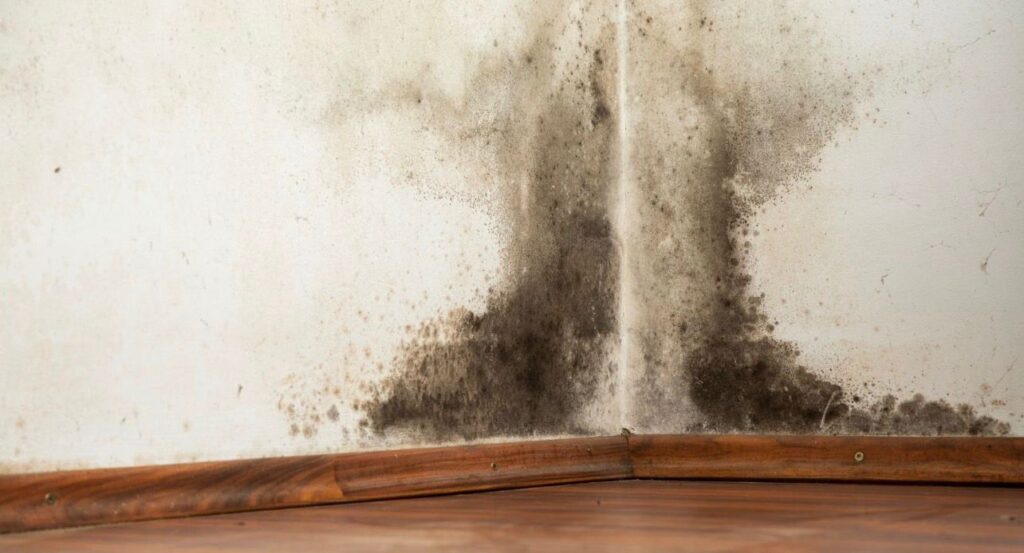
Mold itself is a symptom. Moisture is the cause.
Common Areas of Concern in Satellite Beach Homes
During inspections across Brevard County, certain areas repeatedly show elevated moisture.
Attics
Satellite Beach attics can trap humid air if ventilation is inadequate. Roof leaks during storm season often go unnoticed until staining appears.
Dark spotting on roof sheathing is common in high-humidity homes.
HVAC Systems
Air handlers and ductwork located in hot attics are especially vulnerable to condensation buildup.
Clogged condensate drain lines are a frequent issue in Palm Bay, Rockledge, and Satellite Beach homes.
Around Windows and Sliding Doors
Coastal wind exposure can force rain into small gaps around seals.
Bathrooms
Improperly vented exhaust fans allow moisture to linger above ceilings.
Under Flooring
Slab homes may trap moisture beneath tile or laminate after plumbing leaks.
A thorough inspection examines all of these areas.
Signs That Warrant a Mold Inspection
Homeowners often notice subtle signs before scheduling an inspection.
Common indicators include:
- Persistent musty odors
- Peeling paint near ceilings
- Warped baseboards
- Condensation on windows
- Dark staining in attic spaces
- AC running constantly but home feels humid
In Merritt Island and Titusville homes, attic humidity issues are often discovered during routine maintenance rather than after visible mold appears indoors.
Early inspection prevents larger problems.
How Moisture Detection Works
Moisture detection is one of the most important parts of an inspection.
At Brevard Mold Inspections & Removal, we use calibrated moisture meters to check:
- Drywall
- Wood framing
- Subflooring
- Insulation
- Areas near HVAC systems
Surfaces may appear dry, but elevated readings can reveal hidden dampness.
We also measure indoor relative humidity. Ideally, homes should stay between 45% and 55%.
Anything consistently above 60% increases mold risk in Florida.
When Mold Testing Is Recommended
Testing is not always necessary.
Air or surface sampling may be recommended when:
- There is a persistent odor but no visible growth
- A property transaction requires documentation
- Remediation clearance is needed
- Health-related concerns arise
Air samples compare indoor spore levels to outdoor baseline levels.
In Brevard County, outdoor mold is normal. Elevated indoor levels suggest an indoor moisture source.
Testing provides data — not guesswork.
Why DIY Mold Testing Can Be Misleading
Hardware store test kits often involve exposing a plate and waiting for mold growth.
In Florida’s climate, those plates almost always grow mold because outdoor air contains spores naturally.
Without outdoor comparison samples and professional interpretation, results can cause unnecessary concern.
Professional inspection provides context and accurate evaluation.
What Happens If Mold Is Found?
If mold growth is confirmed, the next step is identifying the moisture source.
Common corrections in Satellite Beach homes include:
- Improving attic ventilation
- Repairing roof leaks
- Clearing AC drain lines
- Resealing windows
- Adjusting airflow balance
- Reducing indoor humidity
If significant growth is present, remediation may be recommended.
Proper remediation involves containment, HEPA air filtration, removal of contaminated materials, and verification of dry conditions.
Without moisture correction, mold can return.
Preventing Mold in Coastal Brevard County Homes
Prevention in Satellite Beach focuses on moisture management.
Homeowners can reduce risk by:
- Scheduling annual AC maintenance
- Flushing condensate lines
- Inspecting attic ventilation
- Addressing roof damage immediately after storms
- Monitoring indoor humidity
- Ensuring bathroom fans vent outdoors
- Inspecting window seals annually
Coastal homes require consistent monitoring due to wind and salt exposure.
Small maintenance steps prevent larger repairs.
Why Local Experience Matters
Mold inspections in Satellite Beach differ from inspections in dry inland regions.
Coastal homes face:
- Wind-driven rain
- Salt corrosion
- High humidity
- Hurricane vulnerability
- Slab construction
- AC-heavy airflow systems
Homes in Viera or inland Palm Bay may experience different moisture patterns than properties directly along the coast.
Brevard Mold Inspections & Removal has inspected homes throughout Satellite Beach and surrounding communities. Local familiarity with Florida construction styles and coastal weather patterns helps identify issues quickly and accurately.
Understanding how Brevard County homes respond to humidity allows for practical solutions.
A Calm, Practical Next Step
If you’re considering a mold inspection in Satellite Beach, the purpose is simple: clarity.
Most mold concerns in Brevard County are moisture-driven and manageable when addressed early.
A professional inspection identifies:
- Whether mold is present
- Where moisture is coming from
- Whether testing is necessary
- What corrective steps make sense
If you’d like experienced local guidance tailored to Satellite Beach’s coastal environment, Brevard Mold Inspections & Removal is here to help — calmly, clearly, and without pressure.
Moisture awareness protects your home. Inspection provides the answers.