
Mold Remediation in Cocoa Beach: What Homeowners in Brevard County Should Know
If you live in Cocoa Beach, moisture is simply part of coastal living. Ocean air, high humidity, afternoon storms, and hurricane season all create constant pressure on your home’s structure.
So when mold shows up — whether in an attic, bathroom, AC closet, or behind drywall — remediation becomes the next question.
What does proper mold remediation actually involve?
Is it always extensive?
How do you know it’s done correctly?
For homeowners across Brevard County — from Satellite Beach to Cape Canaveral and Melbourne — understanding the remediation process helps remove uncertainty and prevent recurring problems.
Let’s walk through what remediation really means in Florida homes.
First: Remediation Is Not Just “Cleaning”
One of the biggest misconceptions is that mold remediation is simply spraying chemicals and wiping surfaces.
It’s not.
Proper remediation focuses on:
- Identifying and correcting the moisture source
- Safely removing affected materials when necessary
- Cleaning structural surfaces properly
- Preventing future growth
If moisture remains, mold returns. Every time.
In Cocoa Beach homes, humidity and salt air exposure mean moisture correction is the foundation of successful remediation.
Why Mold Develops So Often in Cocoa Beach
Coastal Brevard homes face unique environmental stress:
- Elevated humidity year-round
- Wind-driven rain during storms
- Salt air corrosion affecting seals and flashing
- Slab foundations with potential ground moisture
- Extended air conditioning operation
Common mold sources include:
- Roof leaks after storms
- Bathroom ventilation issues
- Clogged AC condensation lines
- Window seal failures
- Attic condensation buildup
Homes in Rockledge and Palm Bay experience similar moisture challenges, but coastal proximity adds additional pressure in Cocoa Beach.
Signs Mold Remediation May Be Necessary
Not all mold requires large-scale remediation. Small, isolated surface growth on non-porous materials may be manageable.
However, professional remediation is typically recommended when:
- Mold covers a large area
- Growth affects porous materials (drywall, insulation)
- There is a strong musty odor
- Mold follows water damage
- Hidden moisture is detected
- Mold keeps returning after cleaning
In attic spaces, widespread staining on roof decking often requires structured remediation rather than surface treatment.
What Proper Mold Remediation Involves
When remediation is required in a Cocoa Beach home, the process follows structured guidelines.
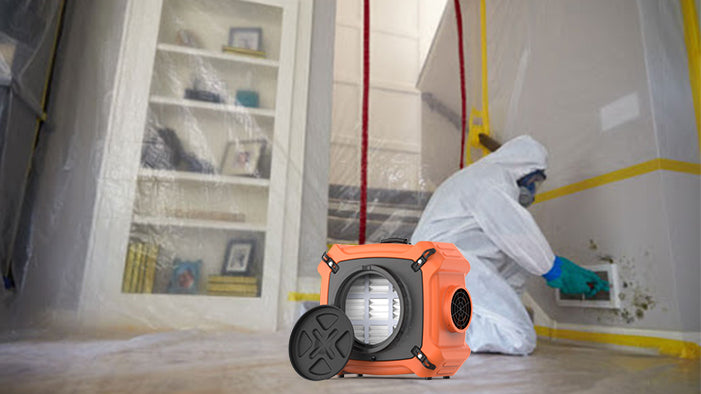
1. Containment
The affected area is sealed using plastic sheeting to prevent spores from spreading into unaffected areas.
This step is critical — especially in homes with central HVAC systems.
2. Air Filtration
HEPA air scrubbers run continuously to capture airborne particles.
This reduces cross-contamination during the remediation process.
3. Removal of Contaminated Materials
Porous materials that cannot be effectively cleaned — such as heavily affected drywall or insulation — may need to be removed.
The goal is eliminating materials that harbor embedded mold growth.
4. Cleaning of Structural Surfaces
Wood framing, subflooring, or roof decking may be professionally cleaned using appropriate antimicrobial solutions.
5. Moisture Correction
This step determines long-term success.
Moisture correction may include:
- Roof repair
- Plumbing repair
- Drain line clearing
- Ventilation improvements
- Dehumidification installation
Without this step, remediation is incomplete.
Attic Mold Remediation in Coastal Homes
Attics in Cocoa Beach frequently develop mold due to:
- Blocked soffit vents
- Inadequate ridge ventilation
- Bathroom fans venting into attic space
- Storm-related roof leaks
During remediation, insulation may need removal and replacement if contaminated.
Ventilation corrections often follow cleaning.
Homes in Merritt Island and Titusville see similar attic mold patterns during humid summer months.
HVAC-Related Mold Remediation
Because air conditioning runs constantly in Florida, mold inside HVAC systems is not uncommon.
Remediation may involve:
- Cleaning evaporator coils
- Clearing clogged drain pans
- Replacing contaminated duct insulation
- Improving system sizing for dehumidification
Coastal salt air can accelerate corrosion inside HVAC components, increasing the chance of water accumulation.
Addressing HVAC issues prevents mold from circulating throughout the home.
Why DIY Remediation Can Backfire
Homeowners sometimes attempt to handle mold themselves. While minor surface spots may be manageable, larger contamination often requires professional equipment.
DIY efforts may:
- Spread spores through the air
- Fail to address hidden moisture
- Miss underlying structural issues
- Leave embedded mold inside porous materials
Painting over mold or applying surface cleaners without containment rarely solves the problem.
In humid climates like Cocoa Beach, incomplete remediation leads to recurrence.
How Long Remediation Takes
The timeline depends on:
- Size of affected area
- Severity of contamination
- Structural involvement
- Moisture correction requirements
Small projects may take a day or two. Larger attic or multi-room remediation may take longer.
Drying time after moisture correction also plays a role.
The focus should always be thoroughness, not speed.
Preventing Mold After Remediation
Once remediation is complete, prevention becomes the priority.
Homeowners in Cocoa Beach should:
- Monitor indoor humidity (45–55%)
- Service HVAC systems annually
- Flush AC drain lines regularly
- Inspect roofing after storms
- Ensure bathroom fans vent outdoors
- Check attic ventilation yearly
Homes in Viera and Satellite Beach benefit from the same consistent moisture management.
Prevention is always more affordable than repeated remediation.
Why Local Experience Matters
Mold remediation in Florida is not identical to remediation in dry climates.
Brevard County homes face:
- Coastal humidity
- Salt air exposure
- High groundwater levels
- Long cooling seasons
- Storm-related roof stress
An approach that ignores these regional factors may not produce lasting results.
Brevard Mold Inspections & Removal understands how Cocoa Beach’s coastal environment influences mold growth patterns.
Local knowledge ensures remediation strategies match Florida’s climate reality.
A Calm and Practical Next Step
If you suspect mold in your Cocoa Beach home, the first step is inspection — not assumption.
Ask:
- Where is the moisture coming from?
- How extensive is the growth?
- Is remediation necessary?
- What corrections will prevent recurrence?
A structured evaluation provides clear answers.
Mold remediation is not about alarm. It’s about restoring balance to your home’s moisture levels and protecting its structure.
With proper inspection, correction, and prevention, your Brevard County home can remain dry, stable, and healthy — even in Florida’s demanding coastal climate.