
Mold Remediation in Cocoa Beach: What Homeowners in Brevard County Should Know
Living in Cocoa Beach means ocean views, coastal breezes, and unfortunately, constant humidity. Between salt air, hurricane season, heavy afternoon storms, and year-round air conditioning, moisture is simply part of life in Brevard County.
When mold develops, the question quickly becomes: How serious is this, and what does proper remediation actually involve?
In coastal communities like Cocoa Beach, Satellite Beach, Cape Canaveral, and Merritt Island, mold remediation requires more than surface cleaning. It requires understanding how Florida’s climate affects your home — and correcting the moisture conditions that allowed mold to grow in the first place.
If you’re facing mold concerns in Cocoa Beach, here’s what you should know.
First, What Mold Remediation Really Means
Mold remediation is not just wiping down visible growth.
It is a structured process designed to:
- Identify the moisture source
- Contain affected areas
- Remove contaminated materials safely
- Clean and filter indoor air
- Fully dry the structure
- Prevent recurrence
In Brevard County, where humidity is persistent, remediation without moisture correction almost guarantees the problem will return.
The goal isn’t just removal. It’s stabilization.
Why Mold Is So Common in Cocoa Beach
Cocoa Beach homes face unique environmental pressures:
- Ocean-driven humidity
- Salt air corrosion
- Hurricane-force wind-driven rain
- Aging roof materials exposed to coastal elements
- High water tables
- Constant HVAC operation
Even homes that never experience flooding can develop mold due to elevated indoor humidity.
Common causes we see in Cocoa Beach include:
- Roof leaks after tropical storms
- Condensation in attics
- AC drain line backups
- Window seal failure
- Moisture trapped beneath flooring
Because coastal air holds more moisture, drying times are often longer than inland cities like Titusville or Palm Bay.
Common Areas That Require Remediation
In Cocoa Beach, certain areas frequently require professional remediation.
Attics
Wind-driven rain during hurricanes affecting Satellite Beach or Cape Canaveral often enters attic vents.
Insulation can remain damp without visible ceiling stains.
Air Handler Closets
Condensate drain clogs are common in Brevard County homes. Water may overflow into surrounding drywall.
Exterior Walls Near Windows
Ocean-facing windows can allow moisture intrusion during storms.
Under Flooring
Slab foundations can trap water after leaks or flooding.
Bathrooms
High humidity combined with poor ventilation creates recurring mold growth.
Each location requires a different remediation strategy.
Why DIY Mold Cleanup Often Fails
Many homeowners attempt to handle mold themselves.
Common mistakes include:
- Using bleach on porous materials
- Scrubbing mold without containment
- Painting over stained drywall
- Replacing drywall without drying framing
- Ignoring attic inspections
Bleach does not penetrate drywall or wood effectively.
Disturbing mold without proper containment can spread spores into unaffected areas.
In Rockledge and Merritt Island homes, we’ve seen small bathroom mold problems turn into multi-room remediation simply because contamination spread during DIY cleaning.
Professional remediation prevents cross-contamination.
The Mold Remediation Process Step by Step
A structured remediation in Cocoa Beach typically follows these steps:
Step 1: Inspection and Moisture Mapping
Moisture meters and infrared tools identify hidden dampness.
This determines how far contamination has spread.
Step 2: Correct the Moisture Source
Roof repairs, plumbing fixes, drainage improvements, or HVAC servicing must occur first.
Without stopping water intrusion, remediation is temporary.
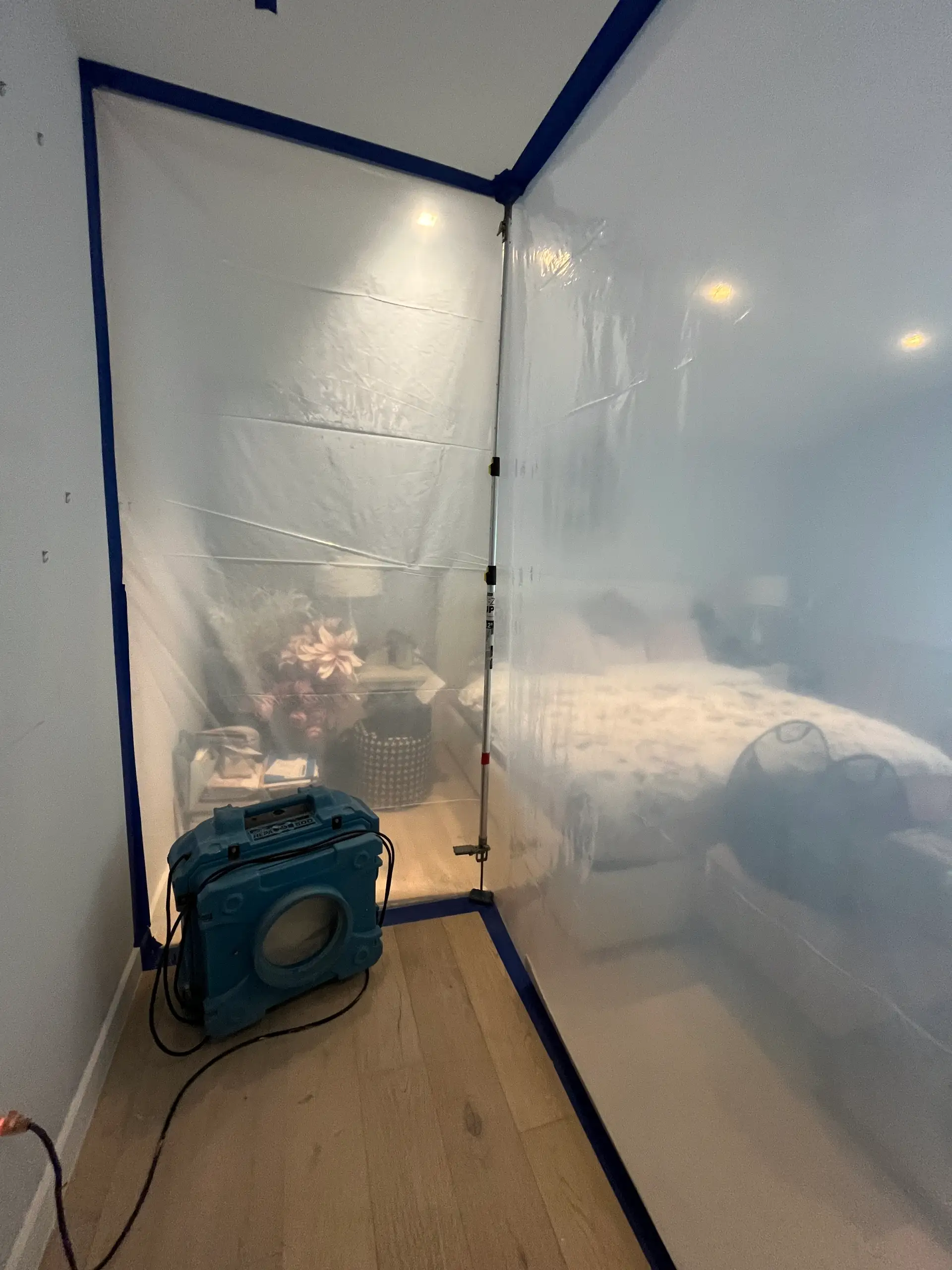
Step 3: Containment
Plastic barriers isolate affected areas.
Negative air machines may be used to prevent spores from spreading.
Step 4: Removal of Contaminated Materials
This may include:
- Removing drywall
- Disposing of wet insulation
- Cleaning structural framing
- Removing contaminated flooring
Step 5: Cleaning and HEPA Filtration
HEPA air scrubbers filter airborne particles.
Remaining surfaces are cleaned appropriately.
Step 6: Thorough Drying
Dehumidifiers and air movers ensure moisture levels return to safe ranges before rebuilding begins.
In Cocoa Beach’s humid environment, drying is critical and sometimes takes longer than homeowners expect.
How Long Does Mold Remediation Take?
The timeline depends on:
- The size of the affected area
- How long moisture has been present
- Whether structural materials must be removed
- Indoor humidity conditions
Small localized areas may take several days.
Large attic contamination after hurricanes affecting Cocoa or Satellite Beach may take longer due to extended drying.
Rushing drying often leads to recurrence.
Do You Always Need Mold Testing?
Testing is not required in every situation.
If visible mold is present and the moisture source is clear, remediation can proceed without laboratory analysis.
Testing may be helpful when:
- There is a persistent odor but no visible mold
- A property sale requires documentation
- The extent of contamination is unclear
- Indoor air quality concerns are raised
Air samples compare indoor spore levels to outdoor baselines.
Brevard Mold Inspections & Removal recommends testing when it adds clarity, not automatically.
Preventing Mold After Remediation
Once remediation is complete, prevention becomes the priority.
Cocoa Beach homeowners should:
- Keep indoor humidity below 55%
- Service HVAC systems annually
- Flush condensate drain lines
- Inspect attics after storms
- Seal windows and sliding doors
- Maintain roof integrity
- Ensure proper exterior drainage
After hurricanes affecting Merritt Island or Rockledge, inspecting attic spaces within 48 hours can prevent larger issues.
In Florida, prevention is ongoing.
Why Local Experience Matters in Cocoa Beach
Mold remediation in Florida differs from remediation in dry climates.
Cocoa Beach homes face:
- Salt-air exposure
- Hurricane wind pressure
- Slab foundation moisture
- Lagoon-driven humidity
- Continuous AC usage
An inspector familiar with Brevard County understands how these environmental pressures influence moisture behavior.
Brevard Mold Inspections & Removal works throughout Cocoa Beach, Satellite Beach, Cape Canaveral, Merritt Island, Melbourne, Rockledge, Palm Bay, and Titusville. Local experience ensures remediation plans are tailored to Florida’s climate.
A Calm, Informed Next Step
Discovering mold in your Cocoa Beach home does not automatically mean severe structural damage.
Most mold situations in Brevard County are manageable when addressed properly and early.
The key is identifying moisture, containing contamination, drying thoroughly, and stabilizing humidity long-term.
If you’ve noticed musty odors, visible growth, or water damage, a professional inspection provides clarity and direction.
In Florida’s coastal climate, mold remediation is less about fear — and more about steady, informed moisture control.