


Mold Remediation in Viera: What Homeowners in Brevard County Should Know
Mold remediation is often misunderstood by homeowners in Viera. Many people assume it’s the same as mold cleaning or mold removal, but remediation is a broader, more structured process. In Brevard County’s humid environment, remediation is often the only approach that actually stops mold from coming back.
Homes in Viera are exposed to the same challenges seen throughout Brevard County: high humidity, heavy rain, storms, slab foundations, and constant air conditioning. Mold doesn’t usually appear overnight, and it rarely stays limited to one small visible area. Mold remediation focuses on correcting conditions, not just removing what you can see.
Understanding what mold remediation really involves helps homeowners make informed decisions and avoid repeat problems.
What Mold Remediation Really Means
Mold remediation is the process of identifying mold-affected areas, removing or treating contaminated materials, and correcting the moisture conditions that allowed mold to grow in the first place.
It is not surface cleaning. It is not spraying chemicals and hoping mold disappears. Remediation is a step-by-step approach designed to return the home to a stable, dry condition where mold cannot easily re-establish itself.
In Viera homes, remediation often involves walls, attics, HVAC systems, flooring, and insulation, not just one isolated surface.
Why Mold Remediation Is Common in Viera
Viera homes experience year-round humidity, even during periods without rain. Moisture in the air slows drying and increases condensation on cool surfaces.
Storms and heavy rainfall introduce additional risk. Wind-driven rain can enter through roofs, windows, and small exterior openings. Even minor water intrusion can lead to mold when moisture becomes trapped behind walls or above ceilings.
Air conditioning systems also play a major role. AC units run frequently and produce condensation. Clogged drain lines, overflowing pans, or poorly insulated ductwork can introduce moisture into building materials.
Slab foundations, common in Viera, can allow moisture to migrate upward into flooring and lower walls, contributing to long-term humidity and mold growth.
Common Situations That Lead to Mold Remediation
Many remediation projects begin after water damage. Plumbing leaks under sinks, behind toilets, or inside walls are common triggers. Roof leaks after storms often soak attic insulation long before interior stains appear.
HVAC-related moisture is another frequent cause. Mold often develops near air handlers, drain pans, or ducts where condensation collects.
Bathrooms and laundry rooms are also high-risk areas, especially when ventilation is poor. In many Viera homes, mold remediation becomes necessary when mold keeps returning despite repeated cleaning.
Signs Mold Remediation May Be Needed
Visible mold is one sign, but it’s not the only one. Persistent musty odors that don’t go away with cleaning often point to hidden mold.
Homeowners may notice bubbling or peeling paint, warped baseboards, stained drywall, or flooring that feels soft or uneven. Elevated indoor humidity or condensation around vents and windows can also indicate ongoing moisture issues.
If mold reappears after cleaning, remediation is usually necessary. Recurring mold almost always means moisture and contamination remain inside materials.
Why Cleaning or DIY Efforts Aren’t Enough
DIY mold cleanup focuses on appearance, not conditions. Bleach and store-bought cleaners may remove surface staining but do not penetrate porous materials like drywall, wood, or insulation.
Scrubbing mold without containment can spread spores into other areas of the home. In Viera homes, this often leads to mold appearing in additional rooms or inside HVAC systems.
Without addressing moisture sources, mold will return. Remediation exists because cleaning alone does not solve Florida mold problems.
How Professional Mold Remediation Works
Professional mold remediation follows a structured process designed to protect the home and its occupants.
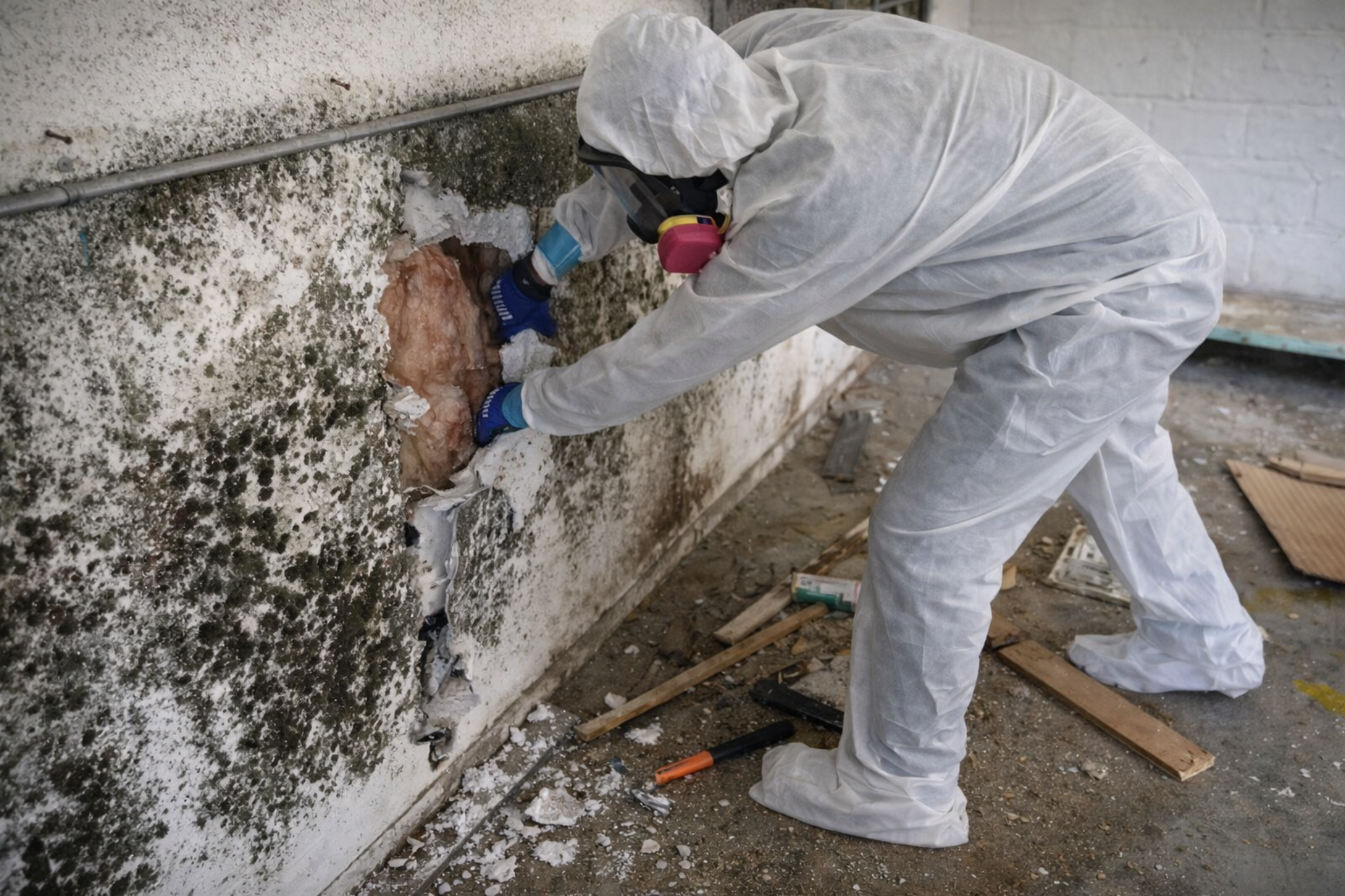
Containment is established to isolate affected areas and prevent spores from spreading. Air filtration may be used to control airborne particles during work.
Mold-affected materials are removed or treated based on severity. This may include drywall, insulation, flooring, or other porous materials that cannot be safely cleaned.
Salvageable surfaces are cleaned using appropriate methods. Once mold is removed, the area is thoroughly cleaned and prepared for repair.
Most importantly, the moisture source is identified and corrected. Without this step, remediation is incomplete.
Moisture Control Is the Core of Remediation
Mold remediation without moisture correction is temporary. In Viera, controlling moisture is essential due to constant humidity and frequent storms.
This may involve plumbing repairs, roof repairs, HVAC maintenance, improved ventilation, sealing exterior openings, or managing indoor humidity levels.
Professionals focus heavily on why mold developed and what conditions allowed it to grow. Fixing those conditions is what prevents recurrence.
Areas Commonly Addressed During Remediation
In Viera homes, remediation often involves multiple areas. Attics are frequently affected, especially after roof leaks or ventilation problems. Mold commonly grows on roof decking and insulation.
Wall cavities near plumbing lines are another common area. Water travels inside walls, spreading contamination beyond visible damage.
Flooring systems may also be involved. Mold under laminate, carpet, or wood flooring often requires removal to fully resolve the issue.
HVAC systems may need attention if mold has developed near air handlers or ductwork.
What Mold Remediation Does Not Do
Mold remediation does not make mold impossible forever. Mold spores exist naturally in the environment.
Remediation also does not guarantee that future moisture issues won’t occur. It restores the home to a stable condition and reduces current risk.
Ongoing maintenance and moisture awareness remain important after remediation is complete.
What to Expect After Mold Remediation
After remediation, affected areas typically require repairs. This may include drywall replacement, insulation installation, flooring repair, or repainting.
Homeowners often notice reduced odors, improved indoor comfort, and more consistent humidity levels once mold and moisture problems are resolved.
A properly remediated home is clean, dry, and ready for restoration work.
Preventing Mold After Remediation
Prevention starts with moisture awareness. Leaks should be addressed immediately, even small ones. Bathroom and kitchen exhaust fans should be used consistently.
AC systems should be maintained to ensure proper drainage and airflow. Indoor humidity should be monitored, especially during rainy seasons.
After storms, attics, ceilings, and areas around windows and doors should be checked promptly. Early detection prevents future remediation projects.
In Brevard County, prevention is ongoing, not one-time.
Why Local Experience in Brevard County Matters
Mold remediation in Florida is different from other regions. Viera homes face humidity, storms, slab foundations, and construction styles that influence how mold develops and spreads.
Local experience means understanding where mold commonly appears and how moisture behaves in this climate. It also means knowing which remediation approaches actually work long-term in Brevard County.
Professionals familiar with local conditions avoid unnecessary work and focus on effective, climate-appropriate solutions.
A Calm, Practical Next Step
If your Viera home has visible mold, recurring odors, or moisture problems that won’t resolve, mold remediation may be the right solution. The first step is understanding the scope of the issue and why it’s happening.
Homeowners across Brevard County benefit from addressing mold thoroughly rather than repeatedly cleaning the same areas. Brevard Mold Inspections & Removal helps homeowners identify mold conditions, understand moisture sources, and take practical, responsible steps toward proper remediation.
When done correctly, mold remediation restores stability to your home and helps prevent the problem from returning.