Mold Testing in Titusville: What Homeowners in Brevard County Should Know
In Titusville, mold testing is often requested when something in the home doesn’t quite add up. There may be a persistent musty odor, humidity that feels hard to control, or mold that keeps returning even after cleaning. In Brevard County’s humid climate, these situations are common—and they don’t always come with obvious visual clues.
Mold testing isn’t about jumping to conclusions or assuming the worst. It’s a tool used to confirm whether mold is present, where it may be coming from, and how it relates to moisture conditions in the home. Understanding when mold testing makes sense, what it can (and can’t) tell you, and how it fits into a broader inspection helps Titusville homeowners make informed, practical decisions.
Why Mold Testing Comes Up So Often in Titusville Homes
Titusville experiences many of the same challenges as the rest of Central Brevard County: high humidity, frequent storms, long air-conditioning seasons, and homes that stay closed much of the year. These conditions allow moisture to linger—even without flooding or major leaks.
Local factors that commonly lead homeowners to consider mold testing include:
- Persistent musty or earthy odors
- Recurring mold after cleaning
- Humidity that feels difficult to manage
- Past water damage from storms or plumbing issues
- Concerns during buying or selling a home
- Uncertainty about hidden mold
In many cases, homeowners simply want confirmation and clarity, not assumptions.
What Mold Testing Actually Does
Mold testing is designed to detect and compare mold levels—not to diagnose problems on its own. It’s most effective when used alongside a professional inspection that identifies moisture conditions.
Mold testing may involve:
- Air sampling to measure airborne spores
- Surface sampling to identify mold on materials
- Comparing indoor results to outdoor baseline levels
The goal is to understand whether mold conditions inside the home are elevated compared to what’s normal outdoors in Florida.
What Mold Testing Does Not Do
It’s important to understand the limits of mold testing so expectations stay realistic.
Mold testing does not:
- Locate moisture sources by itself
- Determine how mold entered the home
- Replace a physical inspection
- Automatically mean remediation is required
In Titusville homes, moisture behavior matters just as much—if not more—than lab results.
When Mold Testing Makes Sense in Titusville
Mold testing isn’t necessary for every situation, but it can be very helpful under the right circumstances.
Testing is often useful when:
- Mold is suspected but not visible
- Odors persist without an obvious source
- Mold keeps returning after cleanup
- Verification is needed after remediation
- Documentation is required for a transaction
In these cases, testing adds an extra layer of confirmation to inspection findings.
Common Areas Where Mold Testing Is Requested
In Titusville homes, mold testing is frequently requested in areas prone to hidden moisture.
High-interest areas include:
- Bedrooms with persistent odors
- Living spaces with recurring humidity issues
- HVAC systems and ductwork
- Attics after storms or roof leaks
- Areas above or below bathrooms and kitchens
These are places where mold can exist without leaving obvious surface signs.
Why Visual Checks Alone Aren’t Enough
Mold doesn’t always grow where you can see it. In Florida homes, hidden mold is extremely common due to slab foundations, wall cavities, and attics.
Relying only on visual checks can miss:
- Mold behind drywall
- Growth beneath flooring
- Mold inside HVAC components
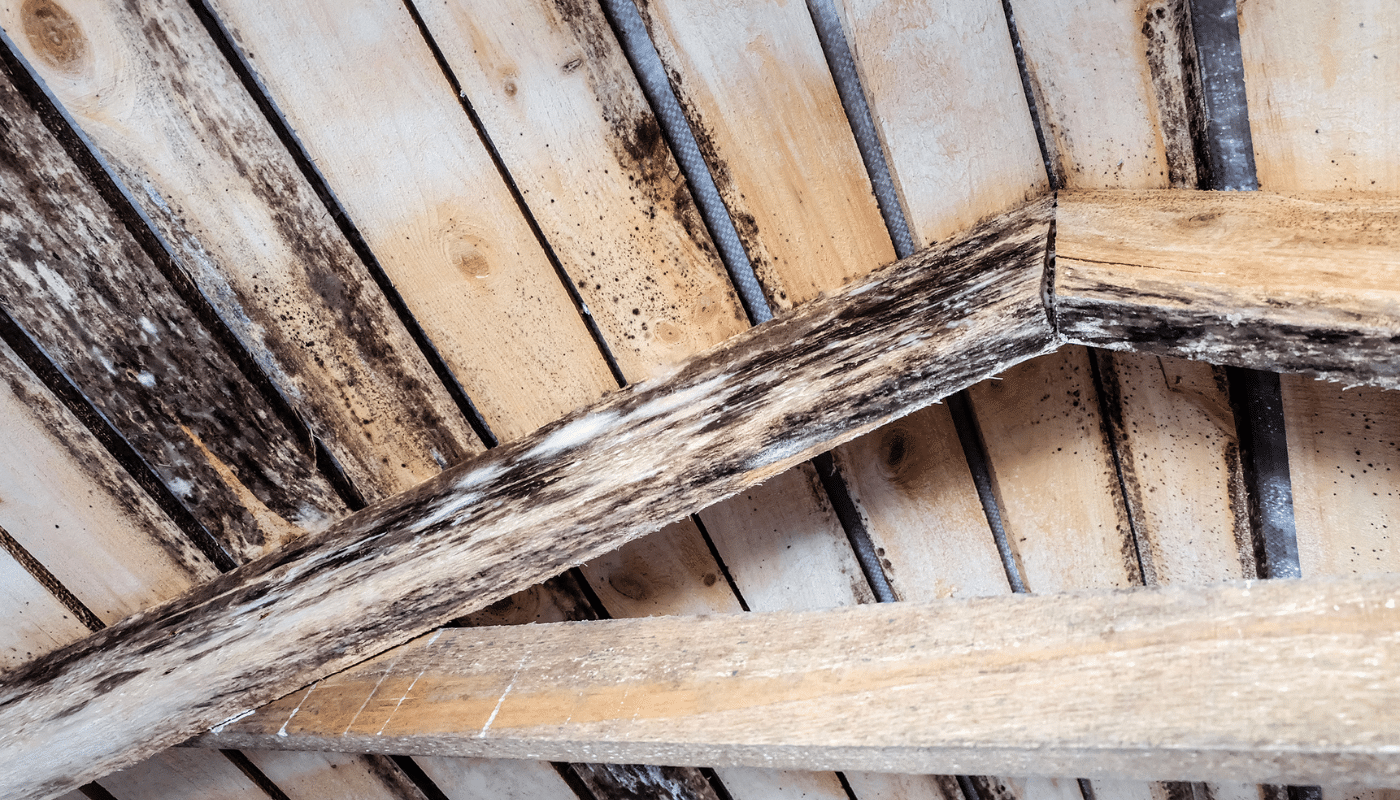
- Attic mold on roof decking
Testing helps confirm whether hidden growth may be affecting indoor air.
HVAC Systems and Mold Testing
HVAC systems are a frequent focus of mold testing in Titusville homes. Because AC systems handle moisture, problems inside them can influence the entire house.
Mold testing may be considered when:
- Odors appear when the AC runs
- Humidity feels worse during cooling cycles
- Mold appears repeatedly in multiple rooms
- Drain pans or coils show signs of moisture
Testing can help determine whether the HVAC system is contributing to indoor mold conditions.
Mold Testing After Water Damage or Storms
Storms are a common trigger for mold testing requests in Titusville—even when there’s no flooding.
After storms:
- Wind-driven rain can enter small openings
- Power outages slow drying
- Attics and walls absorb moisture
- Mold may develop weeks later
Testing can help confirm whether mold growth has begun in hidden areas after a storm.
Understanding Mold Test Results
Mold test results should always be interpreted in context. Florida naturally has higher outdoor mold levels than many other regions.
Results are typically evaluated by:
- Comparing indoor samples to outdoor baselines
- Identifying whether indoor levels are elevated
- Looking for unusual mold types indoors
Numbers alone don’t tell the whole story—conditions and moisture patterns matter just as much.
Why DIY Mold Test Kits Often Cause Confusion
At-home mold test kits are widely available, but they often create more questions than answers.
Common issues with DIY kits include:
- No outdoor comparison sample
- No moisture assessment
- No inspection of hidden areas
- Results without professional interpretation
In a humid area like Titusville, DIY kits often detect mold that’s normal for Florida air—leading to unnecessary worry.
Mold Testing vs Mold Inspection
These two services work best together, not separately.
- A mold inspection identifies moisture sources, visible growth, and risk areas
- Mold testing confirms whether mold levels are elevated or present where it’s suspected
Testing without inspection can miss the “why,” while inspection without testing may lack confirmation in hidden cases.
Brevard Mold Inspections & Removal works with Titusville homeowners to determine when mold testing is useful and how to interpret results clearly—without alarm or pressure.
What Happens After Mold Testing
After testing, homeowners should have clear answers to key questions:
- Is mold present at elevated levels?
- Is it likely hidden or surface-level?
- How does it relate to moisture conditions?
- What steps, if any, make sense next?
Sometimes the outcome is reassurance and prevention guidance. Other times, it leads to targeted remediation. Either way, clarity is the goal.
Preventing Mold Based on Testing and Inspection Findings
One of the biggest benefits of mold testing is prevention. When combined with inspection findings, it helps identify moisture patterns that can be corrected early.
Common prevention steps include:
- Improving ventilation
- Addressing AC drainage issues
- Managing indoor humidity
- Sealing roof or exterior penetrations
- Fixing small leaks promptly
Prevention is almost always simpler than repeated cleanup.
Why Local Titusville Experience Matters
Mold testing in Florida is different from testing in dry climates. Titusville homes face challenges tied to humidity, storms, slab construction, and long cooling seasons.
Local professionals understand:
- What “normal” mold levels look like in Brevard County
- How storms influence indoor moisture
- Where hidden mold commonly develops
- How HVAC systems affect test results
Local experience ensures results are interpreted accurately—not taken out of context.
A Calm, Practical Takeaway for Homeowners
Mold testing in Titusville isn’t about confirming worst-case scenarios—it’s about gaining clarity. In Brevard County’s humid environment, mold concerns often stem from moisture that stayed too long, not from extreme or unusual conditions.
If your home has persistent odors, recurring mold, or unexplained humidity, mold testing—when paired with a proper inspection—can provide useful answers. Understanding what’s happening inside your home helps you take the right steps, protect your property, and stay comfortable in Florida’s challenging climate.