
Salt Air and Mold Growth in South Merritt Island: What Merritt Island Property Owners Should Know
South Merritt Island offers some of the most desirable waterfront living in Brevard County. With homes located near Banana River and the Indian River Lagoon, residents enjoy boating access, coastal breezes, and beautiful views year-round.
However, living near saltwater also brings environmental challenges many homeowners don’t fully anticipate. One of the most common issues affecting homes in South Merritt Island is mold growth caused or accelerated by salt air exposure combined with Florida’s persistent humidity.
Unlike mold problems caused by flooding or leaks, salt-air-related mold issues develop slowly and quietly. Homes may appear well maintained, yet moisture problems gradually build behind walls, under flooring, and in HVAC systems.
Understanding how salt air contributes to mold growth helps property owners take steps to protect their homes and prevent costly repairs.
Let’s look at what Merritt Island homeowners should know.
How Salt Air Impacts Homes
Salt air is simply ocean and lagoon moisture carrying microscopic salt particles inland. In South Merritt Island, this salty moisture constantly circulates through neighborhoods near waterways.
When salt-laden air settles on homes, it affects both exterior and interior environments.
Salt air exposure leads to:
- Increased surface moisture retention
- Faster deterioration of building materials
- Corrosion of metal components
- Breakdown of protective coatings
- Greater indoor humidity challenges
Salt particles attract and hold moisture, meaning surfaces stay damp longer than they otherwise would. Over time, this moisture accumulation contributes to mold-friendly conditions.
Homes close to Banana River or open waterfront areas feel these effects most strongly, but nearly all South Merritt Island properties experience some level of exposure.
Why Salt Air Leads to Mold Growth
Mold growth requires three basic conditions:
- Moisture
- Warm temperatures
- Organic materials to grow on
South Merritt Island provides all three conditions year-round.
Salt air contributes by keeping surfaces damp longer, especially in areas with poor ventilation or insulation. Moisture settles on walls, windows, roofs, and HVAC components.
When indoor humidity rises or moisture becomes trapped, mold spores begin growing on materials like:
- Drywall
- Wood framing
- Insulation
- Flooring materials
- Cabinet surfaces
- Ceiling materials
Because mold does not need flooding to grow, even small amounts of persistent moisture allow contamination to spread quietly.
Why South Merritt Island Homes Are Especially Vulnerable
Several environmental and construction factors increase mold risks in this area.
Persistent Coastal Humidity
Humidity rarely drops low enough for homes to fully dry naturally, especially during summer months.
Constant Salt Air Exposure
Homes close to water experience continuous moisture contact.
Frequent Storm Activity
Storms and hurricanes increase water intrusion risks.
Aging Exterior Materials
Salt air accelerates wear on roofs, siding, and window seals, allowing moisture entry.
Heavy AC Usage
Air conditioning runs constantly, sometimes causing condensation buildup.
Waterfront Wind Patterns
Wind pushes moist air toward homes, increasing exposure.
These factors repeat year after year, slowly affecting homes unless maintenance keeps pace.
Common Signs Homeowners Notice
Salt-air-related mold problems often begin subtly.
Homeowners frequently notice:
- Musty smells indoors
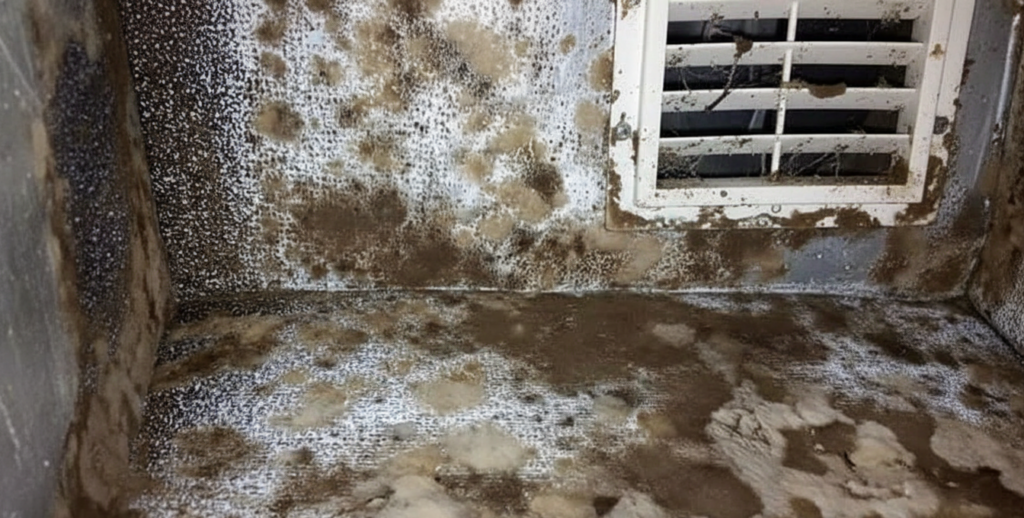
- Mold spots near vents or windows
- Peeling paint on walls
- Warped flooring near exterior walls
- Damp closets or storage spaces
- Mold returning after cleaning
- Increased indoor humidity
Sometimes mold appears in multiple rooms simultaneously, indicating widespread moisture problems rather than a single leak.
If cleaning doesn’t stop mold from returning, moisture conditions may still be present.
Hidden Areas Where Mold Develops
Mold related to salt air often grows in hidden areas homeowners rarely inspect.
Behind Exterior Walls
Moisture enters through worn seals or condensation.
Under Flooring
Moisture accumulates along slab foundations or near walls.
Attics
Warm moist air condenses on cooler attic surfaces.
Crawl Spaces
Ground moisture combines with humid air beneath homes.
HVAC Systems and Ducts
Condensation and dust inside ducts allow mold growth.
Around Windows and Doors
Salt air and moisture damage seals, allowing water entry.
Because these areas remain unseen, contamination spreads slowly.
Why DIY Mold Cleanup Often Fails
Homeowners sometimes try to clean mold themselves, but salt-air-related mold problems rarely stay limited to visible areas.
Common DIY mistakes include:
Cleaning Only Surface Mold
Hidden moisture allows mold to return.
Using Bleach Alone
Bleach removes stains but not deep contamination.
Painting Over Affected Areas
Paint traps moisture and mold behind walls.
Ignoring Ventilation Problems
Humidity remains trapped indoors.
Disturbing Mold Without Containment
Spores spread through the home.
Surface cleaning often provides temporary improvement without solving underlying issues.
Professional Mold Inspection Explained
A professional inspection helps identify both mold and the moisture causing it.
Inspection steps usually include:
Visual Assessment
Checking walls, floors, ceilings, and HVAC areas.
Moisture Detection
Specialized tools locate damp materials behind surfaces.
Leak Investigation
Inspecting roofs, windows, plumbing, and exterior materials.
Ventilation Evaluation
Ensuring proper airflow reduces humidity buildup.
Testing When Necessary
Air or surface sampling confirms contamination levels.
Inspection findings guide remediation planning and moisture correction.
Proper Mold Remediation Process
Professional remediation focuses on removing contamination safely while preventing recurrence.
Typical remediation steps include:
Containment Setup
Preventing mold spores from spreading during removal.
Removal of Damaged Materials
Contaminated drywall or insulation may be removed.
Cleaning Structural Surfaces
Remaining framing and materials are treated safely.
Drying and Dehumidification
Moisture is removed completely.
Moisture Source Correction
Leaks, ventilation, or drainage issues are corrected.
Prevention Recommendations
Homeowners receive guidance to prevent repeat problems.
The goal is not only removal but long-term moisture control.
Preventing Mold in South Merritt Island Homes
Homeowners can reduce mold risks through consistent maintenance.
Helpful steps include:
- Inspecting homes after storms
- Maintaining exterior paint and sealants
- Monitoring indoor humidity levels
- Running exhaust fans regularly
- Scheduling AC maintenance annually
- Keeping gutters and drainage systems clear
- Checking attic and crawl spaces periodically
- Inspecting windows and doors for leaks
Routine inspections prevent small moisture problems from becoming large repairs.
Why Local Experience Matters
Salt-air mold problems vary depending on climate and building style.
Professionals familiar with South Merritt Island understand:
- Coastal humidity patterns
- Local construction materials
- Waterfront moisture behavior
- Storm-related damage patterns
- Ventilation challenges in island homes
Local expertise allows faster diagnosis and more effective long-term solutions.
Companies like Mold Removal Merritt Island regularly inspect homes throughout South Merritt Island and understand recurring moisture issues affecting waterfront communities.
Local knowledge helps prevent repeat problems.
A Smart Next Step for Property Owners
Living near the water brings incredible lifestyle benefits, but moisture management becomes more important than ever.
If your home experiences recurring mold, musty odors, or moisture concerns, a professional evaluation can identify hidden issues before they become major repairs.
For Merritt Island property owners, proactive inspections help maintain safe, comfortable living spaces while protecting long-term property value.
Taking action early keeps homes dry, healthy, and enjoyable for years to come.