
Toxic Mold in Indian Harbour Beach: What Homeowners in Brevard County Should Know
If you’ve discovered dark mold in your Indian Harbour Beach home, the word “toxic” may have crossed your mind almost immediately.
That reaction is understandable.
Living along the Atlantic in Brevard County means dealing with constant humidity, salt air, tropical storms, and hurricane season. Mold is not unusual here — but the term “toxic mold” often creates more fear than clarity.
Before jumping to conclusions, it’s important to understand what toxic mold actually means, what it doesn’t mean, and how mold behaves specifically in Indian Harbour Beach homes.
In most cases, the bigger issue isn’t the label. It’s the moisture.
What People Mean by “Toxic Mold”
When homeowners refer to “toxic mold,” they are usually thinking of specific mold species capable of producing mycotoxins under certain conditions.
One commonly discussed species is Stachybotrys chartarum, often referred to as “black mold.”
However:
- Not all dark mold is Stachybotrys
- Not all mold produces mycotoxins
- Color alone does not identify species
- Only laboratory testing can confirm type
In Indian Harbour Beach and nearby Satellite Beach and Cocoa Beach, the majority of mold issues we see are related to humidity and water intrusion — not rare species.
The presence of mold signals moisture imbalance first and foremost.
Why Mold Is So Common in Indian Harbour Beach
Indian Harbour Beach sits directly on the ocean. Homes here experience:
- Elevated coastal humidity year-round
- Wind-driven rain
- Salt-air deterioration of seals and flashing
- Hurricane-related roof stress
- Continuous air conditioning operation
Even small moisture intrusions — around windows, roof vents, or plumbing — can lead to mold growth within 24–48 hours.
Because Florida’s humidity slows drying, damp materials may remain wet longer than homeowners realize.
Hidden moisture is often the underlying issue.
Common Areas Where “Toxic Mold” Is Found
In coastal Brevard County homes, dark mold frequently develops in predictable locations.
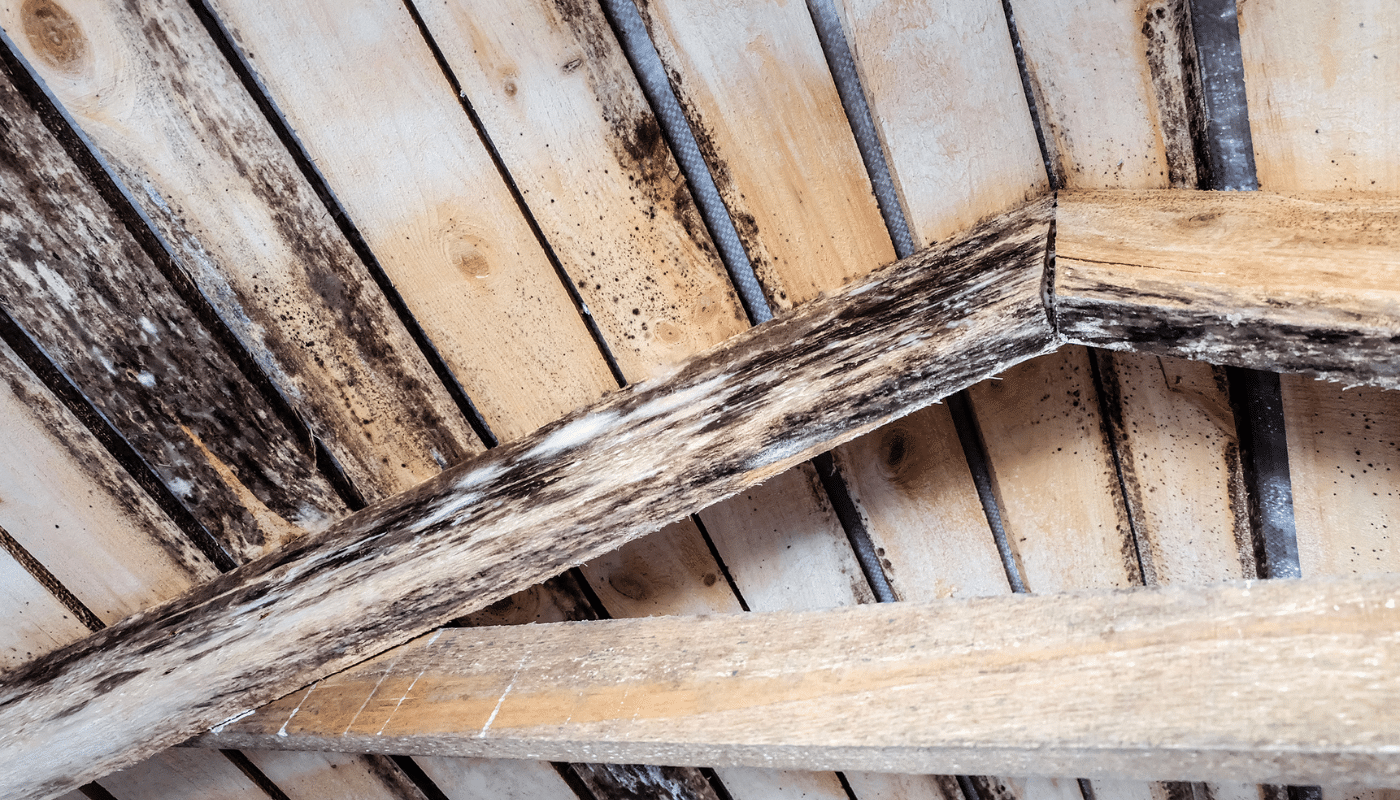
Attics
Wind-driven rain during storms can dampen insulation and roof decking.
Wet insulation holds moisture against wood sheathing.
Around Windows and Sliding Doors
Salt air accelerates seal wear.
Storm pressure forces water into small openings.
Bathrooms
High humidity combined with insufficient ventilation creates repeated condensation.
HVAC Systems
Clogged condensate drain lines and dirty coils create moisture inside air handlers.
Behind Drywall
Slow plumbing leaks may go unnoticed until odor appears.
The location of growth often provides stronger clues than its color.
Can Toxic Mold Affect Health?
Mold spores are naturally present in outdoor air throughout Brevard County.
When indoor mold growth becomes active and widespread, indoor spore levels may increase.
Some individuals may experience:
- Nasal congestion
- Coughing
- Eye irritation
- Throat irritation
- Headaches
People with allergies or respiratory sensitivities may notice symptoms more readily.
However, not everyone reacts the same way. Many homes with minor mold growth report no noticeable health effects.
The key concern is prolonged moisture and ongoing indoor growth — not the color of the mold.
Why Color Alone Doesn’t Tell the Story
Dark mold often causes the most alarm.
But many harmless mold species appear black or dark green.
Conversely, lighter-colored mold can still indicate serious moisture problems.
Without testing, species cannot be identified visually.
More importantly, identifying and correcting the moisture source prevents regrowth regardless of type.
Moisture correction is always the priority.
The Role of Mold Testing
If homeowners are concerned about “toxic mold,” testing can provide clarity.
Testing may include:
- Air sampling
- Surface swabs
- Bulk material sampling
Outdoor samples are typically taken for comparison because outdoor mold levels in Florida are naturally high.
Testing identifies species and spore levels, but it does not correct moisture.
That’s why inspection and moisture detection are equally important.
Brevard Mold Inspections & Removal approaches testing calmly and methodically, focusing on environmental balance.
Why DIY Cleanup Can Make Things Worse
Homeowners often attempt to scrub dark mold with bleach or antimicrobial sprays.
Common problems include:
- Bleach not penetrating porous drywall
- Disturbing mold and releasing spores
- Failing to correct humidity imbalance
- Ignoring hidden moisture inside walls
In Indian Harbour Beach’s humid environment, mold often returns if moisture remains.
Surface cleaning without containment may spread contamination.
Proper remediation focuses on containment and moisture stabilization.
How Mold Is Properly Remediated
When mold is confirmed, remediation typically includes:
- Identifying and correcting the water source
- Containing affected areas
- Removing contaminated drywall or insulation
- Cleaning structural framing
- HEPA air filtration
- Thorough drying before rebuilding
In Florida’s climate, drying is critical before reconstruction begins.
Lowering indoor humidity below 55% significantly reduces regrowth risk.
Stabilization is the goal.
Preventing Mold in Indian Harbour Beach
Prevention requires ongoing moisture management.
Homeowners can:
- Maintain indoor humidity between 45%–55%
- Service HVAC systems annually
- Flush AC drain lines regularly
- Inspect attics after storms
- Seal windows and sliding doors
- Repair roof damage promptly
- Avoid turning off AC during humid months
After hurricanes affecting Merritt Island or Rockledge, attic inspections within 48 hours reduce hidden moisture risks.
Consistent maintenance makes a major difference.
Why Local Experience Matters in Brevard County
Mold behaves differently in Florida than in dry climates.
Indian Harbour Beach homes face:
- Direct ocean humidity
- Salt-air material wear
- Hurricane wind pressure
- Slab foundation moisture
- Continuous AC operation
An inspector familiar with Brevard County understands how these environmental pressures influence mold growth.
Brevard Mold Inspections & Removal works throughout Indian Harbour Beach, Satellite Beach, Cocoa Beach, Melbourne, Palm Bay, Rockledge, and Titusville. Local knowledge ensures recommendations reflect Florida’s coastal realities.
A Calm, Practical Perspective
Hearing the phrase “toxic mold” can be unsettling.
But in most Indian Harbour Beach homes, the issue is not a rare contaminant — it’s prolonged moisture.
If you’ve noticed dark staining, musty odors, or storm-related water intrusion, a professional inspection can provide clarity.
In Brevard County’s humid coastal climate, controlling moisture is the most effective way to protect both your home and indoor air comfort.
Address the source, stabilize the environment, and mold becomes manageable.