Toxic Mold in Indian Harbour Beach: What Homeowners in Brevard County Should Know
In Indian Harbour Beach, the phrase “toxic mold” can immediately raise concern—especially in a coastal community where humidity is constant and storms are part of life. Homeowners may notice dark growth on a wall, a persistent musty odor, or mold that keeps returning despite cleaning. The important thing to understand is that so-called “toxic mold” issues are almost always moisture issues first. Mold doesn’t appear randomly; it grows where damp conditions linger.
This guide explains what homeowners in Brevard County should realistically know about toxic mold concerns in Indian Harbour Beach—what the term actually means, why mold develops here, where it hides, and how it’s properly addressed without fear or exaggeration.
Why Mold Concerns Are Common in Indian Harbour Beach Homes
Indian Harbour Beach sits directly along the Atlantic, where salty air, frequent storms, and high humidity affect homes year-round. Even when there’s no flooding or visible leak, moisture can quietly accumulate indoors.
Local factors that increase mold risk include:
- Constant coastal humidity
- Wind-driven rain during storms
- Salt air breaking down seals and caulking
- Long AC run times creating condensation
- Homes kept closed and air-conditioned most of the year
- Slab foundations that trap moisture beneath flooring
These conditions make mold problems common—but also predictable and manageable.
What “Toxic Mold” Really Means
“Toxic mold” is not a scientific classification. It’s a general term people use to describe mold they believe may be harmful. Many molds can appear dark or black, but color alone does not determine how mold behaves or why it formed.
What matters far more than labels is:
- How long moisture has been present
- Whether the moisture source is ongoing
- Where the mold is growing (visible vs hidden)
- Whether growth is localized or widespread
In Indian Harbour Beach homes, mold concerns labeled as “toxic” almost always trace back to long-term moisture exposure, not rare or extreme mold types.
How Mold Develops in Coastal Homes
Mold spores are naturally present in Florida’s air. Mold becomes a problem only when spores land on surfaces that stay damp long enough to support growth.
Common moisture sources in Indian Harbour Beach include:
- Roof leaks after storms or hurricanes
- Water intrusion around windows and sliding doors
- Bathroom steam without adequate ventilation
- AC condensate drain line clogs
- Condensation on vents and ductwork
When moisture isn’t fully dried, mold can begin growing quietly—sometimes darkening over time.
Where Mold Commonly Appears
Mold growth follows moisture patterns. In coastal homes, certain areas are consistently at higher risk.
Common locations include:
- Bathroom ceilings and shower areas
- Behind drywall on exterior walls
- Beneath laminate or vinyl flooring
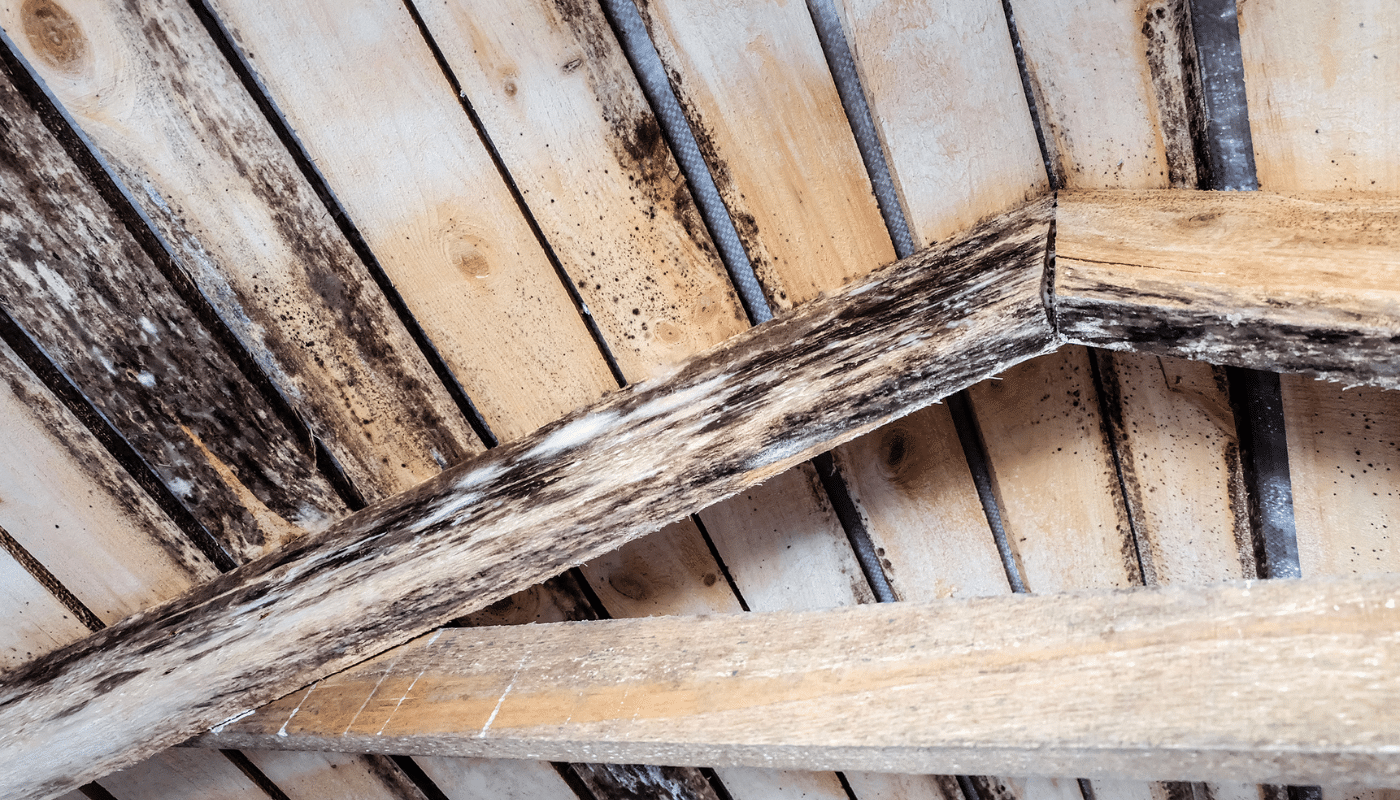
- Inside attics after roof leaks
- Around HVAC air handlers and ductwork
- Inside closets with limited airflow
Visible mold is often only part of the overall issue.
Hidden Mold: The Bigger Concern
Hidden mold is often more significant than what homeowners can see. Mold doesn’t need light, and it can grow undisturbed behind finished surfaces.
Hidden mold commonly develops:
- Inside wall cavities
- Under flooring on slab foundations
- Behind cabinets and bathroom vanities
- Inside attic insulation
- Within HVAC components
This hidden growth can continue spreading even when visible areas are cleaned.
Signs Mold May Be Affecting the Home
Homeowners often notice indirect warning signs before visible mold appears.
Common signs include:
- Persistent musty or earthy odors
- Odors stronger when the AC runs
- Mold that returns after cleaning
- Bubbling paint or peeling drywall
- Condensation that doesn’t fully dry
- Indoor humidity that feels hard to control
These symptoms usually indicate moisture behind surfaces.
Why DIY Cleanup Often Makes Things Worse
DIY mold cleanup is a common reaction, but it often leads to repeat problems—especially in coastal environments.
DIY efforts fail because:
- Bleach doesn’t penetrate porous materials
- Mold roots remain embedded in drywall or wood
- Scrubbing spreads mold spores
- Moisture sources aren’t corrected
- Hidden mold is left untouched
In Indian Harbour Beach’s humid climate, mold often returns quickly after DIY cleaning.
Moisture Control Is the Key Issue
Mold—regardless of what it’s called—cannot exist without moisture. Removing mold without correcting moisture only provides temporary relief.
Common moisture problems that must be addressed include:
- Poor bathroom ventilation
- AC drainage or condensation issues
- Roof or window leaks
- High indoor humidity
- Limited airflow in closed spaces
Until moisture is controlled, mold will continue to reappear.
How Professional Mold Inspections Help
A professional mold inspection focuses on conditions, not fear-based assumptions.
An inspection typically evaluates:
- Visible mold and staining
- Moisture levels in walls, ceilings, and floors
- HVAC systems and condensate drainage
- Attics and roof-related moisture
- Areas prone to hidden mold
This approach helps homeowners understand how extensive the issue really is and what steps make sense next.
Brevard Mold Inspections & Removal works with Indian Harbour Beach homeowners to assess mold concerns calmly and factually, focusing on moisture causes rather than labels.
Mold Testing and “Toxic” Mold Concerns
Mold testing isn’t always necessary, but it can be useful when:
- Mold is suspected but not visible
- Odors persist without a clear source
- Confirmation is needed after remediation
- HVAC involvement is suspected
Testing is most effective when paired with an inspection that explains moisture behavior.
Proper Mold Remediation
Effective remediation focuses on removal and prevention, not cosmetic fixes.
A proper remediation approach may include:
- Containment to prevent spore spread
- Removal of contaminated porous materials
- Cleaning remaining surfaces appropriately
- Correcting moisture sources
- Thorough drying and humidity control
Without fixing the moisture issue, remediation won’t last.
Mold Concerns After Storms and Power Outages
Storms are a major trigger for mold concerns in Indian Harbour Beach—even when there’s no flooding.
After storms:
- Wind-driven rain enters small openings
- Power outages stop humidity control
- Materials dry very slowly
- Mold may develop weeks later
Post-storm inspections often catch problems early.
Preventing Mold in Indian Harbour Beach Homes
Prevention is about consistency, not drastic measures.
Helpful prevention steps include:
- Regular AC maintenance and drain line cleaning
- Using bathroom exhaust fans during and after showers
- Monitoring indoor humidity
- Inspecting attics and ceilings after storms
- Fixing leaks promptly
- Allowing airflow in closets and storage areas
Small habits significantly reduce mold risk in coastal homes.
Why Local Coastal Experience Matters
Mold behaves differently in coastal Florida than in dry climates. Indian Harbour Beach homes face challenges tied to salt air, storms, slab foundations, and constant humidity.
Local professionals understand:
- Where moisture commonly enters coastal homes
- How HVAC systems influence mold spread
- How storms affect drying timelines
- How slab foundations trap moisture
Local knowledge leads to better assessments and longer-lasting solutions.
A Calm, Practical Takeaway for Homeowners
“Toxic mold” concerns in Indian Harbour Beach are common—but they don’t have to be overwhelming. In most cases, mold is a sign that moisture stayed too long in one area, not a rare or extreme condition.
If your home has dark mold, recurring odors, or moisture that doesn’t seem to resolve, a professional inspection can provide clarity. Understanding where moisture is coming from and how it’s affecting your home is the most effective way to address mold properly and prevent it from returning in Brevard County’s coastal environment.